
Bridge lessons · Lesson 7 of 26
Counting Your Winners
Updated 16 October 2026
Every notrump hand you declare starts with a count. Once dummy goes down, and before you call for a card, add up the sure winners, the tricks you can take without giving up the lead, and compare the total with what the contract needs. If the count reaches the target, take your tricks. If it falls short, play the suit that builds the missing tricks before you cash anything else.
What counts as a sure winner?
A sure winner is a trick you can take whenever you like, wherever the opponents' cards lie. Aces are sure winners. So is a king once the ace beside it has been counted, and a queen beside the ace and king.
Count each suit across both hands, yours and dummy's, as if they were one hand. Beginners often forget that you can never take more tricks in a suit than the number of cards in the longer of the two hands, because once that hand runs out there is nothing left to play.
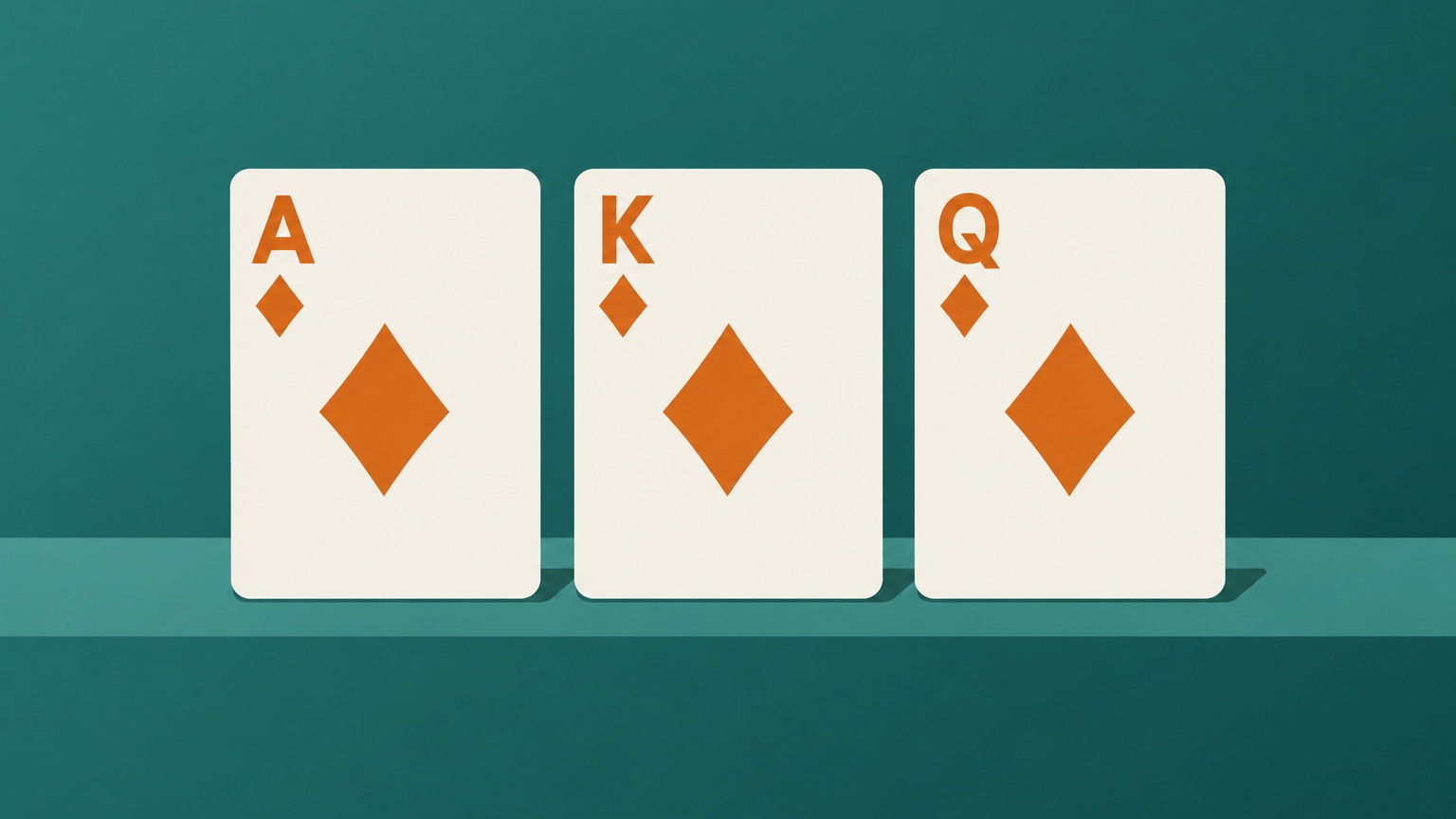
The fourth row holds three honors, but the longer hand has only two cards, so the queen falls under the ace or the king. The last row has no sure winner yet. The opponents hold the ace, and it has to go before your honors count.
Count before trick one
The moment dummy is on the table, stop and count. Go suit by suit, then compare the total with what the contract needs: nine tricks for 3NT, ten for four of a major, and in general six plus the level you bid. When you come up short, you need a plan for the missing tricks, and that plan decides which card you play first.
Extra tricks usually come from a suit where you hold strong cards but are missing one high honor. Lead that suit early and let the opponents win their ace. The honors you have left in the suit are then winners. A long suit can give extra tricks too, once the opponents have run out of it, and that is the subject of the next lesson.
Watch it in a deal
You are South in 3NT. Step through the deal and count along with the comments.
South opens 1NT with a balanced 17, North raises to 3NT with 10, and West leads the ♠Q, the top of a sequence. Count first. Spades give two winners, the ace and king. Hearts give none, since the opponents hold the ace. Diamonds give two and clubs two. That is six sure winners, three short of nine.
The habit to keep
Count, compare, then decide which suit gives you the tricks you are missing. Once the sure winners cover the contract, there is no reason to risk any of them. Until they do, the building suit comes first, because every winner you cash early can turn one of the opponents' cards into a winner of their own.
For more on how a suit splits between the two hidden hands, see suit break odds. For a whole deal from the auction to the score, see how to play bridge.
Practice: counting winners
Eight quick questions on what you just read.