How to Play Bridge
Bridge is a trick-taking card game for four players in two partnerships. Each deal has an auction, in which the partnerships bid for the right to name trumps and set a target, and then a play of thirteen tricks that decides whether the target was met.
Updated 14 October 2026
Two partnerships face each other across a square table, and one shuffled deck is about to be dealt. Everything that follows on this page happens on every deal of bridge, from a kitchen-table game to a world championship. You need no experience of other card games to follow it, although players who know whist or spades will recognize the tricks.
What do you need to play bridge?
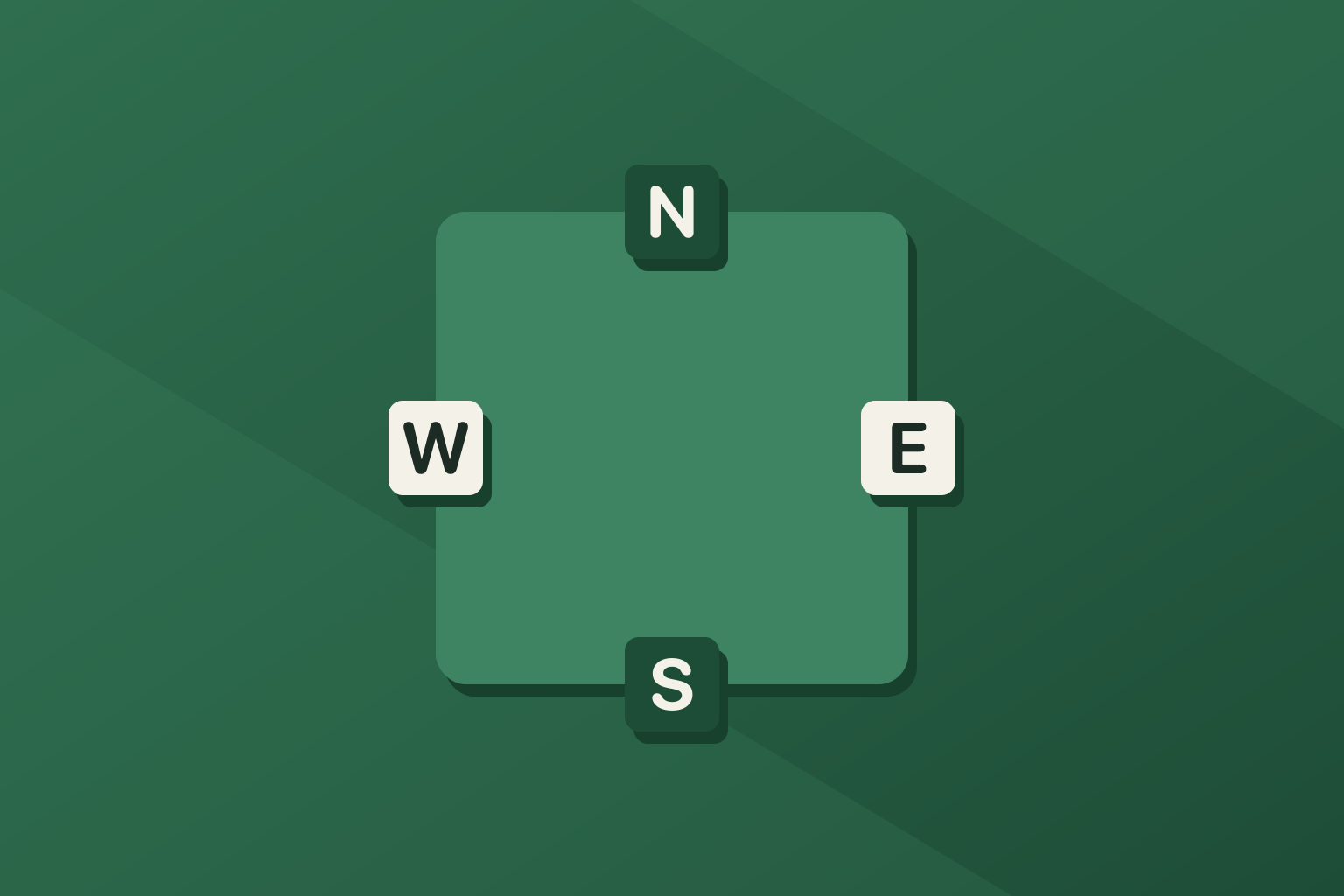
You need four players, one standard 52-card deck with the jokers removed, a table and something to keep score on. The four players form two partnerships, and partners sit opposite each other. The seats are named after the points of the compass, so North and South play together against East and West. The names have nothing to do with the room; they are labels that let books, scoresheets and diagrams say who held which cards.
Everything moves clockwise. The deal, the bidding and the play all go round the table from each player to the player on the left. The full story of the seats, including the dealer, the declarer, the dummy and the two defenders, is on the page about bridge positions.
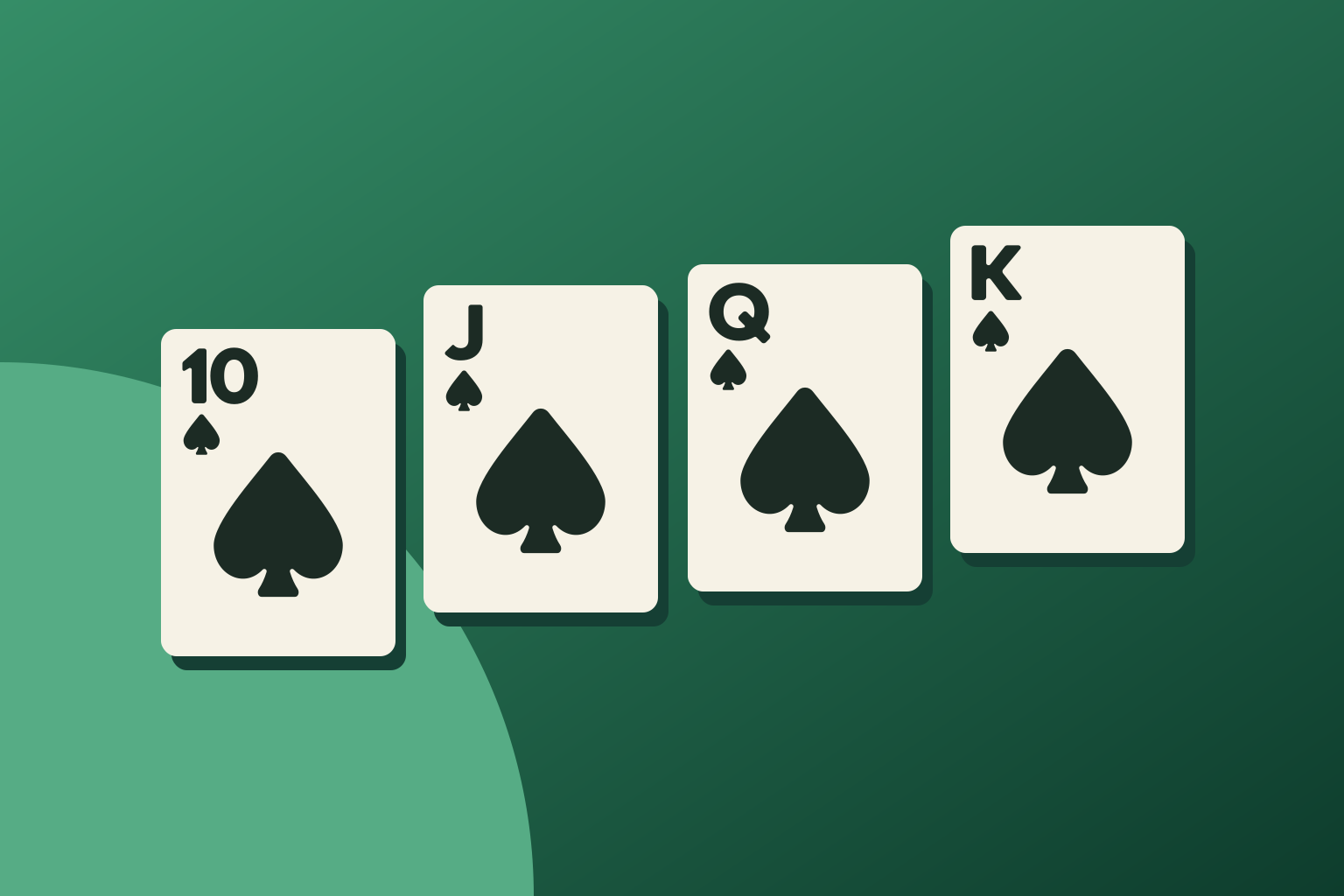
The cards rank in the usual order within each suit, from the ace down through the king, queen, jack and ten to the two. The four suits also have a rank for the auction, which comes up shortly. In the play itself no suit beats another except the trump suit, if there is one.
How is a bridge hand dealt?
The dealer gives out all 52 cards one at a time, face down and clockwise, starting with the player on the left, so each player ends up with 13. On the next deal the role of dealer passes one seat to the left. The dealer matters for one more reason. The dealer makes the first call of the auction.
Pick up your cards and sort them by suit. Most players alternate black and red suits so that the spades and clubs are not confused at a glance, and put the highest card of each suit on the left. Keep the cards close and do not show them to anyone, partner included.
The next step is to judge how good the hand is. Nearly every player starts with high-card points (HCP): count 4 for each ace, 3 for each king, 2 for each queen and 1 for each jack. The whole deck holds 40 points, so the average hand has 10. A hand of 12 or 13 points is usually enough to open the bidding, and the shape of the hand, meaning how many cards you hold in each suit, adjusts that count up or down. The page on hand evaluation covers the adjustments, and high-card points gives the odds of holding any given count.
How does bidding work in bridge?
The bidding, called the auction, decides which side will try to win the most tricks and what the target is. Starting with the dealer and going clockwise, each player makes one call in turn. There are four kinds of call.
| Call | What it does |
|---|---|
| Pass | Makes no bid this turn. A player who passed may still bid later if the auction is still going. |
| Bid | Names a number of tricks and a strain, such as 2♥. It must be higher than the last bid made. |
| Double (X) | Allowed only when the last bid was made by an opponent, with nothing but passes since. It raises the stakes if that bid becomes the contract. |
| Redouble (XX) | Allowed only after an opponent doubles your side's bid. It raises the stakes again. |
A bid has two parts, a level from 1 to 7 and a strain, which is one of the four suits or notrump (NT). The level counts tricks above six, a base of six tricks called the book. A bid of two hearts, written 2♥, is a promise to win 6 + 2 = 8 of the 13 tricks with hearts as trumps. A bid of 3NT promises nine tricks with no trump suit at all. The highest possible bid, 7NT, promises all thirteen.
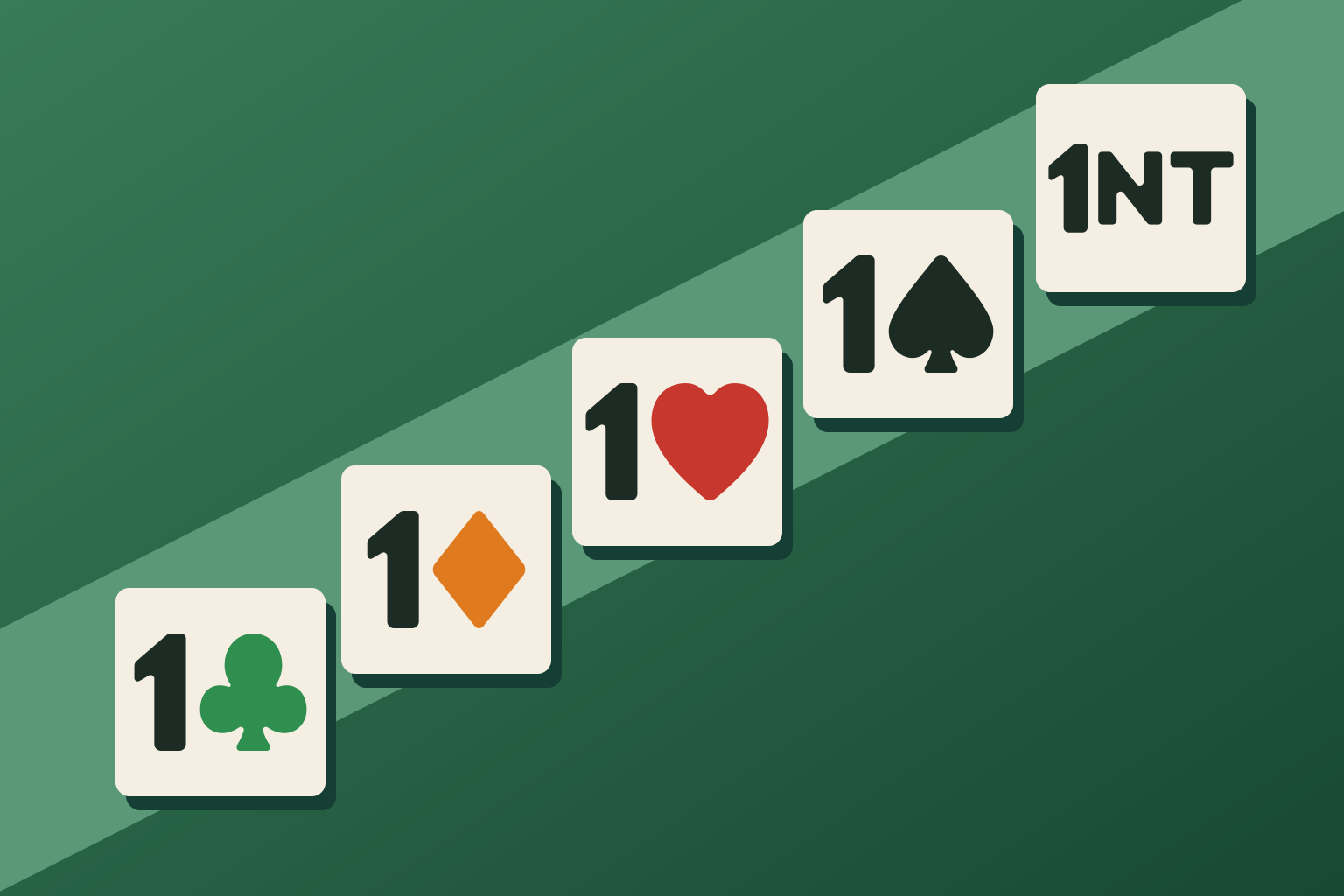
For the auction the strains rank in the order clubs, diamonds, hearts, spades, notrump, from lowest to highest. Each new bid must outrank the one before it, either at a higher level or at the same level in a higher strain. Over 1♠ you may bid 1NT, because notrump outranks spades, but to show hearts you would have to go to 2♥. Clubs and diamonds are called the minor suits, hearts and spades the major suits.
The auction ends when a bid, double or redouble is followed by three passes in a row. The last bid becomes the contract, and the side that made it is the declaring side. Of the two partners on that side, the one who first named the strain of the contract is the declarer, and declarer's partner becomes the dummy. If all four players pass at the start, the deal is passed out and nobody scores. In a home game the cards are thrown in and the next dealer deals a fresh hand.
The bids also carry information, because partners cannot see each other's cards and the auction is the only legal way to describe them. In Standard American, the system most North American players learn first, an opening bid of one of a suit shows about 12 points or more, an opening bid of one of a major promises at least five cards in that suit, and an opening 1NT shows a balanced hand of 15 to 17 points. The two hands together need about 25 points to make a game contract. The bridge bidding cheat sheet sets out the openings and responses on one page, and the SAYC guide explains the full system.
Players soon add conventions, agreed bids whose meaning is artificial, such as Stayman after a 1NT opening. They are agreements between partners and must be disclosed to the opponents. A beginner can leave them for later.
How does the play work in bridge?
The play begins with the opening lead, made by the player on declarer's left, who places one card face up in the middle of the table. Then the dummy lays all 13 cards face up in front of them, sorted into suits, with the trumps on dummy's right. From that point declarer plays the cards of both hands, calling for a card from dummy whenever it is dummy's turn. Dummy takes no further part in the play.
Each player in turn, going clockwise, plays one card to the trick. Four cards make a trick. The rules for which card you may play are short.
- 1.You must follow suit, playing a card of the suit that was led, if you have one.
- 2.If you have no card in the suit led, you may play any card. A trump played on another suit is a ruff, and a card of a third suit is a discard.
- 3.The highest trump played to a trick wins it. If no trump was played, the highest card of the suit led wins, and a higher card in a different suit counts for nothing.
- 4.Whoever wins the trick leads any card to the next one, and play continues until all 13 tricks are played.
In a notrump contract there is no trump suit, so the highest card of the suit led always wins. Each side keeps its tricks together, turned face down, and counts them at the end. Declarer needs the number of tricks the contract promised, and the defenders need enough to stop that.
Defending is half the game. The defenders cannot see each other's hands, but they can see dummy, and the cards they play tell partner what they hold. The choice of opening lead is the first decision of every defense. For declarer, the plays that turn up most often in the first weeks are drawing trumps, setting up a long suit and taking a finesse, which tries to win a trick with a card that is not the highest left.
How does bridge scoring work?
If declarer makes the contract, the declaring side scores trick points for each trick bid above the book. A trick in clubs or diamonds is worth 20, a trick in hearts or spades 30, and a trick in notrump 40 for the first and 30 for each one after. Extra tricks beyond the contract, called overtricks, add their value too but do not count toward game.
A contract worth 100 trick points or more is a game and earns a large bonus. Anything less is a part score, which earns a small one. Five contracts are the lowest that reach 100.
In duplicate scoring, a made part score adds a bonus of 50 and a made game adds 300, or 500 when the side is vulnerable, a state that raises both the rewards and the penalties. A small slam (twelve tricks) and a grand slam (all thirteen) earn bonuses on top of that. When declarer fails, the defenders score for each trick short, called an undertrick. Undoubled, each costs 50 when not vulnerable and 100 when vulnerable, and a double makes those figures larger.
That is the outline a beginner needs at the table. The full scoring, including rubber bridge, doubled contracts and slams, is in how bridge scoring works, and every value is set out in one place in the bridge scoring chart.
One complete hand, from the deal to the score
Here is one deal followed all the way through. South is the dealer and nobody is vulnerable.
South counts 15 points and a five-card spade suit and opens 1♠. West has 9 points and good hearts, but over 1♠ the cheapest heart bid is 2♥, which needs a stronger hand, so West passes. North has 11 points and three-card support, enough to invite game with a jump to 3♠. This jump is a limit raise, which shows support for opener's suit and about 10 to 12 points. East passes. South has more than a minimum opening and accepts by bidding 4♠, and three passes end the auction.
South named spades first, so South is declarer and North is dummy. West, on declarer's left, leads the ♥Q, the top card of a run of hearts. North's hand goes down on the table, and South counts. There are five spade tricks in the South hand, the ace and king of hearts and the ace and king of diamonds, which makes nine. The tenth comes from the shortness in dummy. After two rounds of hearts dummy has none left, so South's third heart can be ruffed with one of dummy's spades.
Declarer wins the first trick with dummy's ♥A, cashes the ♥K, and leads the ♥7, ruffing it in dummy. A diamond to the ♦A brings the lead back to the South hand, and the ♠A, ♠K and ♠J draw the defenders' trumps in three rounds. Declarer then cashes the ♦K and gives up the rest. The defenders win one diamond and their two top clubs, the ♣A and ♣K, and South takes the other ten tricks.
The contract is made exactly. North-South score 4 x 30 = 120 trick points, which is game, plus the non-vulnerable game bonus of 300, for a total of 420. Vulnerable, the bonus would have been 500 and the score 620. Had declarer drawn all the trumps straight away, dummy's spades would have been gone before the heart ruff, and the contract would have gone one down.
What to learn next
The order that works for most beginners is to play first and read second. Deal a few hands with three friends, bid them with the opening points above, and play them out. After that, these pages fill in the gaps, and learn bridge online sets them out as eight stages in order, with bridge bidding as the one most beginners want first.
- Bridge positions explains the seats, the roles on each deal and vulnerability.
- The rules of bridge sets out every rule in order, including what happens when someone plays out of turn or fails to follow suit.
- Bridge terms defines the vocabulary you will hear at the table.
- The bridge bidding cheat sheet is the one page of bidding to keep beside you.
- Duplicate bridge is the form played at clubs and tournaments, where every table plays the same deals and luck of the cards drops out.
Common questions
Short answers to what readers ask most.
- How many players do you need for bridge?
- Bridge needs four players, in two partnerships of two. Partners sit opposite each other, and the partnerships are called North-South and East-West.
- Is bridge hard to learn?
- The rules are not hard and can be learned in an afternoon. The depth comes from bidding and card play, which reward practice for years, and most players enjoy the game well before they feel expert at it.
- How long does it take to learn bridge?
- Most people can play a sociable game after a few weeks of lessons or regular practice. Many clubs run beginner courses of several weekly sessions, and players usually feel at ease in a club game after some months of playing.
- Can you play bridge with two or three players?
- Not the real game, which needs four. There are variants for fewer, such as honeymoon bridge for two and three-handed versions in which one hand is played as a dummy, but they are pastimes rather than the standard game.
- What is the difference between bridge and whist?
- Bridge adds an auction and a dummy to whist. In classic whist the trump suit is set by turning up the last card dealt and there is no bidding, while in bridge the players bid for the right to choose trumps, and declarer plays partner's hand face up.
- What is the difference between bridge and spades?
- In spades the trump suit is always spades, and each player bids a number of tricks without naming a suit. Bridge lets the auction choose any suit or notrump, has a dummy, and scores game and slam bonuses instead of counting bags.
- Where can I practice bridge online?
- You can practice the parts of the game on this site. Bridge Lab deals hands with the points and shapes you ask for, the double dummy solver shows the best play on any deal, and the Suit Trainer drills the handling of single suits.
Practice: how to play bridge
Eight quick questions on what you just read. For a longer session, take the hundred-question quiz.