The Rules of Bridge
Contract bridge is played by four people in two partnerships with a standard 52-card deck. The rules fix how the cards are dealt, how the auction is conducted, how the thirteen tricks are played and how the result is scored.
Updated 14 October 2026
Fifty-two cards, four players and a square table are all the equipment the game needs. What follows is the rulebook in the order a deal runs, from the shuffle to the score, with each rule stated once and plainly. If you have never played a hand, start with how to play bridge, which walks through a whole deal, and come back here when you want the exact rule.
Players, partnerships and the deck
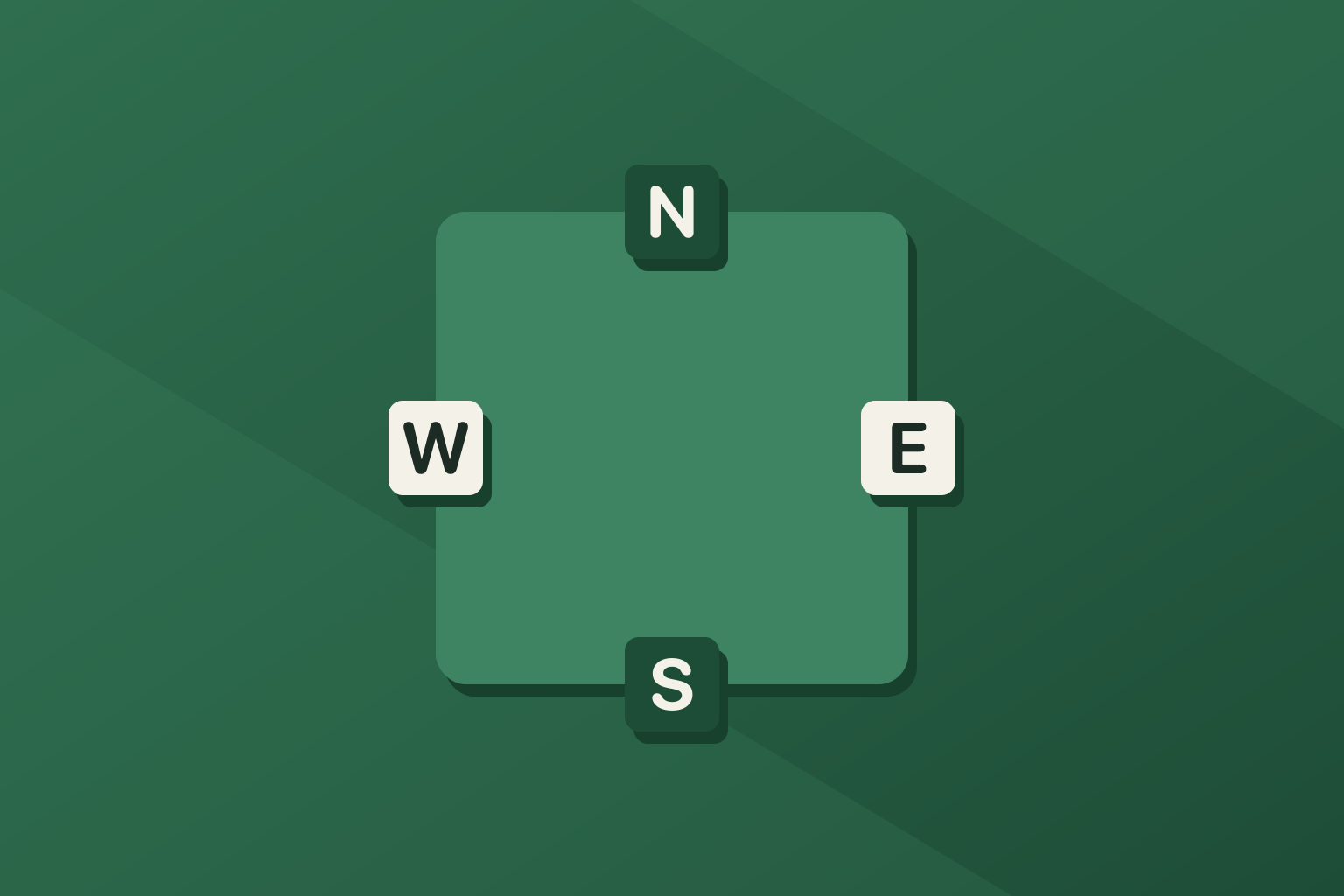
Bridge is played by four players in two fixed partnerships. Partners sit opposite each other, and the seats are named after the compass points, so North and South play against East and West. The positions guide covers the seats and the roles they take on each deal.
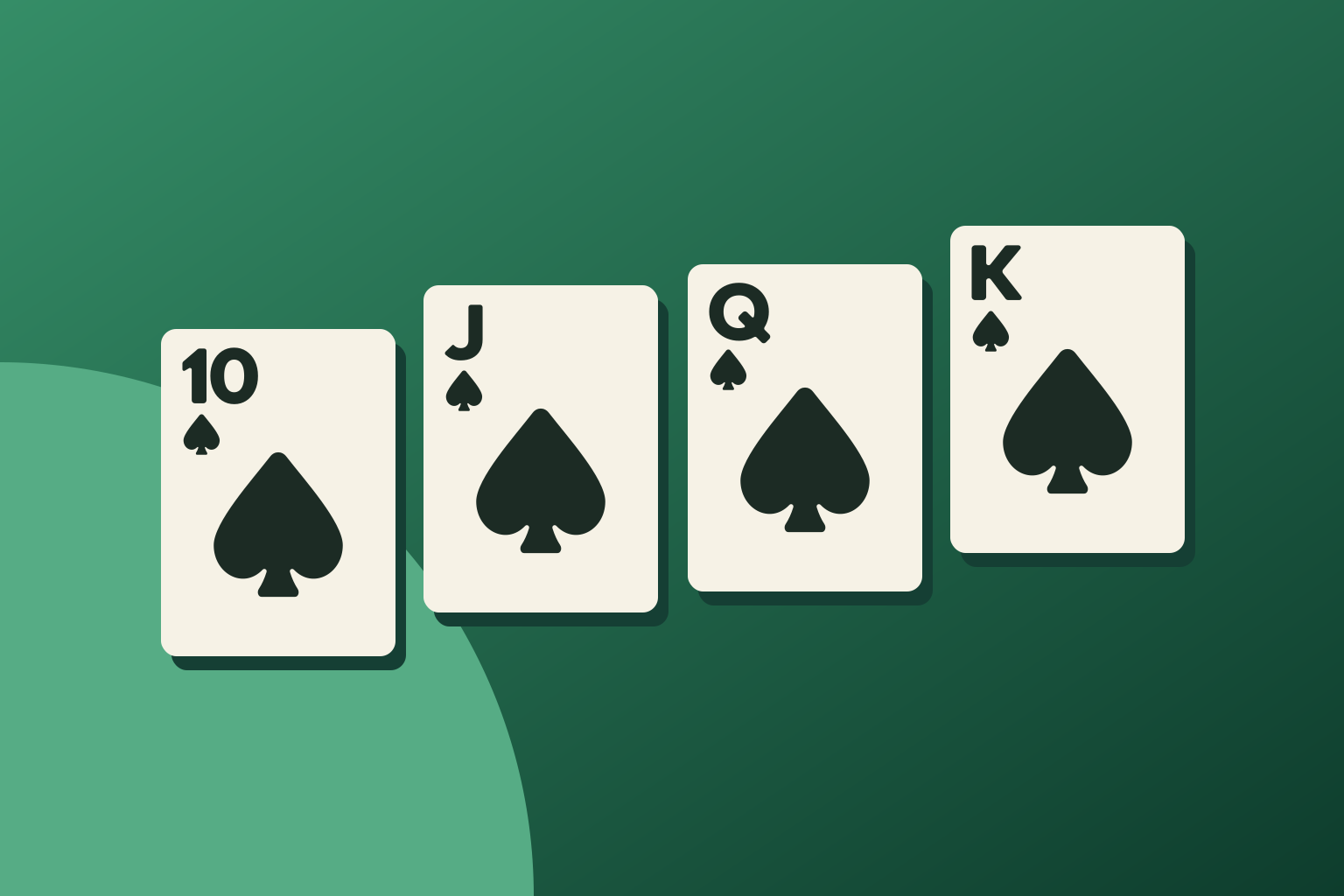
The game uses one standard 52-card deck with no jokers. In each suit the cards rank from the ace down: A, K, Q, J, 10, 9, 8, 7, 6, 5, 4, 3, 2. The ace is always high.
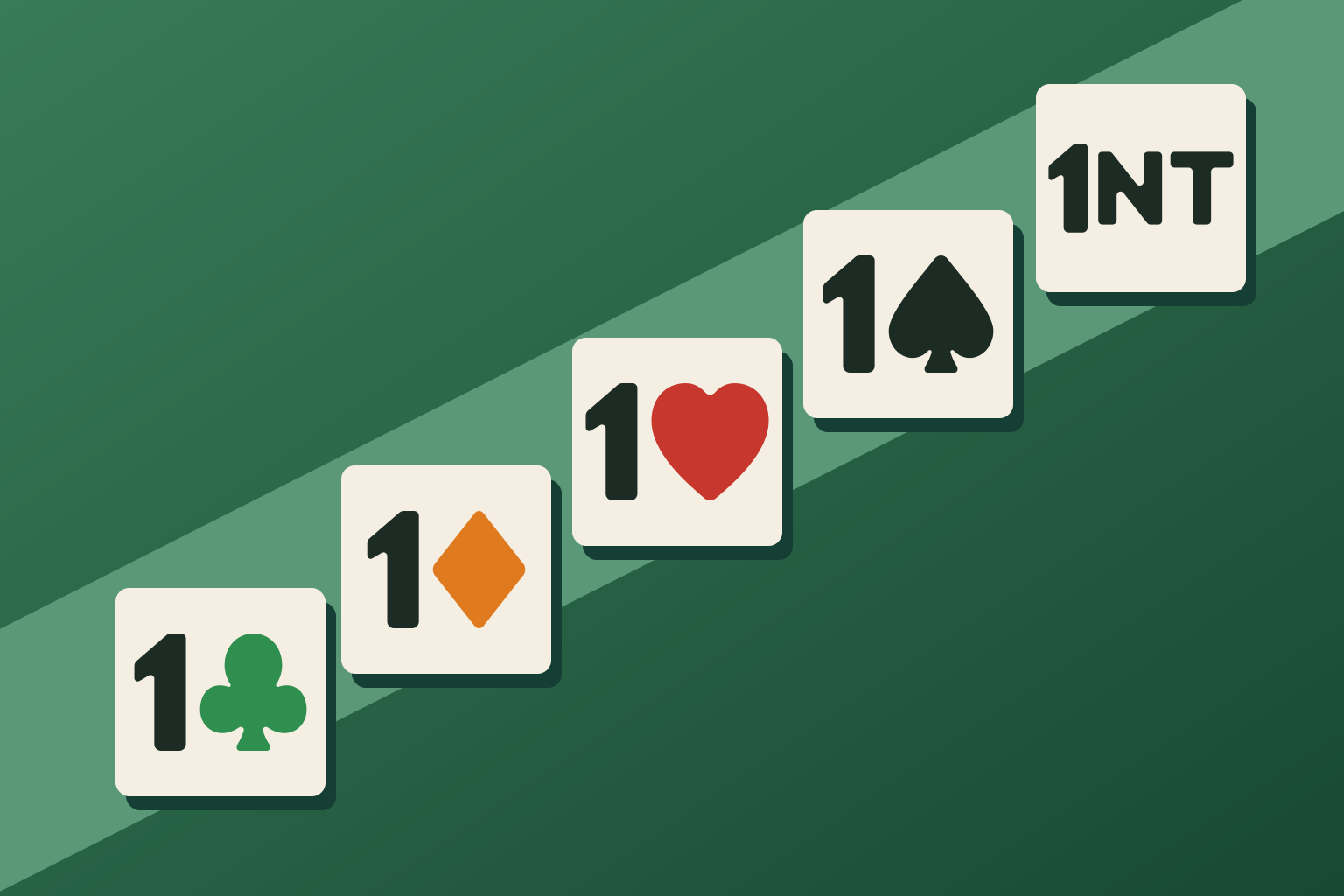
The suits also have a rank, but only for the auction. From lowest to highest they are clubs, diamonds, hearts and spades, with notrump above all four. During the play no suit outranks another except the trump suit, if there is one.
How are the cards dealt in bridge?
The dealer deals the whole deck one card at a time, face down, clockwise, starting with the player on the dealer's left, until each player has 13 cards. Before the deal the cards are shuffled and then cut by the player on the dealer's right. A deal with a card exposed or a wrong number of cards is dealt again.
The first dealer is usually chosen by drawing cards, highest card dealing. After that the deal passes clockwise, one seat per hand. Each player picks up their own 13 cards only after the deal is complete and keeps them out of sight of the other three.
In duplicate bridge nobody deals at the table. The cards come pre-dealt in a board, a tray with four pockets, and the board itself names the dealer and the vulnerability. Each player returns their cards to the same pocket at the end so the next table can play the same deal.
The rules of the auction
The auction decides the contract, the number of tricks one side undertakes to win and which suit, if any, will be trumps. The dealer makes the first call and the turn passes clockwise. There are four kinds of call.
- 1.Pass, which may be made at any turn.
- 2.A bid, which names a level from 1 to 7 and a strain. The level is the number of tricks over six that the side undertakes to win, so a bid of 3♥ promises nine tricks with hearts as trumps.
- 3.Double, which may be made only over the last bid if an opponent made it and it has not already been doubled.
- 4.Redouble, which may be made only when an opponent has doubled your side's bid and no call other than a pass has followed.
Every bid must be higher than the last bid made, by anyone. A higher bid is either a higher level, or the same level in a higher-ranking strain. After 1♠ you may bid 1NT or anything at the two level, but not 1♥. There are 35 bids in all, from 1♣ up to 7NT. A double or redouble does not raise the level, and any later bid cancels it.
How the auction ends
Once anyone has bid, the auction ends when three players in a row pass. The last bid becomes the contract, doubled or redoubled if it was. If all four players pass at the start, the deal is passed out. The cards are thrown in and nobody scores. In duplicate that board scores zero for both sides. In rubber bridge the next player in turn deals a fresh hand, and in Chicago the same dealer usually deals again.
The side that bought the contract is the declaring side. Declarer is the player of that side who first bid the strain of the final contract, which is not always the player who made the final bid.
Conventions and alerts are agreements
The laws say which calls are legal, but they do not say what a bid means. Partnerships agree meanings among themselves, and an artificial bid such as Stayman is a convention, an agreement and not a rule. What the laws do require is disclosure. The opponents are entitled to know your agreements, so in a duplicate game you play from a convention card and alert unusual calls, under regulations set by the organizing body. The conventions guide lists the common ones.
The rules of the play
The play consists of 13 tricks. A trick is four cards, one from each player in clockwise order, and the declaring side scores if it wins at least the number of tricks its contract needs.
Who leads first in bridge?
The player on declarer's left makes the opening lead. In duplicate the opening lead is normally made face down, so the leader's partner can ask any questions about the auction, and then turned face up.
After the opening lead, declarer's partner spreads their whole hand face up on the table, sorted by suit with the trumps on dummy's right, which is declarer's left. This hand is the dummy. Declarer plays both hands, naming each card to be played from dummy. The dummy player takes no part in the play. Dummy may not suggest a card or comment on the play, but may try to stop an irregularity, such as asking declarer who fails to follow suit whether they have a card of that suit.
Following suit and trumping
- 1.Each player in turn plays one card to the trick, clockwise.
- 2.You must follow suit, playing a card of the suit led, if you can.
- 3.If you cannot follow suit, you may play any card. A card of another suit is a discard, and a trump is a ruff.
- 4.A trick goes to the highest trump played to it. If no trump was played, it goes to the highest card of the suit led. A higher card in a third suit never wins.
- 5.The player who won the trick leads to the next one, with any card.
In notrump there are no trumps, so the highest card of the suit led always wins. Nobody is ever required to win a trick or to ruff.
Quitted tricks, claims and concessions
Once all four players have played to a trick it is turned face down, or quitted. In duplicate each player keeps their own card face down in front of them, pointed lengthwise toward their partner if their side won the trick and crosswise if it lost. In rubber bridge one member of the winning side gathers the four cards into a packet. Until you have turned your own card face down, and as long as your side has not led or played to the next trick, you may ask to see all four cards of the trick just played.
Play does not have to go to the last card. A player may claim some or all of the remaining tricks by facing their hand and stating how they intend to play it. Play stops, and if the opponents agree the claim stands. If they dispute it, the director rules, and any doubtful point goes against the claimer. A player may likewise concede tricks, though a concession of a trick that could not be lost by any normal play of the remaining cards is cancelled.
Scoring: what the rules provide
If declarer wins at least the number of tricks bid, the declaring side scores. Each trick bid and made over the first six, an odd trick, earns trick points by strain. Trick points worth 100 or more make a game and earn the game bonus. A smaller contract is a part score and earns 50 in duplicate.
| Item | Not vulnerable | Vulnerable |
|---|---|---|
| Each odd trick in ♣ or ♦ | 20 | 20 |
| Each odd trick in ♥ or ♠ | 30 | 30 |
| First odd trick in NT | 40 | 40 |
| Each later odd trick in NT | 30 | 30 |
| Part score bonus (duplicate) | 50 | 50 |
| Game bonus (duplicate) | 300 | 500 |
The cheapest games are therefore 3NT, 4♥, 4♠, 5♣ and 5♦. A small slam (six level) earns a further 500, or 750 vulnerable, and a grand slam (seven level) 1000, or 1500 vulnerable. Overtricks score at the trick value but never count toward game. A double multiplies the trick points by two and a redouble by four, with an extra 50 or 100 for making the contract and fixed values for the overtricks.
If declarer falls short, the defenders score for every undertrick. Undoubled, each one is worth 50, or 100 vulnerable. Doubled and redoubled undertricks cost more and rise with each trick, as undertrick penalties sets out.
Being vulnerable raises both the bonuses and the penalties. In duplicate the board says which sides are vulnerable. In rubber bridge a side becomes vulnerable by winning a game. The full numbers, including doubled contracts and slams, are in bridge scoring and on one page in the bridge scoring chart.
Irregularities: revokes, leads out of turn and insufficient bids
The laws of bridge are mostly about what happens when someone breaks a rule by accident. The current code is the World Bridge Federation's Laws of Duplicate Bridge 2017, published in North America by the ACBL and in England by the EBU. Rubber bridge has its own laws, which follow the same lines.
The revoke
A revoke is a failure to follow suit when you could have. If it is noticed in time it must be corrected, the wrong card being replaced by a card of the suit led. A defender's withdrawn card becomes a penalty card, while declarer's simply goes back into the hand. A revoke becomes established once the offending side leads or plays to the following trick, and then it stands and is put right at the end of play.
Under the 2017 Laws an established revoke transfers one trick to the other side, provided the revoking side won the revoke trick or a later one. It transfers two tricks when the revoking player won the revoke trick itself and the side also won a later trick. If the other side was damaged by more than that, the director restores the result that would have been reached without the revoke.
Leads out of turn and insufficient bids
When a defender leads out of turn, declarer may accept the lead or have the correct player lead, in which case the card led in error usually becomes a penalty card. After an opening lead out of turn, declarer may also spread their own hand and become dummy. An insufficient bid, such as 1♥ after 1♠, may be accepted by the next player. Otherwise it must be made legal. If the correction is the cheapest bid in the same strain and both bids are natural, or a call with the same or a more precise meaning, the auction goes on normally. Any other correction means the offender's partner must pass for the rest of the auction.
In a duplicate game, the moment an irregularity happens, any player should call the director, who applies the law. Players do not settle it among themselves. In a home game there is no director, and the players apply the rubber bridge laws by common sense, which in practice means most friendly games let small slips be taken back.
Rubber bridge, Chicago and duplicate: how the formats differ
The rules of the auction and the play are the same in every form of bridge. The formats differ in how deals are linked and how the score is kept.
Rubber bridge is the original form. Part scores carry over from deal to deal until one side reaches 100 trick points and wins a game. A side with a game is vulnerable, and the first side to win two games wins the rubber and a bonus of 700 or 500. Honors held in one hand also score. A rubber can last from two deals to a dozen or more.
Chicago is four-deal bridge for a home table or a club rubber room. Each player deals once, vulnerability is fixed by the deal number, and games earn the duplicate bonuses of 300 and 500 on the spot. It suits a group that wants to change partners or stop at a set time.
Duplicate plays the same deals at several tables and compares each result with the others who held the same cards, by matchpoints or IMPs. Each board is scored on its own with the bonuses in the table above, and nothing carries over. It is the form played in clubs and tournaments, and the one the 2017 Laws were written for. Duplicate bridge explains how a session runs, and bridge scoring gives the rubber and Chicago numbers in full. Any word in the rules that is new to you is in the bridge terms glossary.
Common questions
Short answers to what readers ask most.
- What are the basic rules of bridge?
- Four players in two partnerships each receive 13 cards, bid for the right to name a contract and then play 13 tricks. Players must follow suit if they can, the highest trump or the highest card of the suit led wins each trick, and the declaring side scores if it makes its contract.
- How many cards does each player get in bridge?
- Each player gets 13 cards. The whole 52-card deck is dealt out one card at a time, clockwise from the dealer's left.
- What happens if everyone passes in bridge?
- The deal is passed out and nobody scores. In duplicate the board is recorded as zero for both sides, and in rubber bridge the cards are thrown in and the next player deals.
- Can you bid a lower suit after a higher one?
- Yes, but only at a higher level. After 1♠ you cannot bid 1♥, but 2♥ is legal because any two-level bid outranks any one-level bid.
- What is a revoke in bridge?
- A revoke is playing a card of another suit when you could have followed suit. If it is corrected before your side plays to the next trick there is no trick penalty. Once established it usually costs one or two tricks.
- Who leads first in bridge?
- The player on declarer's left leads to the first trick. After that, whoever wins a trick leads to the next one.
- Where are the official laws of bridge published?
- The World Bridge Federation publishes the Laws of Duplicate Bridge, last revised in 2017. National bodies such as the ACBL in North America and the EBU in England publish them for their players, and rubber bridge has a separate code.
Practice: the rules of bridge
Eight quick questions on what you just read. For a longer session, take the hundred-question quiz.