Conventions
The Stayman Convention
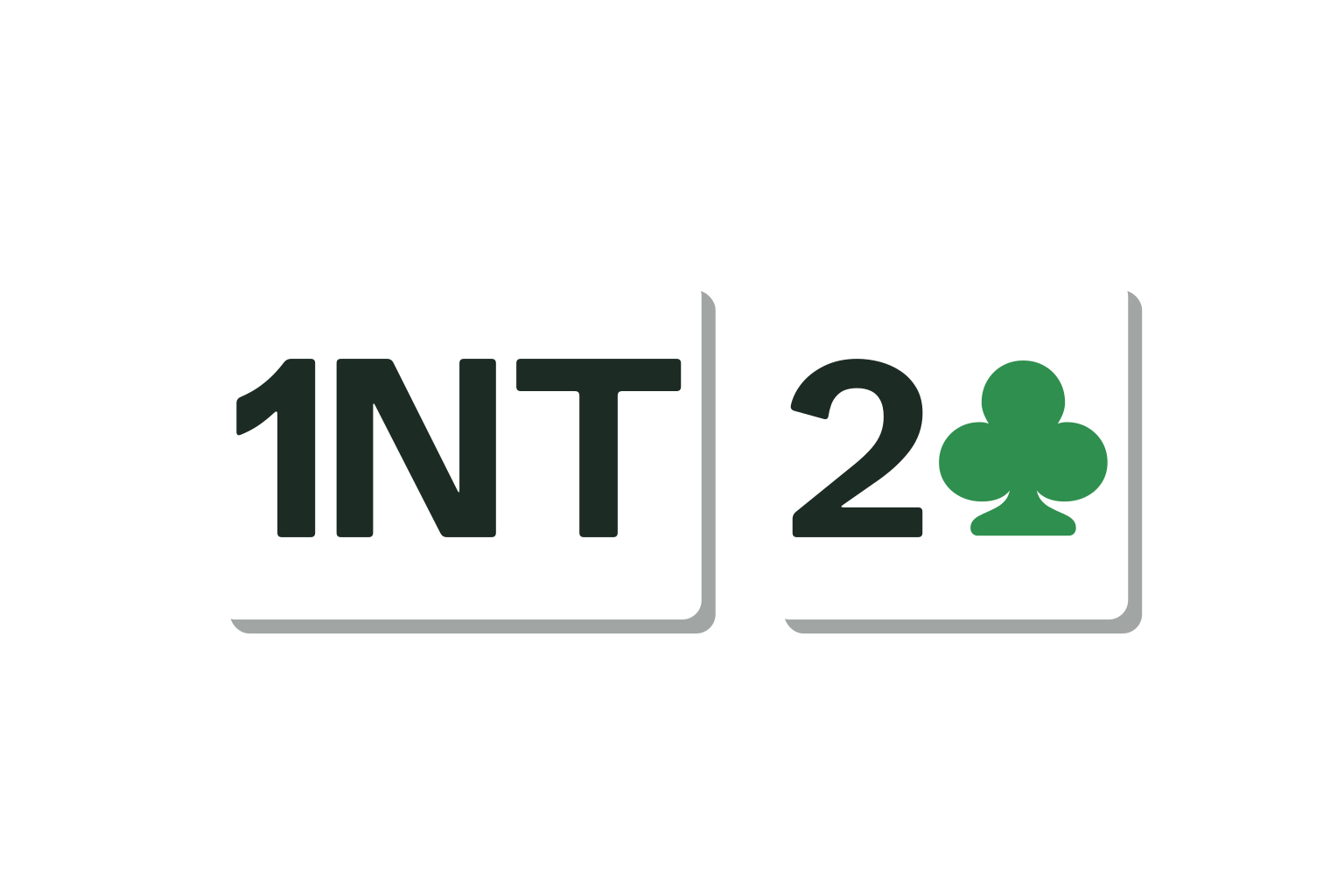
The Stayman convention uses a 2♣ reply to partner's 1NT opening to find out whether opener has a four-card major. Responder uses it with a four-card major of their own, hoping to find a fit in hearts or spades, because a trump contract with a fit often plays better than notrump. Nearly every partnership has it on the card.
How the Stayman convention works
Opener has three answers to 2♣: 2♥, 2♠ or 2♦. Holding both majors, opener bids 2♥ first, and responder can still find the spade fit on the next round. Responder then places the contract or invites game, knowing whether a 4-4 major fit exists.
When to bid Stayman
The standard requirements are a four-card major and at least invitational values: about 8 points opposite a 15 to 17 point 1NT, or 11 opposite a 12 to 14 point weak notrump as played in Acol. A weaker hand usually has no game to find, so you pass 1NT or use a transfer if you hold a five-card major (see Jacoby transfers).
- Holding 4-4 in the majors and 8 or more points, bid 2♣ and you will find any 4-4 fit.
- A hand with one four-card major and 8 or more points also bids 2♣, then rebids notrump if opener names the other major or bids 2♦.
- Five spades and four hearts with game values also start with 2♣. If opener denies a major, jump to 3♠ to show the five-card suit.
- A five-card major with no four-card side major calls for a transfer instead of Stayman.
- On a 4-3-3-3 hand with a four-card major, many experts skip Stayman and bid notrump directly. The flat hand offers no ruffing value, so the major fit gains little, and you give the defenders less information.
Opener's answers and responder's rebids
Opener's reply is mechanical: 2♦ with no four-card major, 2♥ with four hearts (whether or not opener also has four spades), 2♠ with four spades and fewer than four hearts. Opener does not show strength at this point. Responder's second bid carries the meaning.
| Opener bid | Responder bids | Meaning |
|---|---|---|
| 2♥ or 2♠ | Raise to 3 | Invitational with a fit. Opener passes with a minimum, bids game with a maximum |
| 2♥ or 2♠ | Raise to 4 | Game values with a fit |
| Any | 2NT | Invitational, no fit. Opener passes with a minimum, bids 3NT with a maximum |
| Any | 3NT | Game values, no fit |
| 2♦ | 3♥ or 3♠ | Game forcing with five cards in the bid major and four in the other |
| 2♦ | 2♥ | Weak with both majors, opener passes or corrects to 2♠ (some pairs play it as invitational with five hearts) |
If opener bids 2♥ and responder continues with 2NT or 3NT, responder must hold four spades, since Stayman promised a major and it was not hearts. Opener holding both majors now corrects, to 3♠ or 4♠ over 2NT depending on strength and to 4♠ over 3NT.
Stayman example hands
Garbage Stayman
Stayman can also rescue a weak hand. Hold ♠J853 ♥Q962 ♦T8642 and a void in clubs. That is 3 points, and 1NT is likely to go down. Bid 2♣ and pass any answer. Opener's reply is always a suit where you have at least four cards, so you have improved the contract. A weak hand that is 4-4 in the majors but lacks the diamonds to stand 2♦ bids 2♥ over 2♦ instead. Opener passes or corrects to 2♠, choosing the longer major.
Puppet Stayman
**Puppet Stayman** asks for five-card majors as well as four-card ones. Most pairs play it as 3♣ over a 2NT opening, and some also use it as 2♣ over 1NT, in both cases when the notrump opening may contain a five-card major. Opener bids 3♦ holding at least one four-card major, bids a five-card major directly, and bids 3NT without either. After 3♦ responder names the major he does not hold. It looks backwards, but it lets opener bid the 4-4 fit first and become declarer, keeping the strong hand hidden and letting it play last to the first trick.
The convention exists because many players now open 2NT with a five-card major, and a growing number open a balanced 15 to 17 point hand 1NT with one too. Ordinary Stayman cannot find a 5-3 major fit on those hands, because responder with three-card support has no way to ask about a fifth card.
Common mistakes and variations
- Bidding Stayman without a four-card major. There is nothing to find, so raise notrump directly.
- Forgetting that Stayman promised a major. When responder bids notrump after opener's 2♥, opener with four spades must not pass a contract that might be missing a 4-4 spade fit.
- Showing strength with the answer. Opener's reply only describes shape. A 17-point opener still bids a simple 2♥ or 2♠, and decides about game only after responder's invitation.
- Using Stayman after an overcall. If the opponents overcall 1NT, Stayman is off. A cuebid of their suit takes over the job (see Lebensohl). After a double of 1NT, most partnerships keep Stayman on.
Most pairs who add anything to Stayman add Smolen. Over 2♦, responder with five-four in the majors and game values jumps in the four-card major instead of the five-card one, which makes opener with three-card support the declarer. Puppet Stayman, described above, also asks for five-card majors. Forcing Stayman treats 2♣ as forcing to 2NT, which rules out garbage Stayman. Over a 2NT opening the idea is the same one level higher, with 3♣ asking for a major. Stayman is part of the Standard American Yellow Card, and many pairs round out their notrump responses with Texas transfers.
The full Stayman tree
The tree below shows Stayman with the invitational, game-forcing and garbage branches, with every answer and continuation.
Loading the convention from the library.
Common questions
Short answers to what readers ask most.
- What is the Stayman convention in bridge?
- Stayman is an artificial 2♣ bid over partner's 1NT opening, asking whether opener holds four hearts or four spades. The bid has no connection to clubs. Opener bids 2♥ or 2♠ with a four-card major and 2♦ without one, and over a 2NT opening the same question is asked with 3♣.
- How many points do you need to bid Stayman?
- Usually 8 or more opposite a 15 to 17 point 1NT, which is enough to invite game. Weaker hands may use garbage Stayman when they can pass any reply.
- What does opener bid with both majors after Stayman?
- Opener bids 2♥ first. If responder then bids notrump, showing four spades, opener corrects to spades.
- What is garbage Stayman?
- Garbage Stayman is Stayman bid on a weak hand short in clubs, such as 4-4-5-0, intending to pass whatever opener bids. Every reply lands in a suit where responder holds at least four cards.
- What is Puppet Stayman?
- Puppet Stayman is a version of Stayman, most often played as 3♣ over 2NT, that asks opener for a five-card major as well as a four-card one. Opener shows a five-card major by bidding it, which matters when the notrump opening may hide one. Pairs who play it need a full agreement on the follow-ups, since they differ from ordinary Stayman.
- What is checkback Stayman?
- Checkback Stayman is an artificial 2♣ by responder after opener rebids 1NT, as in 1♦ - 1♠ - 1NT - 2♣. It asks opener to show three-card support for responder's major or four cards in the other major. It does the same job as new minor forcing, but always uses clubs whichever minor was opened.
- Who invented the Stayman convention?
- George Rapée came up with it. His partner Sam Stayman described it in The Bridge World in June 1945, and the convention took his name. In Britain, Jack Marx had worked out a similar 2♣ bid in 1939, but the war delayed its publication.
- Is there a Stayman cheat sheet?
- The bidding tree and the table of responder's second bids on this page cover the whole convention, and you can print them as a cheat sheet. For Stayman alongside the rest of a standard system on one page, see the bridge bidding cheat sheet.
Practice: Stayman
Eight quick questions on what you just read. For a longer session, bid a hundred hands or take the hundred-question quiz.