 Bidding systems
Standard American Yellow Card
SAYC, the Standard American Yellow Card, is a bidding system published by the ACBL for partners who have not discussed their methods. It is built from natural bids and a short list of well-known conventions, so two players who have never met can agree on it in a minute. In North America it is the usual choice for online pickup partnerships and a common starting point at clubs.
SAYC opening bids
One-level openings show about 12 or 13 to 21 points. Majors normally show five cards in every seat, although the booklet allows an occasional four-card major in third seat. With two five-card or six-card suits, open the higher-ranking. Between the minors, open 1♦ with 4-4 and 1♣ with 3-3.
| Opening | Shows |
|---|---|
| 1♣ | 3+ clubs, 12-21 points |
| 1♦ | 4+ diamonds, 12-21 (three only with 4-4-3-2 and two clubs) |
| 1♥ / 1♠ | 5+ cards, 12-21 |
| 1NT | 15-17, balanced (may hold a five-card suit) |
| 2♣ | Strong and artificial: 22+ or the playing strength of game |
| 2♦ / 2♥ / 2♠ | Weak two: six-card suit, 5-10 points |
| 2NT | 20-21, balanced |
| 3NT | 25-27, balanced |
| 3 and 4 of a suit | Preemptive, usually a seven-card or longer suit |
Balanced hands are shown by range: 12 to 14 opens one of a suit and rebids 1NT, 15 to 17 opens 1NT, 18 to 19 opens one of a suit and jumps to 2NT, 20 to 21 opens 2NT, 22 to 24 opens 2♣ and rebids 2NT. If you are unsure whether to open a shapely 11 or 12 count, the rule of 20 is the usual guide.
Notrump bidding
Over 2NT the same structure moves up a level: 3♣ is Stayman, 3♦ and 3♥ are transfers, and 4♣ is Gerber. If the opponents double 1NT, all these conventions stay on. If they overcall, Stayman and transfers are off. Bids become natural, and a cuebid of their suit takes the place of Stayman on a game-forcing hand.
Responding to one of a suit
| Response | Meaning |
|---|---|
| Raise to 2 | 6-10 dummy points, 3+ trumps |
| 1NT | 6-9, not forcing, no fit and nothing better to bid |
| New suit at the one level | 6+, 4+ cards, forcing one round |
| New suit at the two level | 10+, forcing one round (not to game) |
| 2NT | Jacoby 2NT: game-forcing raise, 4+ trumps |
| Raise to 3 | Limit raise, 10-11 dummy points |
| 3NT | 15-17, balanced, two-card support |
| Raise to 4 | Preemptive: five trumps, a singleton or void, under 10 points |
| Jump shift | Strong, slam interest |
Over a minor opening, responder bids four-card suits up the line at the one level. 1NT shows 6 to 10 without a four-card major, 2NT shows 13 to 15 and forces to game, and 3NT shows 16 to 18. A single raise of the minor is 6 to 10 points with four or more diamonds or five or more clubs, since 1♣ can be a three-card suit. A jump raise is a limit raise. SAYC does not use inverted minors. After the opponents overcall, responder uses the negative double, which applies through 2♠.
Opener's rebids
Opener's second bid shows which of three ranges the hand falls in. The ranges are counted in total points, including distribution once a fit is found.
| Range | Points | Typical rebids |
|---|---|---|
| Minimum | 13-15 | 1NT, a simple raise, rebid own suit, a new suit that is not a reverse |
| Medium | 16-18 | Jump raise, jump rebid of own suit, a reverse |
| Maximum | 19-21 | Jump to 2NT (18-19 balanced), jump shift, jump to game |
A new suit by responder is forcing for one round, so opener with a minimum still bids again. A reverse shows a medium or better hand and forces one round. When responder has limited the hand with a raise or 1NT, opener is the captain and can pass, invite or bid game.
Strong 2♣, weak twos and competition
After 2♣, responder bids 2♦ as a waiting bid with most hands. A positive response shows 8 or more points. A five-card suit is bid naturally, and 2NT shows a balanced 8. Opener's 2NT rebid after 2♦ shows 22 to 24 balanced, and the same Stayman and transfer structure applies.
Over a weak two, a new suit is forcing for one round, a raise is to play and may be preemptive, and 2NT is the only strong inquiry. Opener rebids the suit with a minimum. Holding a maximum, opener shows a feature (an ace or king) in a side suit, or bids 3NT when there is no feature.
| Call | Meaning |
|---|---|
| Simple overcall | 8-16 points, usually a five-card suit |
| 1NT overcall | 15-18, balanced, usually a stopper in their suit |
| Jump overcall | Preemptive, like a weak two or a three-level opening |
| Cuebid of their suit | Michaels: 5-5 two-suiter |
| Jump to 2NT | Unusual 2NT: 5-5 in the two lowest unbid suits |
| Double of a suit opening | Takeout through 4♦, penalty from 4♥ up |
| Redouble after their takeout double | 10+ points, usually no fit |
Slam bidding uses Blackwood 4NT with simple ace responses, 5NT for kings, the Grand Slam Force (a jump to 5NT that asks for two of the top three trump honors) and Gerber over notrump. Leads are fourth best from long suits and top of touching honors; signals are standard, with high encouraging and high-low showing an even number.
A SAYC auction
The biggest difference between SAYC and two over one is that a two-level new-suit response in SAYC promises 10 points and forces one round only, while in 2/1 it forces to game. The forcing 1NT response comes with it, and once the game force is set the partnership can take its time describing the hands. Many partnerships learn SAYC first and add 2/1 later. For a one-page summary, see the bridge bidding cheat sheet.
The SAYC bidding tree
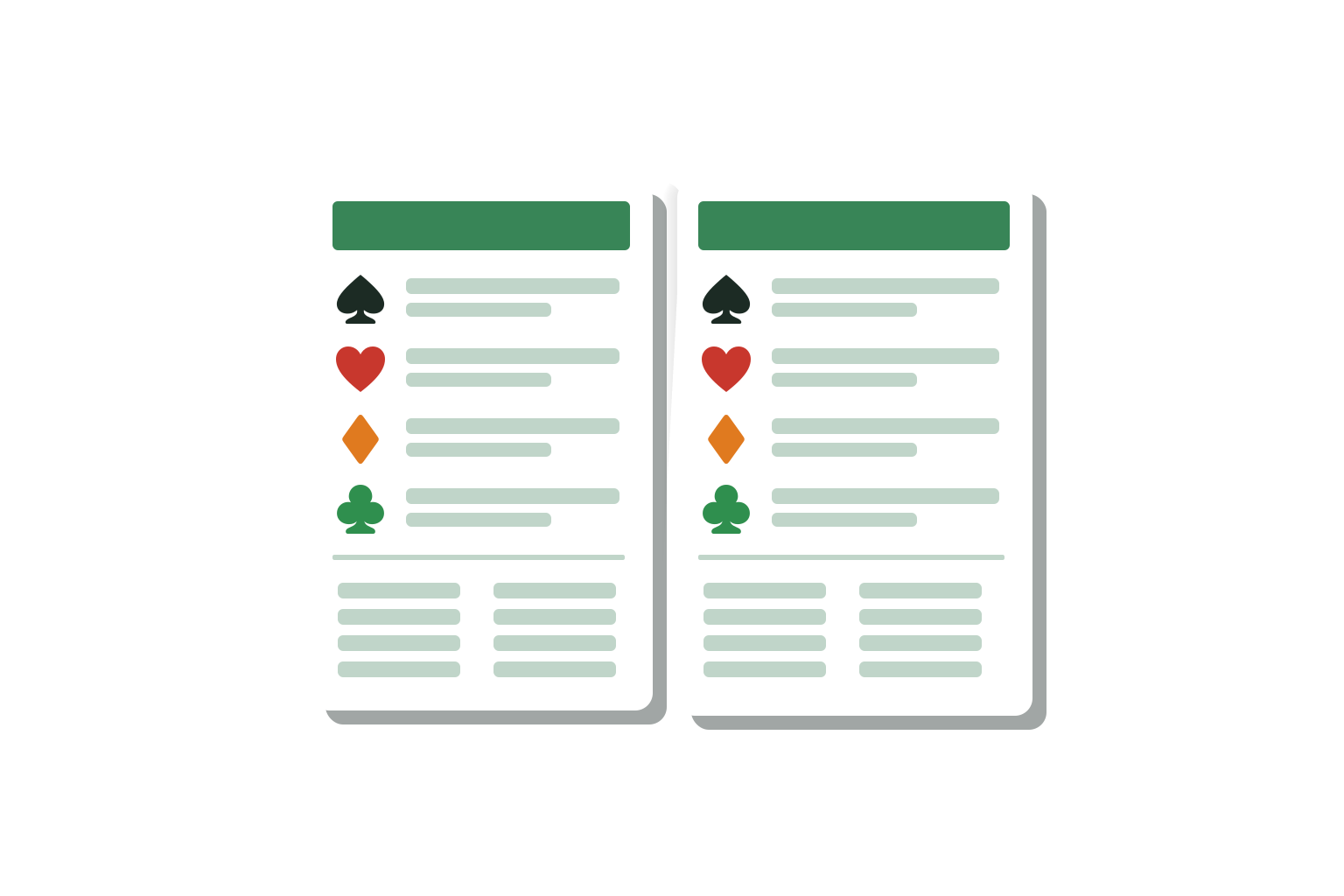
The tree below shows the whole yellow card, opening by opening, with notes from the ACBL booklet.
Loading the convention from the library.
Common questions
Short answers to what readers ask most.
- What is the SAYC yellow card?
- Short for Standard American Yellow Card, SAYC is the ACBL's published version of Standard American, built for partners who want to sit down together after very little discussion. The name comes from the ACBL's Standard Yellow Card events, where every pair had to play the same system.
- Is there a SAYC convention card?
- Yes. The ACBL publishes the SAYC booklet with a filled-in convention card, and many pickup partnerships simply agree to play it as printed. If you change anything, such as adding inverted minors, mark it on your own card.
- What is the 1NT range in SAYC?
- 15 to 17 high-card points, balanced. It may include a five-card major or minor.
- Is a two-level response forcing to game in SAYC?
- No. A two-level new suit shows 10 or more points and is forcing for one round. In two over one game force it would force to game.
- Which conventions are part of SAYC?
- Stayman, Jacoby transfers, the 2♠ minor relay, Gerber, Blackwood, Jacoby 2NT, strong 2♣, weak twos with a 2NT feature ask, negative doubles, Michaels, the unusual 2NT and the Grand Slam Force.
- Is SAYC still played?
- Yes. It remains the default for pickup partnerships online and at ACBL clubs, although many regular partnerships play two over one.
- Where can I practice SAYC bidding?
- The full yellow card is on this page as a bidding tree. To drill the auctions, bid a hundred hands with SAYC methods.
Practice: SAYC
Eight quick questions on what you just read. For a longer session, bid a hundred hands or take the hundred-question quiz.