 Conventions
The Unusual 2NT
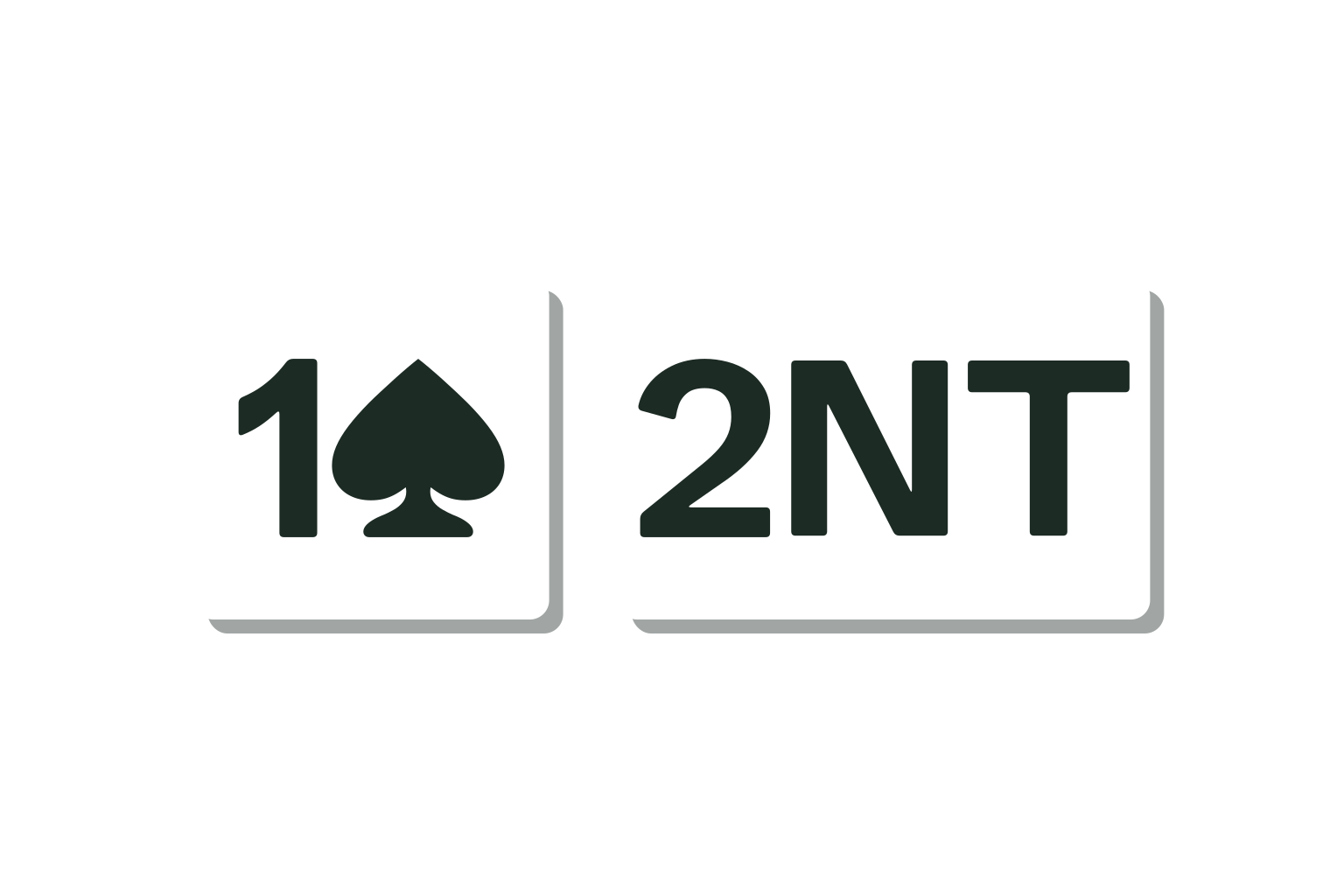
The unusual 2NT is a jump overcall of 2NT over an opponent's opening bid of one of a suit. It shows a hand with two long suits, the two lowest suits not yet bid, and asks partner to choose between them. Such hands are awkward to show with natural bids, and most partnerships play the convention.
How the unusual 2NT works
The bid is artificial, and which two suits it shows depends on the opening. Over a major they are the minors, which is how the bid is used most of the time. Over a minor they are hearts and the other minor.
| Opening | Overcall | Shows |
|---|---|---|
| 1♥ | 2NT | Five or more clubs and five or more diamonds |
| 1♠ | 2NT | Five or more clubs and five or more diamonds |
| 1♣ | 2NT | Five or more diamonds and five or more hearts |
| 1♦ | 2NT | Five or more clubs and five or more hearts |
Requirements for the unusual notrump
Shape is the firm part, five-five or longer in the two suits shown. Strength works in two tiers, as with the Michaels cue bid.
- The weak version has roughly 6 to 11 points, with the honors in the two long suits. The aim is to compete for the part score or find a cheap sacrifice.
- The strong version has roughly 17 points or more. Bid 2NT, then bid again over partner's preference to show the extra strength.
- On 12 to 16 points, in between the two, most players overcall in one suit and bid the other later. Partnerships that play the unusual 2NT at any strength should say so.
Vulnerability matters more than with most overcalls. The bid gives declarer a blueprint of your hand whenever the opponents play the contract, so at unfavorable vulnerability it needs good suits. At favorable vulnerability, you can bid it on weaker suits.
Responding to the unusual 2NT
Partner, the advancer, picks one of the two suits. The rules are the same as for any two-suited overcall.
- 1.Simple preference shows no extras. Holding equal length in the minors, bid 3♣, the cheaper one.
- 2.A jump to four of a minor is preemptive. It shows a four-card fit and is meant to raise the level before the opponents find their fit.
- 3.Game in a minor is to play, usually with a strong fit and good shape.
- 4.A cue bid of opener's suit shows a fit and invitational or better values, and it is forcing. With a minimum the 2NT bidder makes the cheapest bid in a minor, and with extra values he bids something else.
- 5.3NT is natural. It shows stoppers in the majors and expects the minors to provide the tricks.
- 6.Bidding the unbid major (3♥ over 1♠) is natural and not forcing. It shows a long, good suit and no fit for either minor.
Advancer should never pass 2NT. The bid is artificial, and partner's two long suits belong in a suit contract.
Example deal
Sacrifice decisions like this are easier to judge with real numbers. You can deal 5-5 minor hands in the simulator and see how often the save pays off.
Common mistakes and variations
- Bidding it with five-four. Partner will choose a suit expecting five cards and may sacrifice on that basis.
- Using it with a middling hand. A 14-point five-five is better shown by overcalling and bidding the other suit later.
- Ignoring vulnerability. Vulnerable against not, the unusual 2NT on bad suits can lead to an expensive penalty.
- Advancer jumping to show values. A jump to four of a minor is preemptive. To show a good hand, cue bid opener's suit.
Other unusual notrump bids
Any notrump bid that cannot sensibly be natural can be read as unusual. A 4NT bid in a competitive auction when no slam is possible usually shows two suits, and many pairs treat a 1NT overcall by a passed hand the same way. In the balancing seat, as in 1♥ - Pass - Pass - 2NT, the jump to 2NT is usually natural and shows a strong balanced hand. Over a 1NT opening, a 2NT overcall for the minors belongs to a defense such as Cappelletti.
Unusual over unusual
When the opponents use the unusual 2NT against your opening, your side gains two cue bids. In the usual form of unusual over unusual, the lower cue bid shows the lower major and the higher cue bid the higher major. After 1♠ - (2NT), 3♣ shows a good hand with five or more hearts and 3♦ shows a limit raise or better in spades. A direct raise to 3♠ is constructive and not forcing, about 7 to 10 points, and a double shows interest in penalizing at least one minor. Some pairs swap the two cue bids, so agree on your version. The same structure works over a Michaels cue bid, and a takeout double remains the tool for three-suited hands.
The full unusual 2NT tree
The tree below shows the unusual 2NT over each one-level opening, with advancer's preferences, preemptive jumps and the cue bid for strong hands.
Loading the convention from the library.
Common questions
Short answers to what readers ask most.
- What does an unusual 2NT overcall mean?
- It is an artificial jump to 2NT after an opponent opens one of a suit, promising five or more cards in each of the two cheapest suits nobody has bid. Against a major opening those are clubs and diamonds. Partner is asked to pick one of them.
- What is the point range for the unusual 2NT?
- Most partnerships play it as weak, roughly 6 to 11 points, or strong, about 17 or more. With an intermediate hand, overcall and bid the second suit later.
- What does the unusual 2NT show over a minor opening?
- The two lowest unbid suits. Over 1♣ it shows diamonds and hearts, and over 1♦ it shows clubs and hearts.
- What should partner bid with equal length in the minors?
- Bid 3♣, the cheaper suit. The 2NT bidder may hold longer diamonds and can correct.
- How do Michaels and the unusual 2NT fit together?
- They split the five-five two-suiters between them. Over a major opening, 2NT shows both minors and the Michaels cue bid shows the other major and a minor. Over a minor opening, the cue bid shows both majors and 2NT shows the other minor and hearts. Together they cover most five-five hands over a one-level opening.
Practice: the unusual 2NT
Eight quick questions on what you just read. For a longer session, bid a hundred hands or take the hundred-question quiz.