Conventions
The Michaels Cue Bid
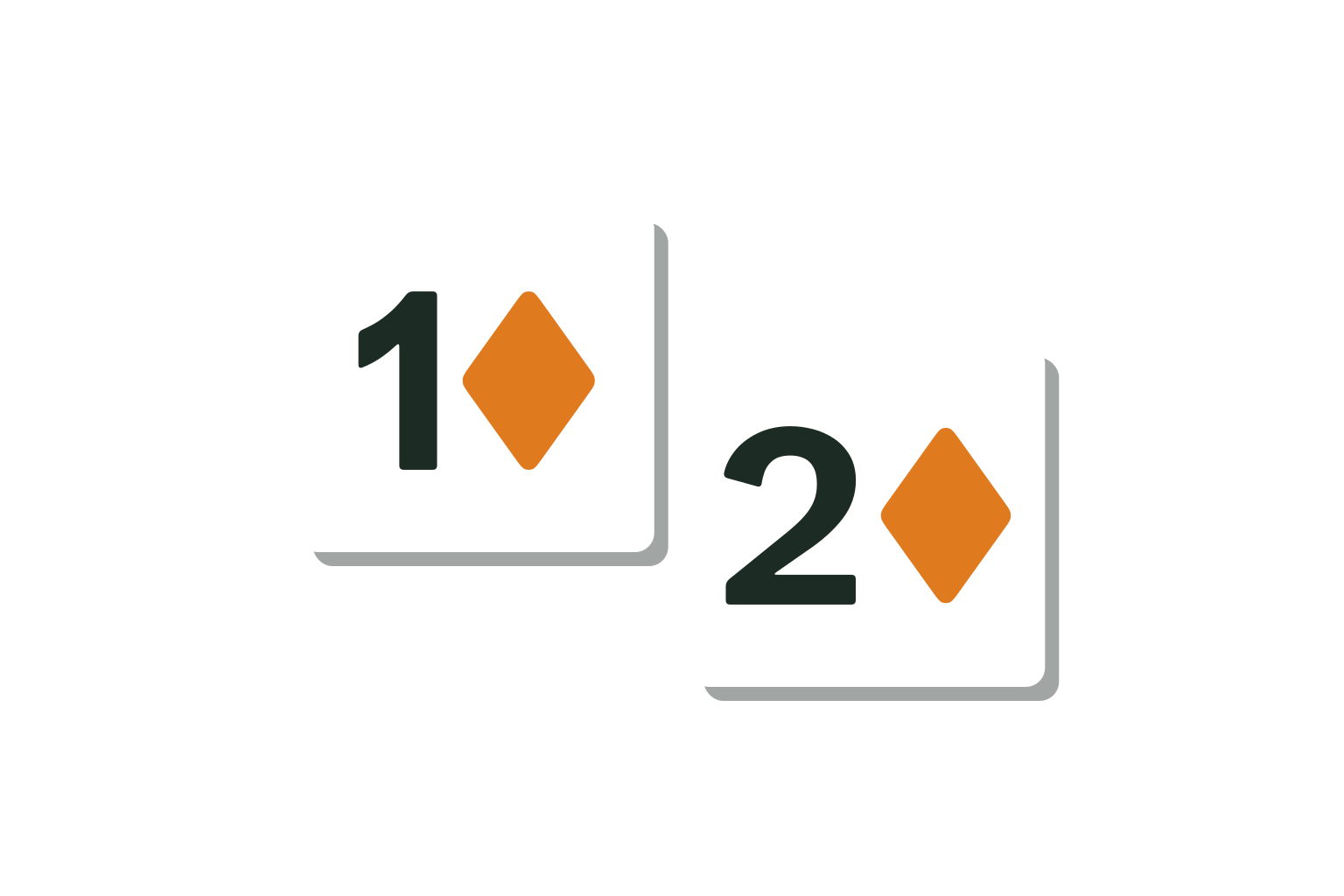
The Michaels cue bid in bridge lets you show a two-suited hand in a single call by bidding the suit the opponent has just opened. Partner hears about both suits at once, so the partnership can see its best fit early and judge how high to compete, even when the opponents bid on.
How the Michaels cue bid works
A direct cue bid of the opponent's opening suit has no natural use, so it becomes the two-suit signal. The convention, often written Michaels cuebid, is very widely played. Each opening points to a different pair of suits:
| Opening | Cue bid | Shows |
|---|---|---|
| 1♣ | 2♣ | Five or more hearts and five or more spades |
| 1♦ | 2♦ | Five or more hearts and five or more spades |
| 1♥ | 2♥ | Five or more spades and five or more in a minor |
| 1♠ | 2♠ | Five or more hearts and five or more in a minor |
Over a minor the two suits are known. Over a major only one of them is, so advancer can ask for the minor with 2NT when it matters. A weak advancer who just wants to play in partner's minor bids 3♣ instead, and partner passes or corrects to 3♦.
Requirements: shape and strength
The shape requirement is firm. You need five-five or longer, and a five-four hand should overcall in the five-card suit or make a takeout double. Strength is more flexible. Many partnerships play Michaels as either weak or strong, but not in between. Others use it at any strength, so agree on this with partner.
- A weak hand has roughly 6 to 11 points, with the honors in the two long suits. The aim is to compete or find a sacrifice. Non-vulnerable you can be at the low end, but vulnerable you need good suits.
- A strong hand has roughly 16 points or more. Bid Michaels first, then bid again over partner's simple preference to show the extra strength.
- With about 12 to 15 points in between, many players prefer to overcall the higher suit and bid the other one later, since those hands can afford to wait.
The cue bid applies in the direct seat. In the balancing seat many pairs play it the same way, while some use it for other two-suiters, so talk this over with partner.
Advancer's responses
Advancer's bids are mostly obedient, picking a suit at the right level. Over a minor-suit cue bid, the choices look like this:
- 1.Simple preference shows no extras. If your lengths are equal, choose the cheaper suit, or the higher one when you would rather play there.
- 2.Jumps are preemptive, not invitational. Holding four-card support and a weak hand, raise to the three level to take space from the opponents.
- 3.Game bids are to play. A fit with shape or a good hand can bid game directly.
- 4.The cue bid of opener's suit shows strength. It asks the Michaels bidder to describe further, for example whether the hand is weak or strong. Over a major-suit Michaels, 2NT is also forcing and asks for the minor.
Example deal
Deal two-suited hands like North's in the simulator to see how often a 5-5 hand opposite four-card support produces a game.
Common mistakes and variations
- Using Michaels with five-four. Partner will play you for five cards in each suit and may sacrifice on that basis.
- Bidding it with an intermediate hand. A 13-count five-five is better shown by overcalling and bidding again, unless your partnership plays Michaels at any strength.
- Advancer passing the cue bid. When the next player passes, the cue bid is artificial and must be answered, even with nothing.
- Treating advancer's jump as invitational. A jump by advancer is preemptive. To invite, cue bid opener's suit.
Related two-suited bids
Michaels pairs naturally with the unusual 2NT, and together they cover most five-five two-suiters over a one-level opening. Over a weak two in a major, a different tool called leaping Michaels uses jumps to 4♣ and 4♦ to show a strong minor-major two-suiter. Against a 1NT opening, Michaels does not apply. Use a two-suited defense such as Cappelletti instead. Some players over a 1♣ opening that may be short keep 2♣ natural, but most still play it as Michaels. When the opponents use Michaels against you, the opening side gains two cue bids, the agreement often called unusual over unusual.
The bidding tree
The tree below covers all four Michaels cue bids, with advancer's preferences, preemptive jumps, the strong cue bid and the 2NT ask for the minor.
Loading the convention from the library.
Common questions
Short answers to what readers ask most.
- What does a Michaels cue bid show?
- At least five-five in two suits. After a minor-suit opening the two suits are hearts and spades, and after a major-suit opening they are the unbid major plus a minor that is not yet named.
- What is an example of a Michaels cue bid?
- West opens 1♦ and North bids 2♦ holding KQ974 of spades, AJ863 of hearts, a singleton diamond and two small clubs. That is 10 points and five-five in the majors, a typical weak Michaels. South holds four hearts with the ♠A and jumps straight to 4♥. The example deal above shows both hands.
- How many points do you need for Michaels?
- Two ranges are standard. The weak one runs from about 6 to 11 points and the strong one starts around 16, while hands in between usually overcall and bid again.
- How does partner find out the minor after a Michaels cue bid over a major?
- Advancer bids 2NT, which asks the Michaels bidder to bid 3♣ or 3♦. It shows interest in the minor, usually invitational values or better.
- Is a jump by advancer after Michaels invitational?
- No, it is preemptive. To show a good hand, advancer cue bids opener's suit.
- What is the difference between Michaels and the unusual 2NT?
- Michaels is a cue bid of the opener's suit and shows both majors, or the other major and a minor. The unusual 2NT is a jump to 2NT and shows the two lowest unbid suits, usually both minors.
Practice: the Michaels cue bid
Eight quick questions on what you just read. For a longer session, bid a hundred hands or take the hundred-question quiz.