Cue Bids in Bridge
A cue bid is a bid of a suit the bidder does not want to play in. In competition it is a bid of the opponents' suit, used to show a strong hand or a strong raise, and in slam auctions it is a control cue bid, showing an ace, a king or shortness in the suit named.
Updated 14 October 2026
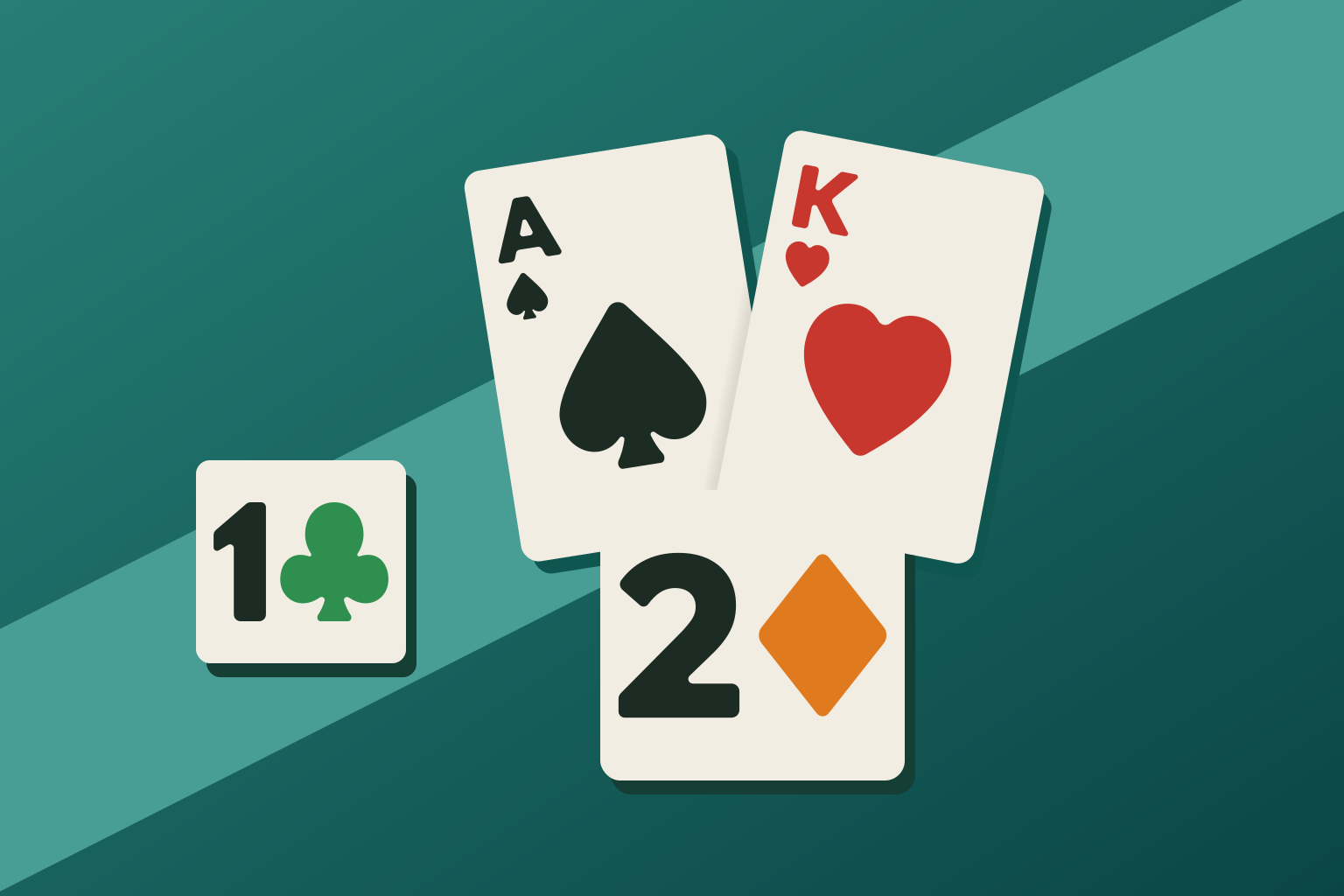
Your left-hand opponent opens 1♥, partner overcalls 1♠ and the next player passes. You hold three spades and 11 points. A raise to 2♠ would undersell the hand, a jump to 3♠ would be read as preemptive, and you have no wish to play in hearts. The bid that fits is 2♥, the suit the opponents opened.
That bid is a cue bid. Players use the name for two related families of bids, the cue bid of the opponents' suit in competition and the control cue bid in slam auctions. This guide covers both, with the hands and auctions that go with each.
What is a cue bid in bridge?
A cue bid is a bid of a suit you do not intend to play in, given an agreed artificial meaning instead. Partner is never meant to pass it as natural.
In competitive auctions the suit is the one the opponents have bid. Since you are unlikely to want their suit as trumps, the bid is free to carry a message, most often "I have a good hand" or "I have a good raise for you". In slam auctions the suit is a side suit after your side has agreed trumps, and the bid shows a control there, an ace or a void, and in most modern partnerships a king or a singleton as well.
| Auction | Name | Usual meaning |
|---|---|---|
| (1♥) 1♠ (Pass) 2♥ | Unassuming cue bid | Three or more spades, a limit raise or better |
| 1♥ (1♠) 2♠ | Cue raise by responder | Three or more hearts, a limit raise or better |
| (1♥) X (Pass) 2♥ | Cue bid after a takeout double | About 12 or more points, forcing until a suit is agreed |
| (1♥) 2♥ | Direct cue bid | Michaels, a two-suited hand |
| 1♦ (1♠) 2♣ (Pass) 3♣ (Pass) 3♠ | Western cue bid | Game values, asks partner for a spade stopper |
| 1♠ 3♠ 4♣ | Control cue bid | Slam interest and a club control |
The cue bid after partner overcalls
When partner overcalls, a cue bid of the opener's suit shows support for partner's suit and at least the values of a limit raise, roughly 10 points or more. It is usually called the unassuming cue bid.
After (1♥) 1♠ (Pass), the usual structure is a three-step ladder. A raise to 2♠ shows three or more spades and about 6 to 9 points. A jump to 3♠ is preemptive, typically four spades and a weak hand, meant to shut out the opener's side. The cue bid of 2♥ takes every hand with three or more spades and 10 or more points, whether it is invitational or worth a game force. Most partnerships play it this way, because the cue bid frees the jump raise to be preemptive.
Overcaller's answer is simple. A minimum overcall rebids the suit at the cheapest level, as North does here, and advancer passes that with a bare limit raise. A sound overcall with extras bids game, or makes a game try in a new suit. If advancer has game values, advancer bids game over the minimum rebid.
The same idea works for the opening side. After 1♥ (1♠), responder's 2♠ shows three or more hearts and a limit raise or better, which frees the direct raise to 2♥ for weak hands. Many pairs then play the jump to 3♥ as preemptive too, although some keep it as a natural limit raise, so agree which.
The cue bid after partner's takeout double
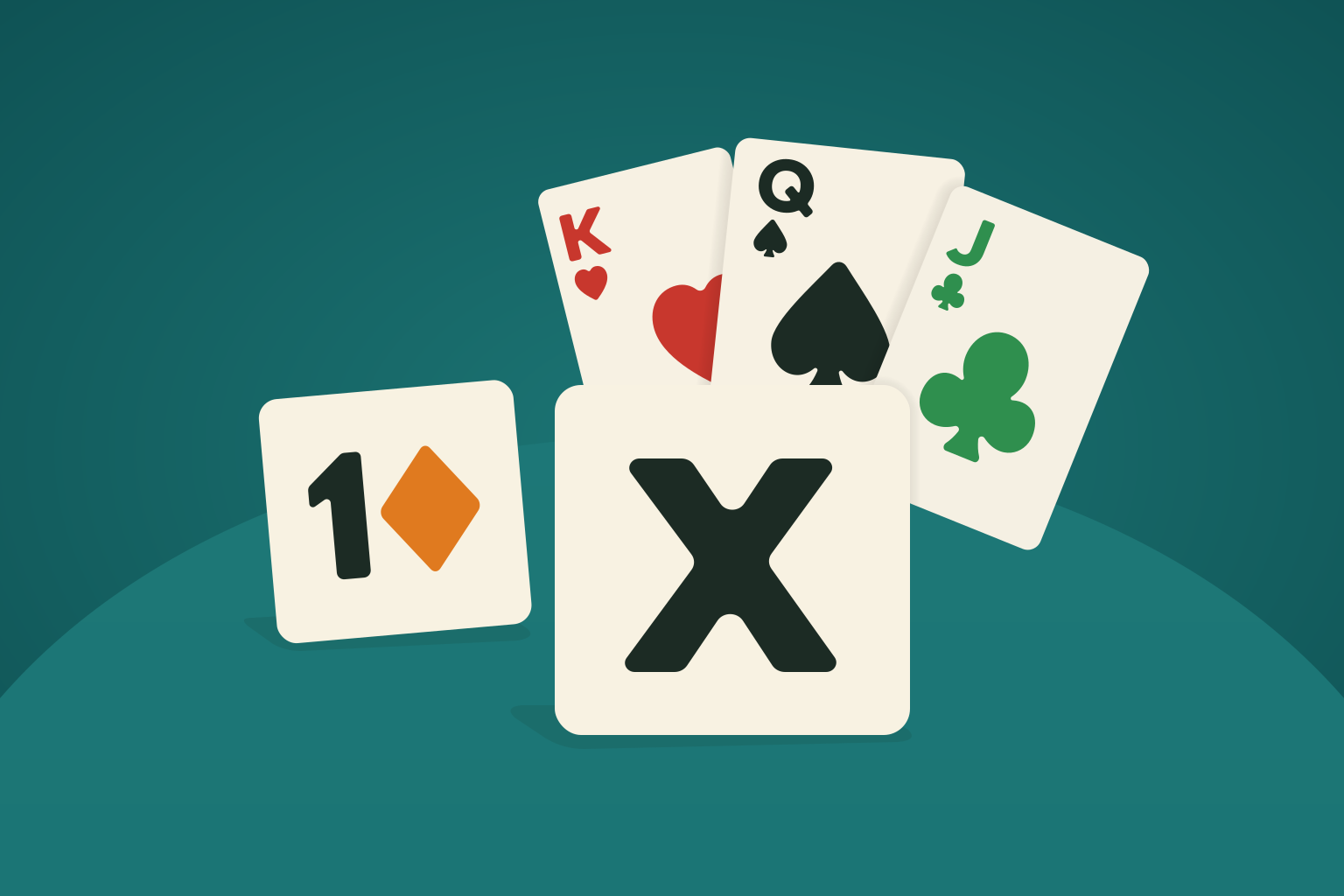
When partner makes a takeout double, a cue bid of the opener's suit is advancer's one strong, forcing bid. It shows a good hand, usually 12 or more points, and says that advancer is not yet sure where the hand belongs. The partnership keeps bidding until a suit is agreed.
The cue bid fits two kinds of hands. One has two four-card suits, often both majors, and wants the doubler to pick. The other has a good five-card suit and game values, too strong for a jump that partner could pass. Some partnerships start the cue bid at 10 or 11 points when the hand has no clear suit to jump in, which is a reasonable agreement as long as both players know it.
The doubler answers by bidding naturally, cheapest four-card major first. A minimum doubler bids a suit at the lowest level, and a doubler with extras can jump. If the doubler has a stopper in the opener's suit and no major to show, 2NT is the natural reply.
What is a Western cue bid?
A Western cue bid is a cue bid of the opponents' suit at the three level, by a side that has game values and a fit, which asks partner to bid 3NT holding a stopper in that suit. It usually comes after the partnership has found a minor-suit fit and wants to know whether nine tricks in notrump are easier than eleven in the minor.
Eleven tricks are there on top, six clubs, the ♥A and ♥K, and three diamonds once the ♦K is unblocked, so 3NT is the easier game. Without the cue bid South would have to guess. If North held three small spades, a blind 3NT would let the defense run the spade suit at once. There is a second gain too. North bid 3NT first, so North is declarer, and East's spade lead comes round to the K104 instead of through it.
Without a stopper, partner bids naturally, usually by returning to the minor. Some partnerships also let the cue bidder's partner bid 3NT with a half stopper such as Qx or Jxx, on the view that the cue bidder may hold the other half. The usual agreement is that a new suit in the same position, other than the opponents' suit, shows a stopper there and leaves partner to judge.
Michaels and the direct cue bid
The immediate cue bid of an opening bid, as in (1♥) 2♥, is the Michaels cue bid for most pairs today, showing five-five in two suits. Over a minor it shows both majors, and over a major it shows the other major and a minor. Its companion is the unusual 2NT, the jump to 2NT that shows the two lowest unbid suits. Both guides cover the requirements and the replies in full.
Before Michaels took over, the direct cue bid was a strong cue bid, a game-forcing hand similar to a strong 2♣ opening. A few traditional partnerships still play it that way, but almost everyone now starts such hands with a takeout double and bids again. Over a preempt the direct cue bid needs its own agreement. Many pairs use (2♠) 3♠ to ask for a spade stopper with a long running minor.
What is a control cue bid?
A control cue bid is a bid of a new suit, after trumps are agreed and the side has shown slam interest, that shows a control in the suit named. A first-round control is an ace or a void. A second-round control is a king or a singleton.
There are two styles. In the classic style, the first cue bid in a suit shows first-round control, and kings and singletons come later. In the Italian style, which most modern partnerships use, any control counts, first or second round, and the partnership bids them as they come. The Italian style finds the missing control faster, which is usually what decides whether a slam makes.
The rules are few. Cue bids go up the line, cheapest first. A player who skips a suit denies a control in it. A return to the trump suit is a sign-off. Below game, a player who holds a control usually shows it, even with a minimum, because the side can still stop in four of the trump suit. Once every side suit is known to be controlled, the captain checks key cards with Blackwood or Roman Key Card Blackwood.
North's worry is the two small hearts. Blackwood alone cannot settle it, because a reply showing one key card would not say whether it is the ♥A or the ♠K. So North cue bids 4♣ to show the club ace and invite cooperation. South's hand is a minimum limit raise, but 4♥ costs nothing, since it is still below 4♠, and it carries the one fact North wants. By skipping 4♦, South also denies a diamond control, which does not matter to North, who holds the singleton ace. With every suit covered, North asks with 4NT. The 5♥ reply shows two key cards without the trump queen, the ♠K and the ♥A, in both the 1430 and the 3014 schedules. North bids 6♠ and stops there, because the second heart is still a loser unless South also holds the ♥K.
Shortness agreed in an earlier splinter bid works the same way. Once the splinter has shown it, neither player shows that suit's control again.
Example auctions
Responder's cue raise
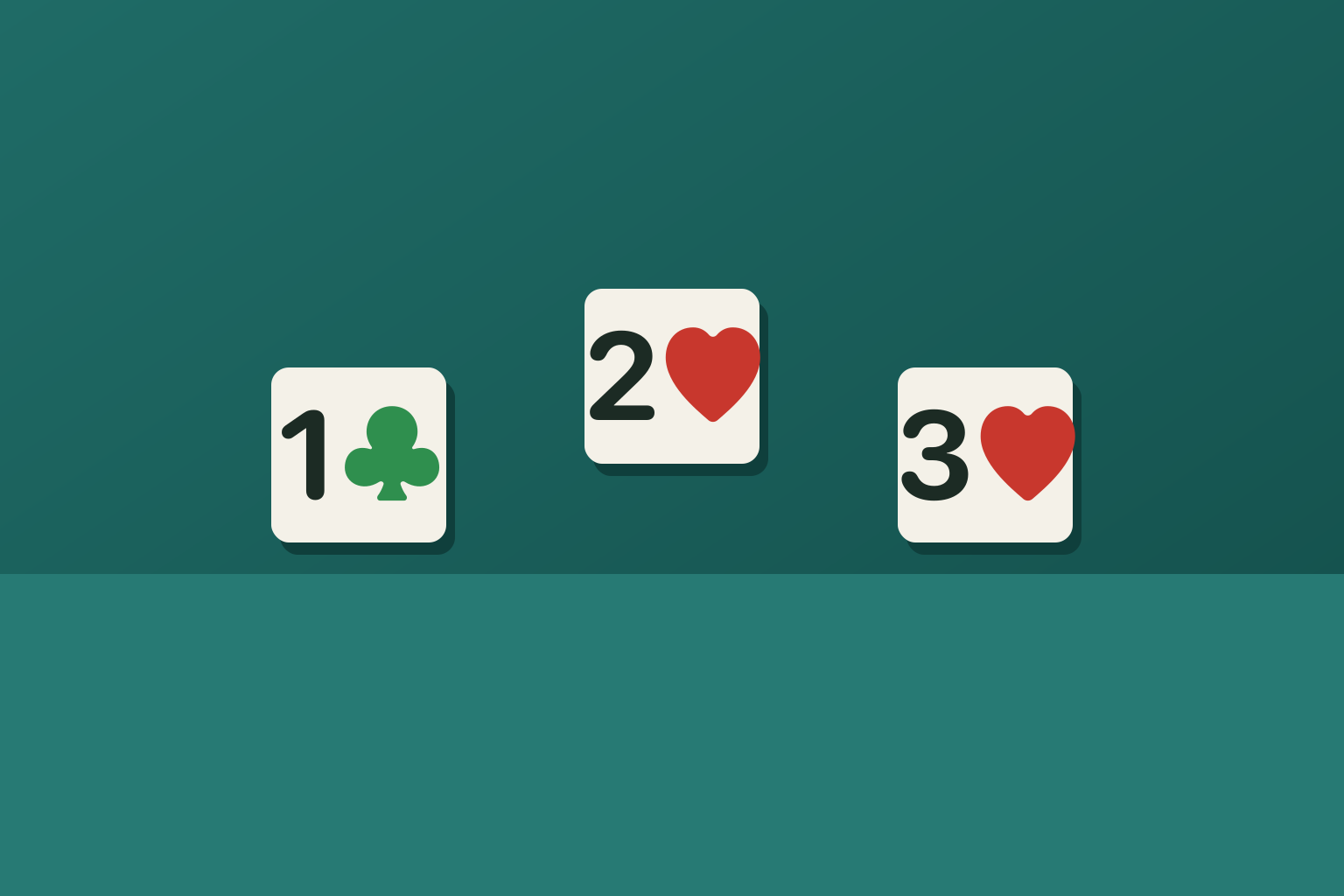
A direct 2♥ from South would have shown the same heart fit with 6 to 9 points, and North would have passed. The cue bid promises 10 or more, and opposite that North's six-card suit and two aces are enough for game.
A slam try that stops in game
Here the cue bid keeps the side out of a bad slam. Between them the hands are missing only one key card, the ♦A, so a Blackwood bidder would find one key card missing and bid 6♥. The defense would then take the ♦A and the ♦K at once. South's return to 4♥ denied a diamond control, and North, with two small diamonds, stops.
Common mistakes with cue bids
- Cue bidding with a weak raise. The unassuming cue bid promises at least a limit raise. A hand with 7 points and three trumps raises to the two level.
- Passing a cue bid. Every cue bid in this guide is forcing for at least one round. After a takeout double, the cue bid is forcing until a suit is agreed.
- Taking a control cue bid as natural. Once trumps are agreed, a new suit below game is a control, and the reply is another cue bid or a return to the trump suit. Raising it as a second trump suit loses the thread.
- Cue bidding a suit the opponents have not bid. Bidding a new suit before trumps are agreed is natural, and partner will read it that way. The competitive cue bid needs the opponents' suit, and the control cue bid needs an agreed trump suit.
- Skipping a suit by accident. A player who bids 4♥ after 4♣ has denied a diamond control. If you hold one, bid 4♦ first.
Agreements vary more here than in most conventions, so put the main ones on your convention card. Which cue bids your partnership plays is part of its system, and the bridge conventions guide shows where they sit among the rest. When the opponents overcall your opening and responder has no fit to show with a cue raise, the usual tool is the negative double.
Common questions
Short answers to what readers ask most.
- What is a cue bid in bridge?
- A cue bid is a bid of a suit you do not want to play in, used to carry an agreed message. In competition it is usually a bid of the opponents' suit showing strength or a good raise. In slam auctions it shows a control in the suit named.
- What does it mean to cue bid the opponents' suit?
- It shows a good hand instead of a wish to play there. After partner overcalls it promises a limit raise or better in partner's suit, and after partner's takeout double it shows about 12 or more points and asks partner to describe further.
- What is a control cue bid?
- It is a bid of a side suit after trumps are agreed that shows a control there, an ace or a void, and in the Italian style also a king or a singleton. Controls are bid cheapest first, and skipping a suit denies a control in it.
- What is a Western cue bid?
- It is a cue bid of the opponents' suit at the three level that asks partner to bid 3NT with a stopper in that suit. The side has game values and usually a minor-suit fit.
- Is a cue bid forcing?
- Yes, in every standard use. The unassuming cue bid and the Western cue bid are forcing for one round, the cue bid after a takeout double is forcing until a suit is agreed, and a control cue bid must be answered with another cue bid or a return to trumps.
- What is the difference between a cue bid and Michaels?
- Michaels is one particular cue bid, the direct cue bid of the opener's suit showing a five-five two-suiter. Other cue bids show a strong raise, a strong hand, a request for a stopper or a control for slam.
Practice: cue bids
Eight quick questions on what you just read. For a longer session, bid a hundred hands or take the hundred-question quiz.