Conventions
The Negative Double
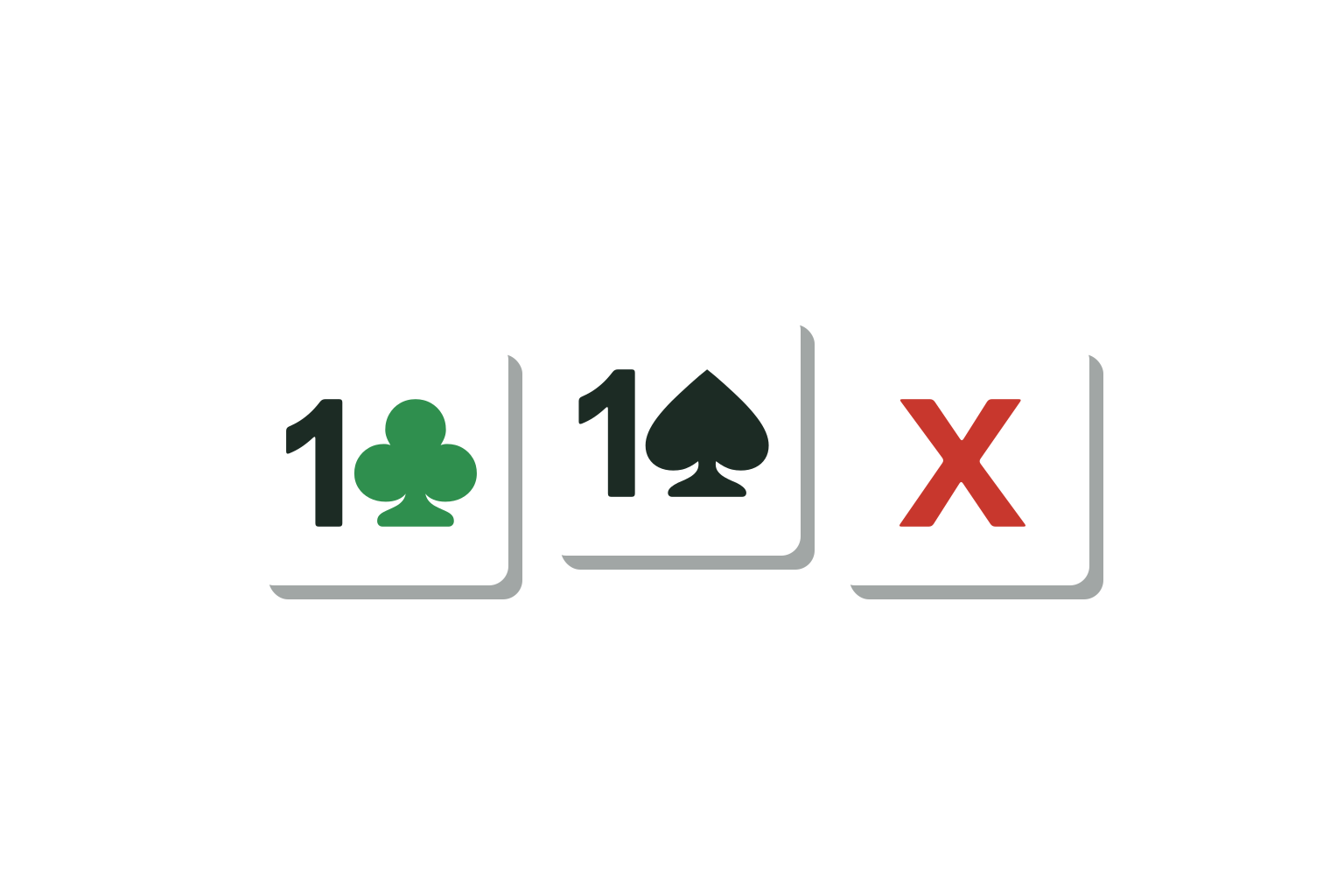
In bridge, a negative double is the double responder makes right after an opponent has overcalled partner's opening bid. It asks opener to keep bidding instead of defending, and it shows values in the suits nobody has bid yet. Responder uses it when the overcall has taken away the reply they meant to make, or when no natural bid fits the hand.
How the negative double works
After partner opens one of a suit and the next player overcalls in a suit, responder's double is not for penalty. It tells opener that responder has values and length in the suits nobody has bid, especially an unbid major. Opener then picks a contract, much as the partner of a takeout double does.
The double describes responder's hand without choosing a contract, and responder may have more than the minimum and bid again later. Opener answers it as if responder had bid the suit the double shows. A minimum bids that suit at the cheapest level, and a hand with extra values jumps.
What the double promises
Shape
The double focuses on the unbid majors. The exact promise depends on the auction:
| Auction | Double shows | Natural alternative |
|---|---|---|
| 1♣ - (1♦) - Dbl | Both majors, at least 4-4 | 1♥ or 1♠ with one major |
| 1♣ or 1♦ - (1♥) - Dbl | Exactly four spades | 1♠ with five or more |
| 1♣ or 1♦ - (1♠) - Dbl | Four or more hearts | 2♥ with five hearts and 10+ |
| 1♥ - (1♠) - Dbl | Both minors, or one minor and values | 2♣ or 2♦ with a good suit and 10+ |
| 1♠ - (2♥) - Dbl | The minors, or values with no good bid | A free new suit at the three level |
After a minor opening and a 1♥ overcall, most players treat the double differently. It shows exactly four spades, and a bid of 1♠ shows five or more. Opener can then raise 1♠ with three-card support, but needs four to raise the double.
Strength
The values needed rise with the level. At the one level, about 6 points is enough. At the two level responder needs about 8 points, and at the three level about 10. Many teachers count the level opener will have to bid at instead, so a double of 1♠ - (2♥), which may push opener to the three level, asks for about 10. There is no upper limit. A strong responder doubles first and bids again, which is often the easiest way to show a good hand with an unbid major.
Agree how high negative doubles apply. Through 2♠ is the classic SAYC limit, and many partnerships play them through 3♠ or higher. Above that level, doubles are usually for penalty or show general values.
Opener's rebids and the reopening double
Opener's rebid follows the same logic as an uncontested rebid. Bid the expected major at the cheapest level with a minimum, jump with about 16 to 18 points, bid notrump with a stopper in the overcaller's suit, and rebid your own suit with extra length. A cue bid of the overcaller's suit is the strong forcing rebid.
Playing negative doubles, responder can no longer double the overcall for penalty. Responder with length and strength in the overcaller's suit passes instead, a trap pass, and hopes opener can reopen. For this reason opener should usually reopen with a double when the auction comes back at a low level and opener is short in the overcaller's suit. Responder then passes for penalty with the trap hand, or bids naturally with a weak one.
Example deals
Common mistakes and variations
- Doubling without the unbid major. After 1♦ - (1♠), a double promises four hearts. Holding a minor-suit hand and no hearts, bid 1NT, raise diamonds or pass.
- Bidding a four-card major freely. After 1♦ - (1♠), a direct 2♥ shows five hearts and about 10 points. Holding only four hearts, double.
- Passing out a low-level overcall when short in it. Opener with shortness should reopen, because responder may have a trap pass.
- Raising a negative double on three cards. After 1♣ - (1♥) - Dbl, responder has exactly four spades. Opener can raise with four spades and should look for another bid with three.
Some partnerships add negative free bids, in which a new suit by responder after an overcall is not forcing and shows a good suit with modest values, while stronger hands double first. Alvin Roth and Tobias Stone introduced the negative double in 1957, and for a while it was called Sputnik, after the satellite launched that year. Today it is standard in Standard American, two over one and Acol alike. The partner of a takeout doubler has a similar tool when the opponents raise, the responsive double.
The bidding tree
The tree below covers the negative double by level, opener's rebids after 1♦ - (1♠) - Dbl, the trap pass with opener's reopening double, and the four-spade and both-majors cases after a club opening.
Loading the convention from the library.
Common questions
Short answers to what readers ask most.
- What is a negative double in bridge?
- A negative double is responder's double after partner opens one of a suit and the next player overcalls. Instead of punishing the overcall, it asks opener to choose a suit, and it promises length in the other suits, above all an unbid major, plus some strength.
- How many points do you need for a negative double?
- About 6 points at the one level, 8 at the two level and 10 at the three level. There is no maximum, since responder can double and bid again.
- Does a negative double promise four cards in the unbid major?
- Yes, in most auctions. After 1♣ - (1♥), the double shows exactly four spades, because a bid of 1♠ would show five or more.
- How do you make a penalty double when playing negative doubles?
- Pass and wait. Opener is expected to reopen with a double when short in the overcalled suit, and responder then passes to convert it to penalty.
- How high do negative doubles apply?
- It is a partnership agreement. SAYC plays them through 2♠, and many partnerships play them through 3♠ or 4♥.
Practice: negative doubles
Eight quick questions on what you just read. For a longer session, bid a hundred hands or take the hundred-question quiz.