Bidding systems
Two Over One Game Force
2 over 1 bridge bidding is a system built around responder's new-suit bids at the two level, made without a jump, after an opening of one of a suit. Such a response shows an opening hand and commits the partnership to game, so the rest of the auction can go into finding the right game or slam instead of deciding whether to stop.
How 2 over 1 bridge bidding works
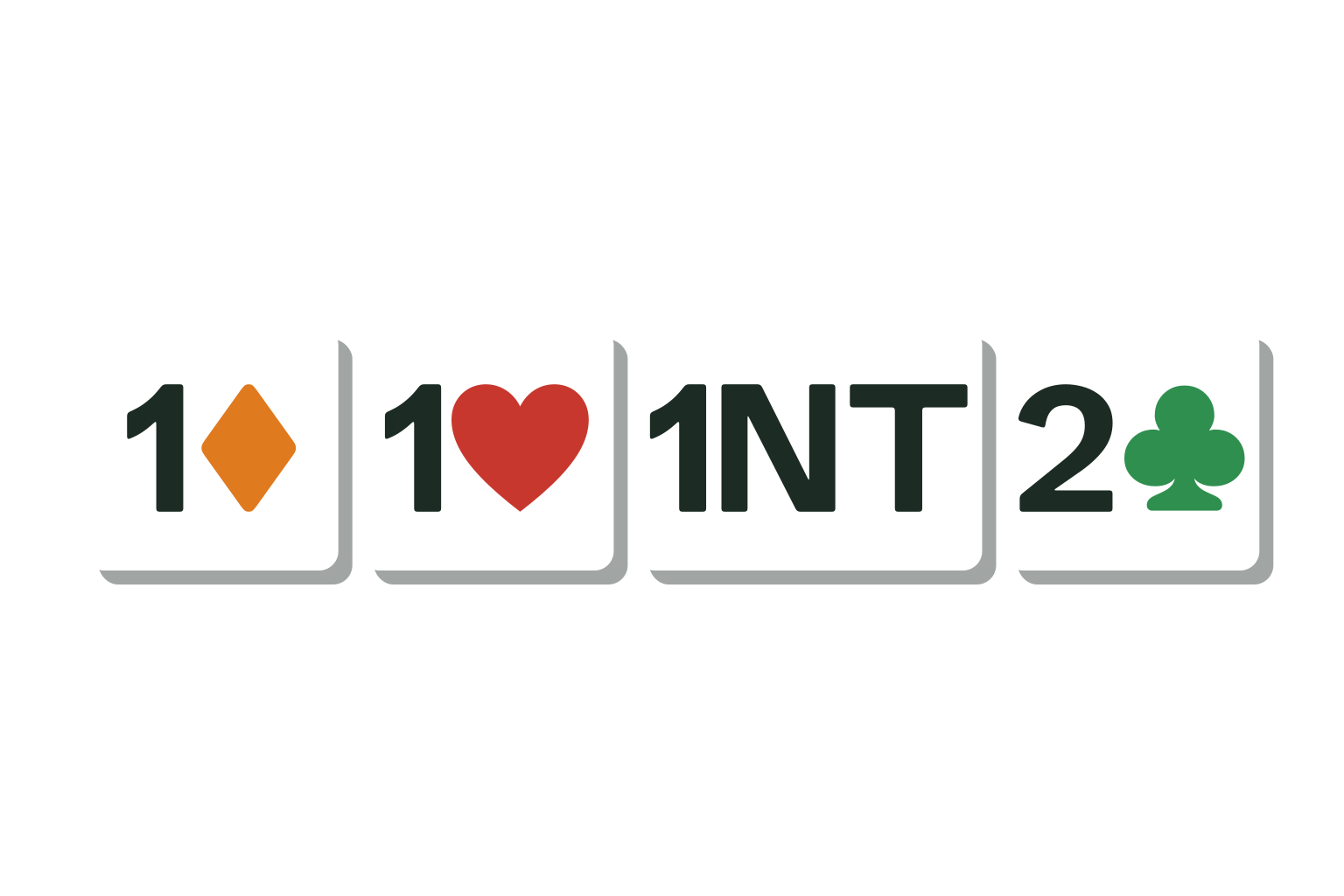
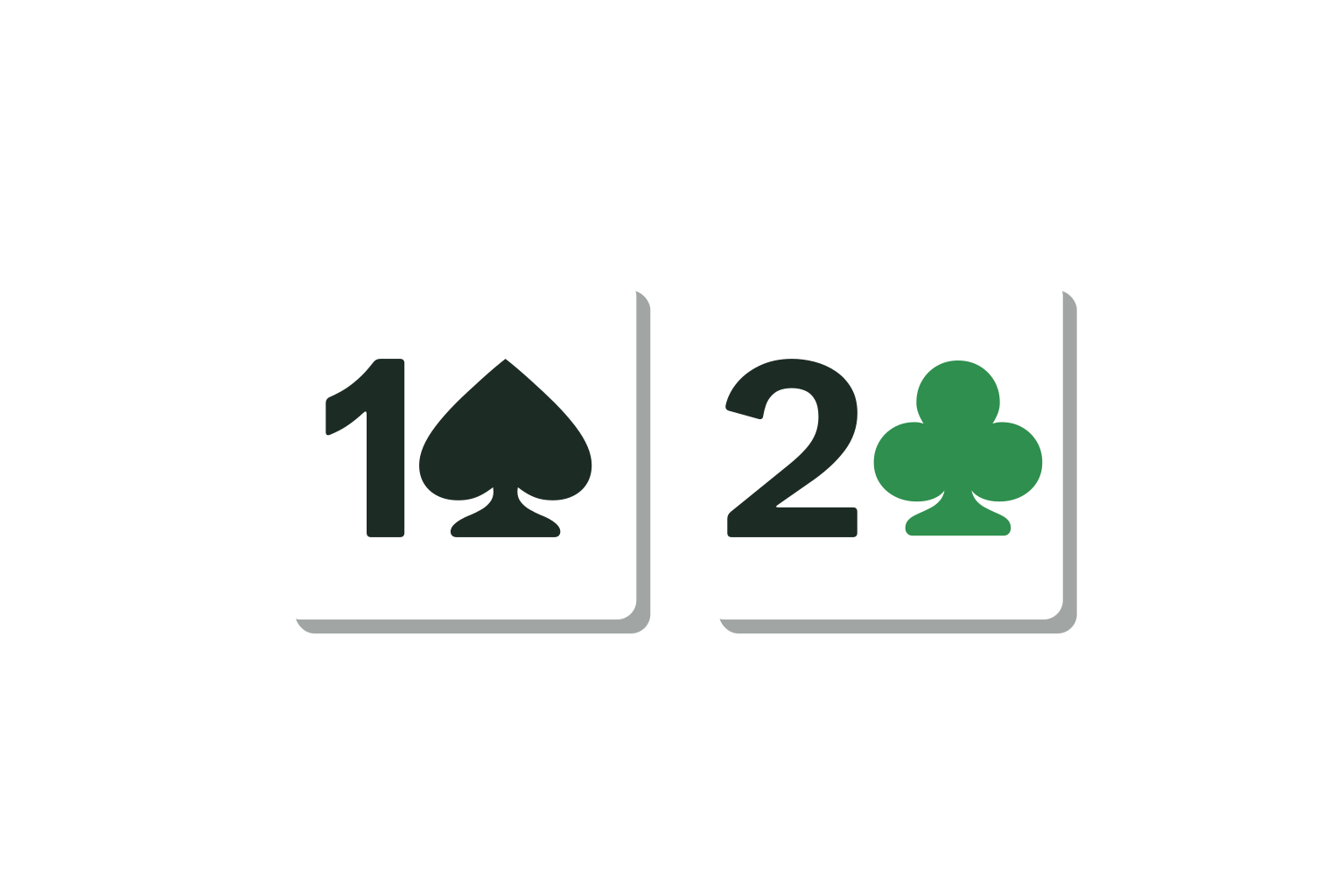
Which responses qualify depends on the suit opened. Over 1♠ that means 2♣, 2♦ or 2♥. Over 1♥ it means 2♣ or 2♦, and over 1♦ only 2♣. Each one promises about 12 or more points. Over a major, the 1NT response takes most hands below that strength that have no fit and no one-level bid.
What is and is not a 2/1
The game force applies only to a non-jump two-level new suit, by an unpassed hand, in an uncontested auction. Everything else keeps its normal meaning.
| Auction | Game forcing? | Why |
|---|---|---|
| 1♠ - 2♣ | Yes | New suit at the two level |
| 1♦ - 2♣ | Yes | New suit at the two level |
| 1♣ - 1♦ | No | A one-level response, forcing one round |
| 1♣ - 2♦ | No | A jump, played as a weak jump shift in most 2/1 cards |
| 1♥ - 2♠ | No | A jump, played as a weak jump shift |
| 1♠ - 2♣ by a passed hand | No | A passed hand cannot force to game; 2♣ is often Drury |
| 1♠ - (2♦) - 3♣ | No | In competition a new suit is forcing one round only |
| 1♠ - (X) - 2♣ | No | After a double, by agreement, usually natural and not forcing |
The forcing 1NT
Because a two-level new suit now shows game values, every weaker hand that cannot bid at the one level and has no fit has to bid 1NT. Over a major, 1NT is therefore forcing for one round and shows about 6 to 12 points. It includes invitational hands with a long suit, invitational balanced hands and the three-card limit raise. Opener must bid again. Some pairs play it as semi-forcing instead, and then opener may pass with a balanced minimum.
| Rebid | Meaning |
|---|---|
| 2♣ | Default bid, often a three-card club suit when there is no better bid |
| 2♦ | Natural, usually four or more cards, but three with a 5-3-3-2 and two clubs |
| 2♥ | Natural, four or more cards |
| 2♠ | Six or more spades, minimum |
| 2NT | 18-19 balanced |
| 3♣ / 3♦ / 3♥ | Jump shift: 17+, forcing one round |
| 3♠ | Six or more spades, about 15-17, invitational |
Responder's second bid then clarifies. A pass or a new suit at the two level is weak. A simple preference to two of opener's major shows a doubleton and 6 to 9. A jump to three of the major shows the three-card limit raise. 2NT is invitational with 11 or 12. A passed hand's 1NT is only semi-forcing, and opener may pass it with a balanced minimum.
Rebids after a 2/1 response
Once the game force is set, nobody needs to jump to show values. The two principles that follow are fast arrival (going straight to game shows a minimum with no slam interest) and slow shows extras (bidding at the lowest level keeps room for slam).
- Opener's 2NT shows a balanced hand of either 12 to 14 or 18 to 19. Responder places the contract or explores slam.
- Rebidding the major is the default with six cards and promises no extra strength.
- A new suit is natural, four or more cards.
- Raising responder's suit shows support (three cards for a major, four for a minor) and is unlimited.
- A jump rebid of the major shows a solid or nearly solid suit and sets trumps.
- Responder's later bids follow the same logic. A delayed raise of opener's major shows support, and the fourth suit asks opener to describe further. See fourth suit forcing.
After a one-level response the auction is not game forcing, and 2/1 players use new minor forcing or XYZ to find out about opener's hand after a 1NT rebid.
Two over one examples
Two over one versus SAYC
| Situation | SAYC | 2/1 game force |
|---|---|---|
| Two-level new suit | 10+, forcing one round | 12+, forcing to game |
| 1♥ / 1♠ - 1NT | 6-10, not forcing | 6-12, forcing one round |
| Three-card limit raise | Jump raise to 3 | 1NT, then jump to 3 |
| Raises of a minor | Single raise 6-10 | Usually inverted: single raise 10+ |
| Jump shifts | Strong | Usually weak |
| 1NT opening, Stayman, transfers | Same | Same |
Most of the rest is common ground, including five-card majors, a 15 to 17 1NT, strong 2♣, weak twos and Jacoby 2NT. 2/1 players also add some gadgets of their own, but the main change is what the two-level response means.
The full 2/1 system
The tree below shows the complete 2/1 game force system, opening by opening, with the forcing 1NT, Bergen raises, splinters, Drury, XYZ and a full notrump structure.
Loading the convention from the library.
Common questions
Short answers to what readers ask most.
- What is the 2 over 1 bridge system?
- It is a bidding system built around one rule. When responder answers a one-of-a-suit opening with a new suit at the two level, without jumping, the partnership must reach game. Hands without game values use a forcing 1NT instead.
- Is 2 over 1 a bidding system or a convention?
- Players use the name for both. The core is one agreement about the two-level response and the forcing 1NT that goes with it, but in practice 2/1 means a full system built on five-card majors and a 15 to 17 1NT, with gadgets such as Jacoby 2NT, Bergen raises and Drury added on top.
- Is there a simplified version of 2 over 1?
- You can start with just the two core changes, the game-forcing 2/1 response and the forcing 1NT over a major, and keep the rest of SAYC as it is. Inverted minors, weak jump shifts, Bergen raises and the other gadgets can be added one at a time once those two feel natural.
- Is 1♦ - 2♣ a game force in 2/1?
- Yes, in standard 2/1 it is, as long as responder has not passed. Some partnerships exclude it, so agree it beforehand.
- Is a 2/1 response game forcing after a passed hand?
- No. A passed hand cannot have game-forcing values. Over a major, 2♣ by a passed hand is often Drury.
- What does the forcing 1NT show?
- About 6 to 12 points without a game force or a fit that can be shown directly. Opener must bid again.
- What is the main difference between 2/1 and SAYC?
- In SAYC a two-level new suit forces only one round; in 2/1 it forces to game. That change also makes the 1NT response to a major forcing.
Practice: two over one
Eight quick questions on what you just read. For a longer session, bid a hundred hands or take the hundred-question quiz.