Conventions
Jacoby 2NT
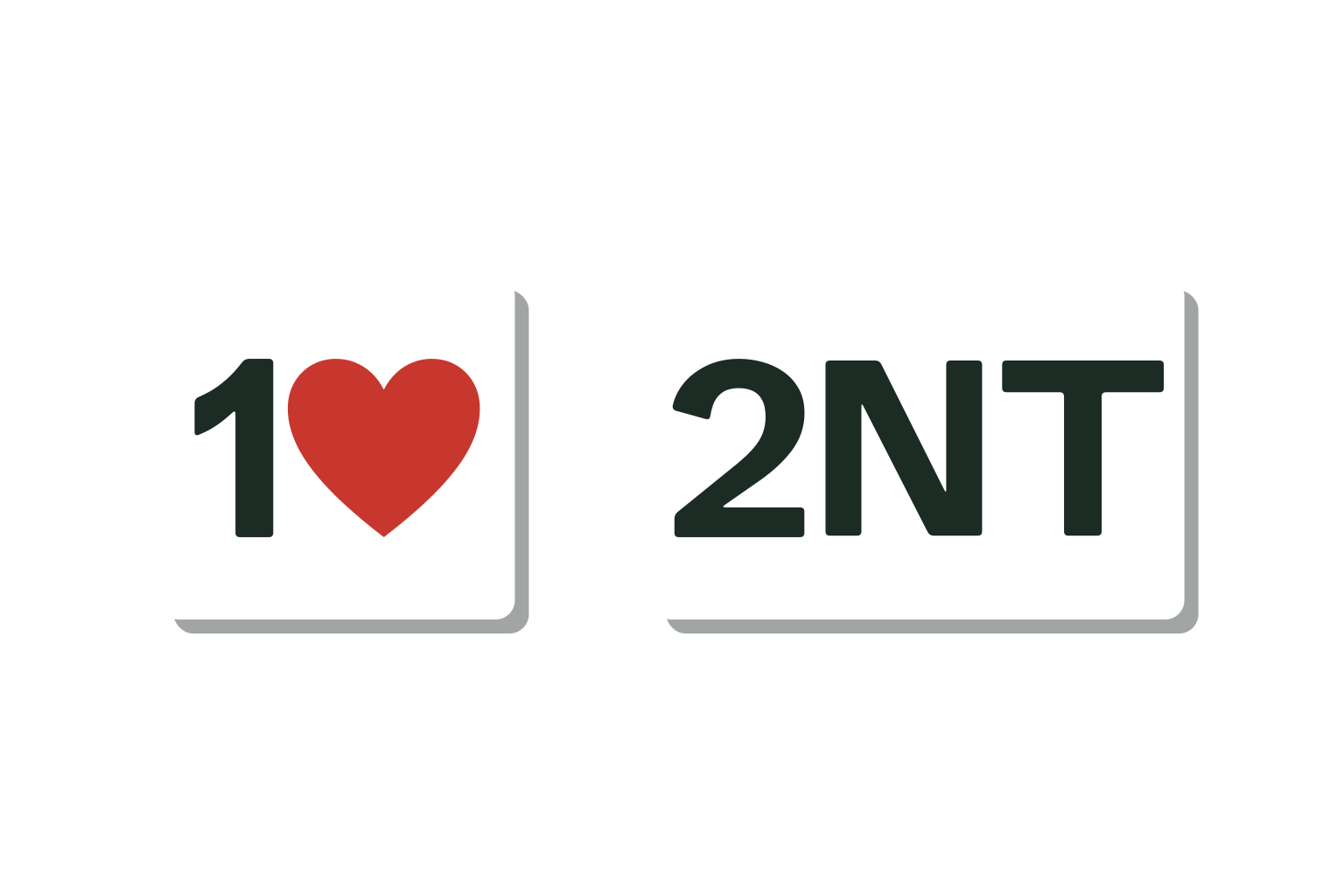
Jacoby 2NT is a 2NT response to partner's 1♥ or 1♠ opening that shows support for opener's suit and enough strength for game. It agrees trumps at a low level and asks opener to describe the hand further, which gives the partnership room to find out whether a slam is worth bidding.
How Jacoby 2NT works
Over a one-of-a-major opening, responder's 2NT is artificial. It promises four or more cards in opener's major and game-forcing values, usually 13 or more points counting shape. Opener then answers in a fixed scheme that shows either a short suit, a strong second suit, or the strength of the hand.
The scheme over 1♥ is the same except that 3♠ shows a singleton or void in spades and 3♥ shows the extra strength. A "good" five-card side suit means one headed by two of the top three honors, a suit that can supply tricks for slam.
Requirements for responder
- Four or more trumps. With only three, make a forcing new-suit response first, such as a two over one, and support later.
- Game-forcing values, meaning an opening hand or better.
- No singleton or void, as a rule. A splinter bid describes a short-suited hand more precisely, and opener can judge the fit at once. Jacoby 2NT is for balanced or semi-balanced raises, and for hands too strong to splinter.
- An unpassed hand. A passed hand cannot hold game-forcing values. After a pass, raises go through Drury.
- No interference. Most pairs play Jacoby 2NT off in competition. Over a takeout double, 2NT is usually a limit raise or better (Jordan). Over an overcall, the cue bid of their suit shows a limit raise or better.
Opener's responses and the continuations
Opener's answer falls into three families.
Shortness: three of a new suit
A singleton or void is the most useful thing opener can show, because it tells responder which honors are working. Honors opposite the shortness, other than the ace, are mostly wasted. Small cards there are ideal, because they can be ruffed. If honors are wasted, responder signs off in four of the major. If nothing is wasted and responder has slam interest, responder cue-bids.
Strength: three of the major, 3NT and four of the major
Without shortness, opener shows strength. Four of the major is the weakest answer, a minimum opening with nothing to add. 3NT shows a sound balanced opening of about 15 to 17. Three of the major shows real extras, usually 18 or more, and is the strongest answer. After it, responder can bid 3NT to ask opener to describe further, or cue-bid.
Opener's answers follow the principle of fast arrival: the faster a hand bids game, the weaker it is. The jump to game is the weakest bid, and the cheap bid of three of the major is the strongest.
A good side suit: four of a new suit
A jump to the four level in a new suit shows a good five-card side suit. Such a hand always has a singleton or void as well, and in the usual version opener shows the side suit first. Responder with a fitting honor in that suit, or shortness elsewhere, is close to slam. Holding nothing there, responder signs off.
Example: from Jacoby 2NT to slam
Now give South ♦KQ6 and ♣9743 instead. The same 13 points now face a singleton, and five of them, the ♦K and ♦Q, are wasted. After 3♦ South signs off in 4♠, because 6♠ would now need a lot of luck.
Common mistakes
- Using Jacoby 2NT with only three trumps. The convention promises four, so a three-card raise starts with a new suit.
- Using it with a singleton. Responder's shortness is what opener most wants to know about, and a splinter shows it at once.
- Showing a five-card side suit that is not good. The four-level suit bid is a slam try based on tricks. Holding a weak side suit, show shortness or strength instead.
- Jumping to game with a good hand. After 2NT, the jump to four of the major is opener's weakest bid. With extras, bid 3NT or three of the major.
- Forgetting the passed-hand rule. After a pass Jacoby is off, and 2NT is natural or a limit raise by agreement.
Variations
The convention is credited to Oswald Jacoby, and opener's scheme has many versions. The point ranges vary: many pairs play 3NT as 14 to 15 and three of the major as 16 or more. Some use opener's jump to four of a new suit to show a void instead of a good side suit. Others put strength first, so opener's cheapest answer, 3♣, shows a minimum, and a minimum hand shows its shortness later, on request. The version above is the one usually given for Standard American (SAYC). Jacoby 2NT sits alongside Bergen raises, which handle the weaker four-card raises.
The Jacoby 2NT bid tree
The tree below shows Jacoby 2NT over both majors, with every response and the first continuations.
Loading the convention from the library.
Common questions
Short answers to what readers ask most.
- What is Jacoby 2NT in bridge?
- When partner opens a major, responder's artificial 2NT agrees the suit, promises at least four-card support and forces to game. Opener then describes the hand so the partnership can judge whether to bid slam.
- What are the responses to Jacoby 2NT?
- A new suit at the three level shows a singleton or void, and a new suit at the four level shows a good five-card suit. Three of the major shows extra strength without shortness, 3NT a balanced 15 to 17, and four of the major a minimum with no slam interest.
- How many points do you need for Jacoby 2NT?
- Responder needs game-forcing values, an opening hand of about 13 or more points counting shape, plus four-card support for opener's major.
- Is Jacoby 2NT on by a passed hand?
- No. A passed hand cannot have game-forcing values. Most partnerships use Drury for passed-hand raises instead.
- Is Jacoby 2NT on after interference?
- For most partnerships it is off. Over a takeout double, 2NT usually becomes a limit raise or better. Over an overcall, a cue bid of their suit shows a limit raise or better.
- Are there different versions of the Jacoby 2NT responses?
- Yes, several. Many pairs play 3NT as 14 to 15 and three of the major as 16 or more. Some show a void, not a good side suit, with a jump to four of a new suit. Others put strength first, so opener's cheapest answer shows a minimum. The scheme in this guide, shortness first, is the one usually given for Standard American.
Practice: Jacoby 2NT
Eight quick questions on what you just read. For a longer session, bid a hundred hands or take the hundred-question quiz.