 Bidding systems
The Precision Club System
Precision is built around one artificial opening. One club says nothing about clubs and shows a good hand, so every other opening can describe a hand of limited strength. Regular partners like how much they learn about each other's hand from the first call. It also takes a longer list of agreements, and opponents bid over the strong club whenever they can.
What a strong club system is
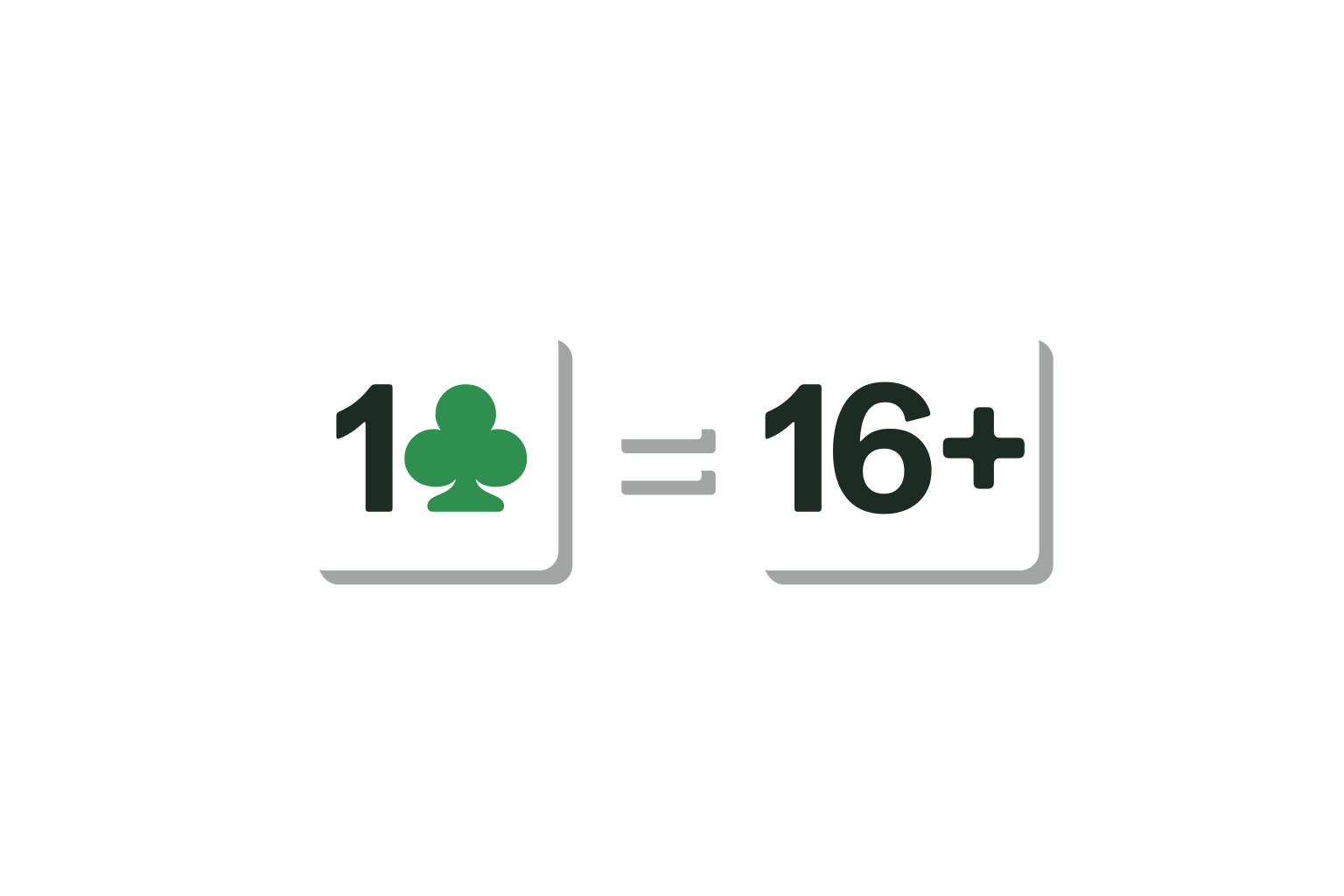
In a natural system such as SAYC or 2/1, 1♥ can be 12 points or 20, and partner learns which only on the next round. Precision splits the hands by strength first. Almost all the strong ones, 16 high-card points or more, open 1♣ whatever their shape. That leaves 1♦, 1♥, 1♠, 1NT, 2♣ and 2♦ free for hands of about 11 to 15, so responder can often judge the final level at once.
The system came from C. C. Wei, a businessman in shipping, who wrote it up with the help of Alan Truscott. Taiwan's team played it to second place in the 1969 Bermuda Bowl. Italy's Blue Team then took it up and won the 1972 World Team Olympiad, and Benito Garozzo later developed his own version, Super Precision. Jeff Meckstroth and Eric Rodwell, the American pair, play a much more detailed strong club system of their own, often called RM Precision.
| Opening | Points | Shows |
|---|---|---|
| 1♣ | 16+ | Any shape, artificial and forcing |
| 1♦ | 11-15 | No five-card major, not a 1NT, 2♣ or 2♦ hand. Two or more diamonds |
| 1♥ / 1♠ | 11-15 | Five or more cards in the suit |
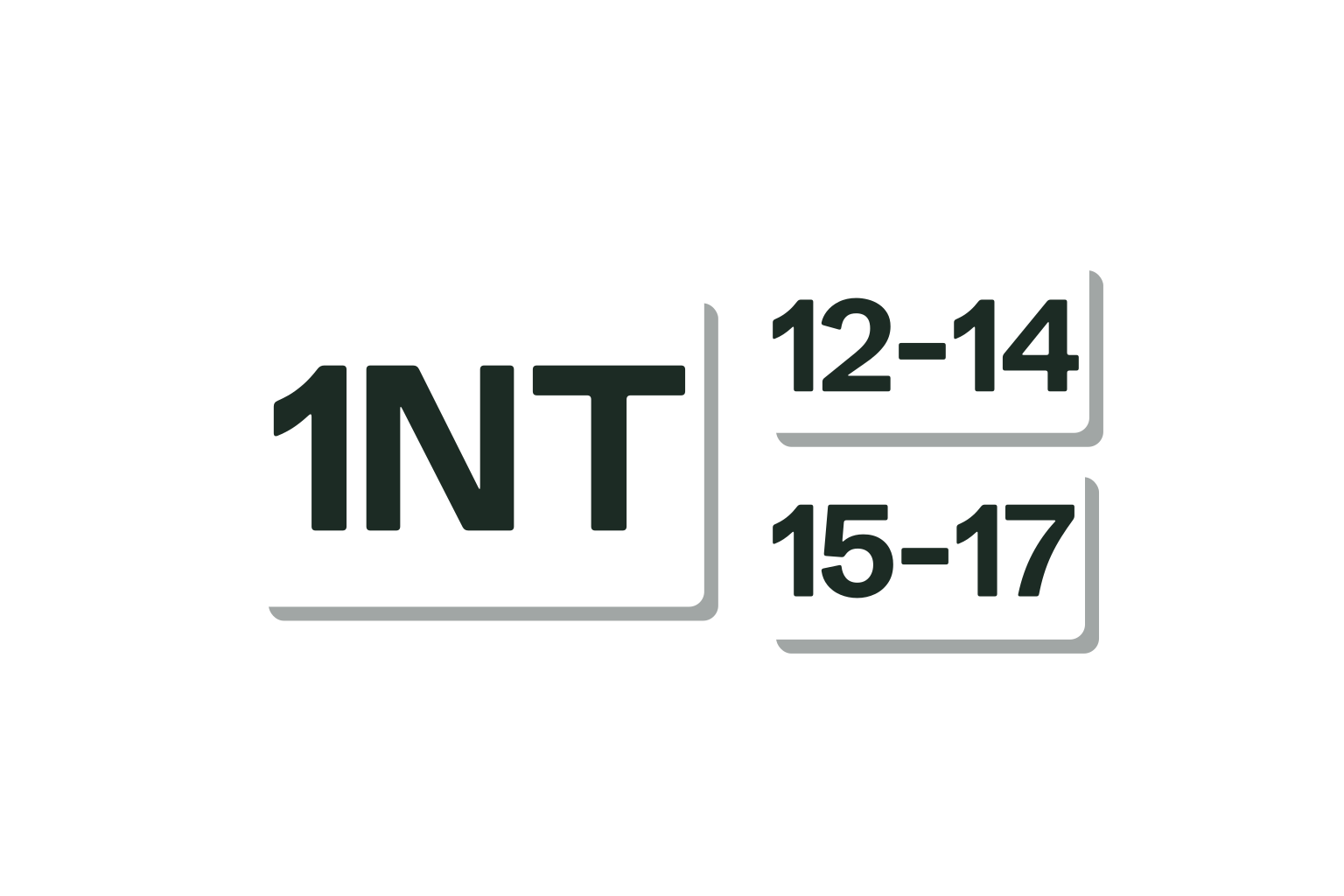
| 1NT | 13-15 | Balanced (many modern pairs play 14-16) |
| 2♣ | 11-15 | Six or more clubs, or five clubs and a four-card major |
| 2♦ | 11-15 | Short diamonds: 4=4=1=4, 4=4=0=5, 4=3=1=5 or 3=4=1=5 |
| 2♥ / 2♠ | 5-10 | Weak two, good six-card suit |
| 2NT | 22-24 | Balanced (some pairs use a lower range) |
| 3-level suits | Weak | Preempts, as in other systems |
These are the classic agreements as most references give them, though very few pairs play every one. Wei's first book asked for four diamonds to open 1♦. The catch-all 1♦ in the table, which can hold only two, came a few years later and is the usual form now. The 1♣ opening, the five-card majors and the 11 to 15 range are common to almost all versions, while 1NT, 2♣ and 2♦ change from one partnership to the next. For how Precision sits next to the natural systems, see bridge bidding systems.
Responding to the 1♣ opening
Responder's first job after 1♣ is to say whether the hand is weak or not. Schemes vary a great deal here. The tree shows a simple modern one, close to Larry Cohen's and to many club-level Precision notes, with a single negative bid and natural positive responses that force to game.
A positive response sets up a game force at once. Opener has 16 or more and responder 8 or more, so the pair holds at least 24 points between them, and both players can bid slowly while looking for the best game or a slam. A four-card suit is not enough for a positive suit response, however good it is. Hands of 8 or more with no five-card suit bid notrump, or use the 4-4-4-1 responses the pair has agreed.
Older versions divide the balanced positives more finely. In the classic scheme 1NT shows 8 to 10, 2NT 11 to 13 (or 16 and more) and 3NT 14 or 15. Many expert pairs go further and play relays, where opener keeps making the cheapest bid and responder describes the exact shape and the controls. Relays reach slams with great accuracy but take a lot of memory work, and they are rare at club level.
After the 1♦ negative
Responder has shown at most 7, so opener now describes the hand naturally. A rebid of 1♥, 1♠, 2♣ or 2♦ shows five or more cards in the suit, and a notrump rebid shows a balanced hand, at a range the pair agrees around its 1NT and 2NT openings. A jump in a suit is very strong. Responder can pass a simple suit rebid with nothing, and should raise with support when holding a few useful points, since opener may be close to game.
The limited openings
Every opening other than 1♣, 2NT and the preempts shows about 11 to 15 points. Opener is never much stronger than a minimum, and that changes how responder bids. Opener rarely reverses or jumps in a new suit, and responder runs the auction. Responder can also pass more hands than a SAYC player, because game opposite at most 15 needs more strength from responder.
1♥ and 1♠
A major opening shows five or more cards and 11 to 15. The responses are close to standard, with raises, a forcing new suit and the usual negative double in competition. Pairs do adjust a few of them, because opener cannot hold a strong hand. In Starting Precision, Paul Dubois's notes for players coming from 2/1, 2NT is a natural invitation instead of Jacoby 2NT, for example.
1NT
The classic 1NT opening is 13 to 15. Many modern pairs, Larry Cohen among them, play 14 to 16 instead, and then open 1♣ a point higher, at about 17. Either way the responses are the normal ones, Stayman and Jacoby transfers, with the point counts shifted to match. Balanced hands below the 1NT range open 1♦.
Why 1♦ can be short
1♦ collects every limited hand that fits no other opening. That means no five-card major, no 1NT, and none of the shapes for 2♣ or 2♦. Every hand with one diamond or none fits one of the other openings, so 1♦ promises at least two diamonds, and many pairs alert or announce it as "as few as two".
Under the classic scheme, 31.0% of all 1♦ openings hold only two or three diamonds, and 9.2% hold exactly two. Every one of these short ones is a balanced hand of 11 or 12, too weak for 1NT. Cohen counts the short 1♦ among the system's slight downsides, since diamond part-scores are harder to find, though it can also keep the opponents out of their own diamond fit.
2♣ and 2♦
In the classic system 2♣ shows a club suit and 11 to 15: six or more clubs, or five clubs with a four-card major. Many pairs today drop the five-card version and play 2♣ as six or more clubs only, opening 1♦ with the rest.
The classic 2♦ is a three-suited hand short in diamonds, with no five-card major and no six-card club suit. Only four shapes qualify, listed with spades first: 4=4=1=4, 4=4=0=5, 4=3=1=5 and 3=4=1=5. Responder usually places the contract or bids 2NT to ask about opener's shape. The opening is rare, so some pairs give 2♦ another meaning and open the three-suiters 1♦, which can then hold a singleton diamond or none. Their 1♦ needs an alert.
The chances in the table are exact, worked out over every possible hand under the classic scheme, counting high-card points only. A 5-3-3-2 hand with a five-card major in the 1NT range counts as a 1NT opening, though some pairs open it in the major.
| Opening | Chance | About one hand in |
|---|---|---|
| 16+ (1♣, or 2NT if balanced 22-24) | 9.76% | 10 |
| 1♦ | 12.10% | 8 |
| 1♥ or 1♠ | 10.46% | 10 |
| 1NT (13-15) | 8.04% | 12 |
| 2♣ | 2.74% | 37 |
| 2♦ | 0.66% | 152 |
Together the five limited openings cover 34.00% of all hands, about one in three, and 1♦ is the most frequent of them. A Precision pair opens 1♣ on about one hand in ten, so the strong auctions come up every session.
When the opponents bid over 1♣
Opponents know that 1♣ says nothing about clubs and that responder has not yet shown any strength, so they overcall and preempt freely, often with artificial two-suited bids. Cohen warns that a preempt over 1♣ often leaves the strong side guessing. Every Precision pair needs agreed methods here, and versions differ a lot.
One common scheme, the one in Dubois's Starting Precision, splits the negative into two ranges when the next player overcalls at the one level:
- Pass: 0 to 4 points.
- Double: about 5 to 8 points, or a minimum positive with no good bid.
- A new suit: natural and positive, as without the overcall.
- A cuebid of their suit: a positive hand with no five-card suit to show and no stopper for notrump.
Over a two-level overcall the same notes keep pass and double as the weak actions and make suit bids natural and game forcing. Other pairs use the double for positive hands instead. Whatever you agree, write it on your convention card, since these auctions come up often.
Precision vs 2/1 on the same hands
The two systems share five-card majors, so many hands open the same way, though the opening does not mean the same. A 2/1 player's 1♠ covers 12 to 21 points, while a Precision 1♠ stops at 15.
| Hand | Points and shape | Precision | 2/1 game force |
|---|---|---|---|
| ♠AKJ84 ♥AQ53 ♦K7 ♣63 | 17, 5-4-2-2 | 1♣ | 1♠ |
| ♠KQ974 ♥A83 ♦Q62 ♣J5 | 12, 5-3-3-2 | 1♠ (11-15) | 1♠ (12-21) |
| ♠KJ84 ♥AQ73 ♦6 ♣Q952 | 12, 4=4=1=4 | 2♦ | 1♦ |
| ♠QJ62 ♥K5 ♦A73 ♣Q842 | 12, 4=2=3=4 | 1♦ | 1♣ |
| ♠Q83 ♥KJ4 ♦AQ72 ♣K95 | 15, 4-3-3-3 | 1NT | 1NT |
On the first hand the 2/1 player opens 1♠ and hopes partner can respond. Partner may pass with 5 points and a spade fit, and a good game is then missed. The Precision player starts with 1♣, and partner with the same 5 points answers 1♦, which keeps the bidding open. On the second hand both open 1♠, but only the Precision responder knows that opener has at most 15.
Precision's 1♣ names no suit, so on the strong hands the first suit comes a round later, and the opponents get a cheap chance to jump in before it does. A 2/1 player bids those hands with a suit named from the first call, though partner may pass it.
Who Precision suits
Precision works best for a regular partnership. Larry Cohen calls it the easiest bidding system to learn, and says he would start beginners on it if almost all their fellow students were not learning Standard. The hard part comes later, in the 1♣ auctions, the defense against interference and the many follow-ups each pair writes down for itself.
- Good fit: a regular partner, both willing to write and review notes, at duplicate where accurate part-score and slam bidding pays.
- Poor fit: casual partners, players who prefer to bid by feel, and events that restrict artificial openings. Check the rules of an event before you bring a strong club system.
- A gentle start: keep your usual methods after 1♥, 1♠ and 1NT, learn the 1♣ responses and one defense to interference, and add the rest as real hands show the gaps.
Players who learned a natural system first usually find the step manageable, since the limited openings and their responses look like the ones they already know. Hand judgment carries over too. The rule of 20 and hand evaluation still decide close openings, and some pairs open a good 15 with a long suit as 1♣.
Common questions
Short answers to what readers ask most.
- What is the Precision bidding system?
- Precision is a strong club system devised by C. C. Wei. An opening 1♣ shows 16 or more points with any shape, and every other one-level opening shows about 11 to 15, with five-card majors and a limited 1NT.
- What does 1 club mean in Precision?
- It shows a strong hand of 16 or more points, of any shape, and says nothing about clubs. It is forcing. Partner answers 1♦ with 0 to 7 points and makes a positive response with more.
- What is the Precision 1 diamond opening?
- It shows 11 to 15 points with no five-card major and no hand for 1NT, 2♣ or 2♦. In most versions it promises at least two diamonds, so it can be short. Wei's first version asked for four.
- What does a 2 diamond opening show in Precision?
- Classically, 11 to 15 points and a three-suited hand short in diamonds: 4=4=1=4, 4=4=0=5, 4=3=1=5 or 3=4=1=5. Some pairs give 2♦ another meaning and open these hands 1♦.
- Is Precision better than 2/1?
- Neither is better for every pair. Precision limits most openings and handles strong hands at a low level, but it needs more agreements and suffers more from interference over 1♣. 2/1 is easier to play with occasional partners.
- Is Precision good for beginners?
- The openings are simple, and some teachers think it would make a fine first system. In practice most beginners learn the natural system their club plays, because that is what their partners and opponents use, and take up Precision later with a regular partner.
Practice: Precision
Eight quick questions on what you just read. For a longer session, bid a hundred hands or take the hundred-question quiz.