 Hand evaluation
The Rule of 20
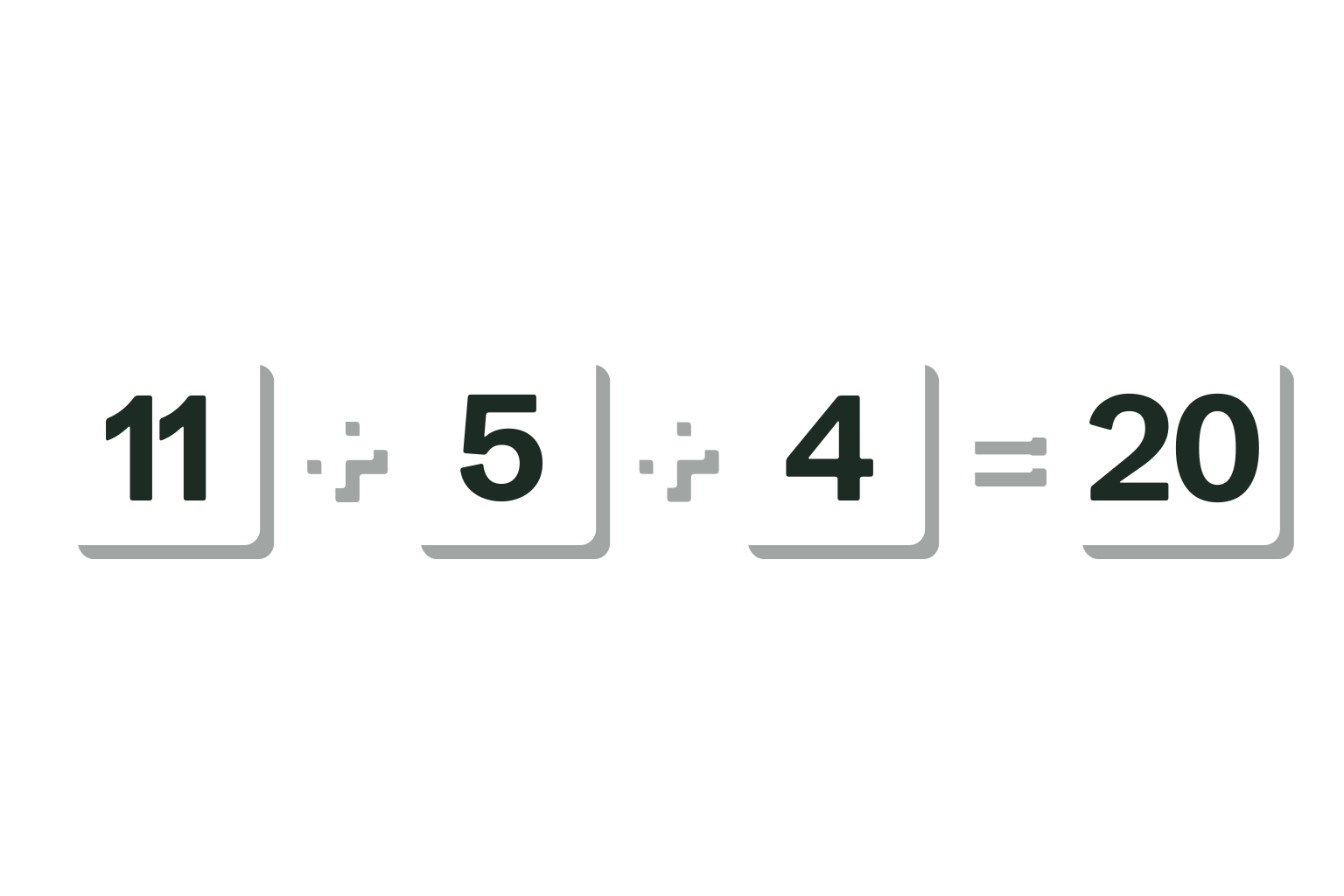
Under the rule of 20, you open a borderline hand at the one level when its high-card points plus the cards in its two longest suits reach 20. It counts shape alongside honors, since a hand with long suits takes more tricks than a flat hand with the same points. That makes it a quick way to decide which close hands are worth an opening bid.
How the rule of 20 works
Count your high-card points the usual way: four for an ace, three for a king, two for a queen, one for a jack. Then add the number of cards in your longest suit and the number in your second longest suit. If the total reaches 20, open the bidding at the one level. The American expert Marty Bergen made the rule popular in the 1990s.
| Hand | HCP | Two longest suits | Total | Open? |
|---|---|---|---|---|
| ♠AQ752 ♥KQ863 ♦4 ♣92 | 11 | 5 + 5 = 10 | 21 | Yes, 1♠ |
| ♠KJ4 ♥Q73 ♦A852 ♣J63 | 11 | 4 + 3 = 7 | 18 | No, pass |
| ♠AK873 ♥5 ♦KJ64 ♣842 | 11 | 5 + 4 = 9 | 20 | Yes, 1♠ |
| ♠Q6 ♥KQ5 ♦KJ73 ♣J754 | 12 | 4 + 4 = 8 | 20 | Borderline, see below |
The rule rewards length because long suits take tricks. A five-card suit opposite partner's three cards is a trump suit, and once a long suit is set up, its fifth and sixth cards win tricks even though they are small cards. Two long suits also mean two short suits, and shortness means ruffing power once a fit is found.
Hands at the border
A total of exactly 20 is where judgment starts. Most experienced players open these hands when the honors are in the long suits and pass when they are not. Compare two hands that both score 20.
- Honors in the long suits are worth more than their point count. The ♠AQJ in a five-card suit will take tricks, while South's doubleton ♦Q will often be wasted.
- The 4-3-2-1 scale undervalues aces and kings and overvalues queens and jacks. A hand whose 11 points are two aces and a king is a sounder opening than one whose 11 points are a king, three queens and two jacks.
- Many players also count quick tricks. When the rule-of-20 total is exactly 20, they open only if the hand has two quick tricks. An ace-king in the same suit counts two, an ace-queen one and a half, an ace or a king-queen one, and a king with a small card beside it a half.
What happens after you open light
Opening an 11-point hand changes the rest of the auction, and partner is entitled to know you might do it. Three things follow.
- 1.Your rebid must be minimum. A light opener never reverses, never jumps, and passes any invitational bid, because partner will play you for 12 or 13 points.
- 2.Some partnerships ask a little more of responder's invitations. If you open every rule-of-20 hand, a good 11 is a safer invitation than a bare 10, because opener's average hand is lighter.
- 3.Only shapely hands open light. A balanced 11-count scores 18 or 19 on the rule of 20 and stays a pass.
Third and fourth seat
In third seat, after two passes, many partnerships open even lighter than the rule of 20 suggests, because partner has already passed and cannot hold an opening hand, and a light opening makes the opponents' auction harder. Drury lets the passed partner check whether a third-seat opening was a full one.
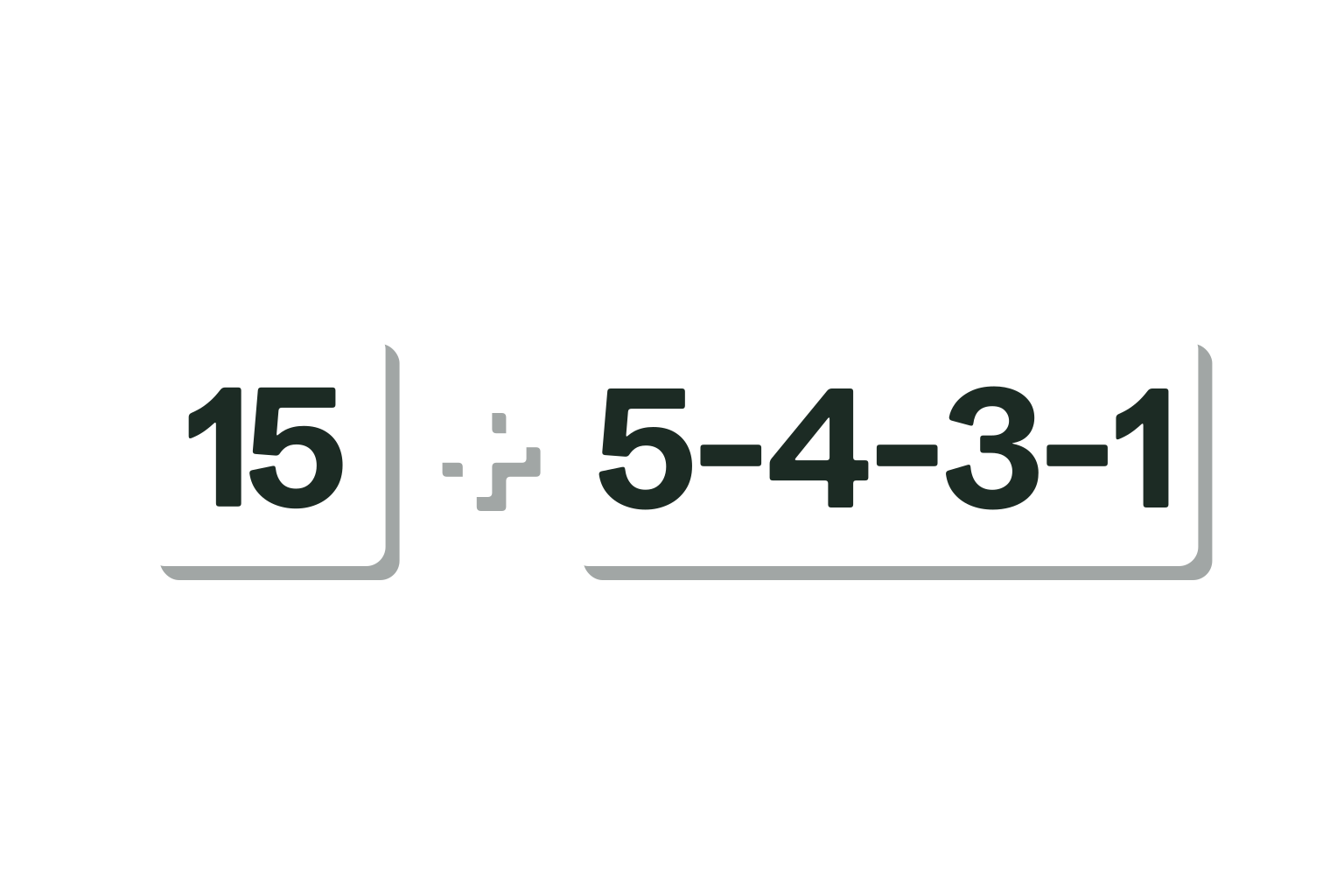
In fourth seat the question changes. If you pass, the deal is thrown in and nobody scores. The traditional tool here is the rule of 15 (Pearson points): add your high-card points to the number of spades you hold and open if the total is 15 or more. The spade count matters because the side that holds the spades usually wins the fight for a part score.
Common questions
Short answers to what readers ask most.
- What is the rule of 20 in bridge?
- It is a guideline for deciding whether to open light, shapely hands. Take the high-card count and add the length of the longest suit and of the next longest. Twenty or more says open one of a suit.
- Does the rule of 20 apply to notrump openings?
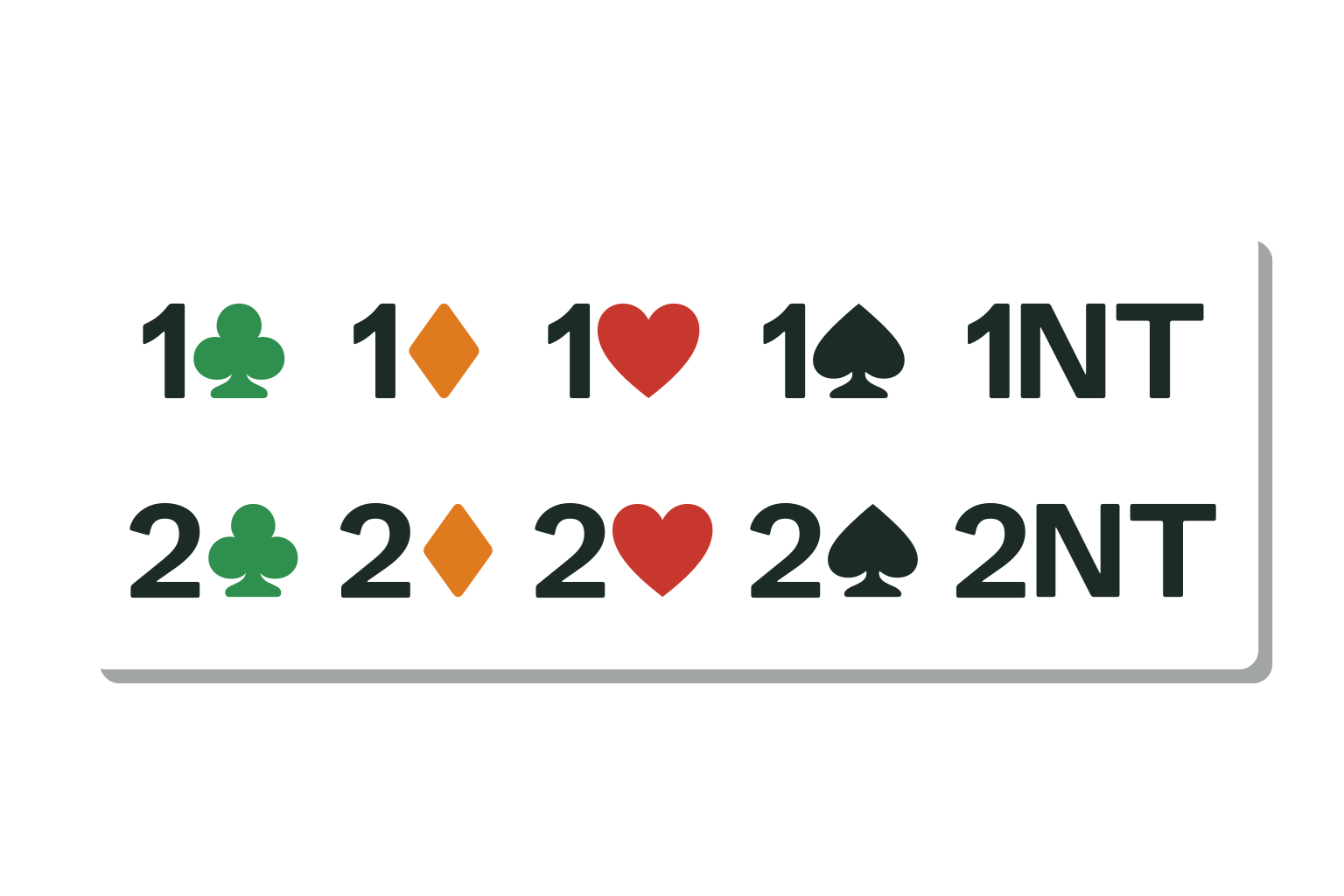
- No. A 1NT opening promises a balanced hand in a stated range, usually 15 to 17 points, and the rule of 20 does not override that. It decides whether to open one of a suit with a shapely hand.
- Should I count distribution points as well as the rule of 20?
- Not at the same time. The rule of 20 already rewards length, so adding length points on top counts the same thing twice. Use one method or the other.
- What is the difference between the rule of 20 and the rule of 22?
- The rule of 22 adds your quick tricks to the rule-of-20 total and asks for 22. It keeps the shapely hands the rule of 20 opens and filters out the ones whose points are all queens and jacks.
- Is the rule of 20 part of Standard American or Acol?
- Neither system requires it. It is a hand-evaluation guideline that partnerships add to any system. Players of the Standard American Yellow Card usually open with 13 points or a good 12, and many of them use the rule of 20 to decide which lighter hands are worth opening.
Practice: the rule of 20
Eight quick questions on what you just read. For a longer session, take the hundred-question quiz.