Hand evaluation
The Losing Trick Count
The losing trick count (LTC) is a way of judging how many tricks a hand can take in a suit contract by counting its losers instead of its points. Once the partnership has found a trump fit, the losers in both hands give an estimate of how high to bid. It often spots shapely hands that play far better than their points suggest.
How to count losers
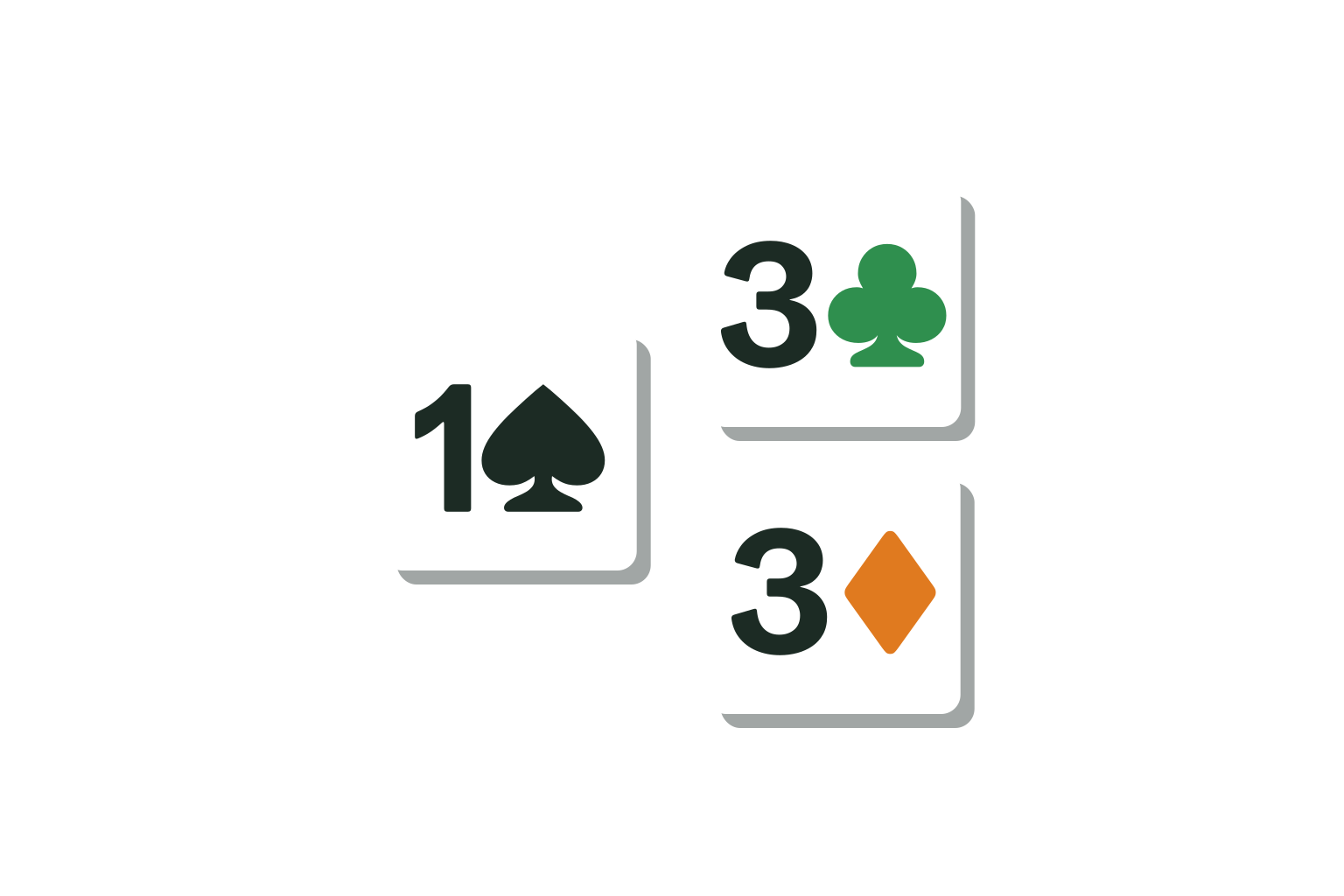
Look at each suit separately and only at its first three cards. Each missing ace, king or queen among those cards is a loser, so no suit has more than three. Shorter suits have fewer possible losers.
| Holding | Losers | Why |
|---|---|---|
| Void | 0 | Nothing to lose |
| Singleton A | 0 | |
| Singleton K, Q or small | 1 | Only the ace matters in a singleton |
| AK | 0 | |
| Ax or Kx | 1 | |
| Qx or xx | 2 | A doubleton has at most two losers |
| AKQ | 0 | |
| AKx, AQx or KQx | 1 | |
| Axx, Kxx or Qxx | 2 | |
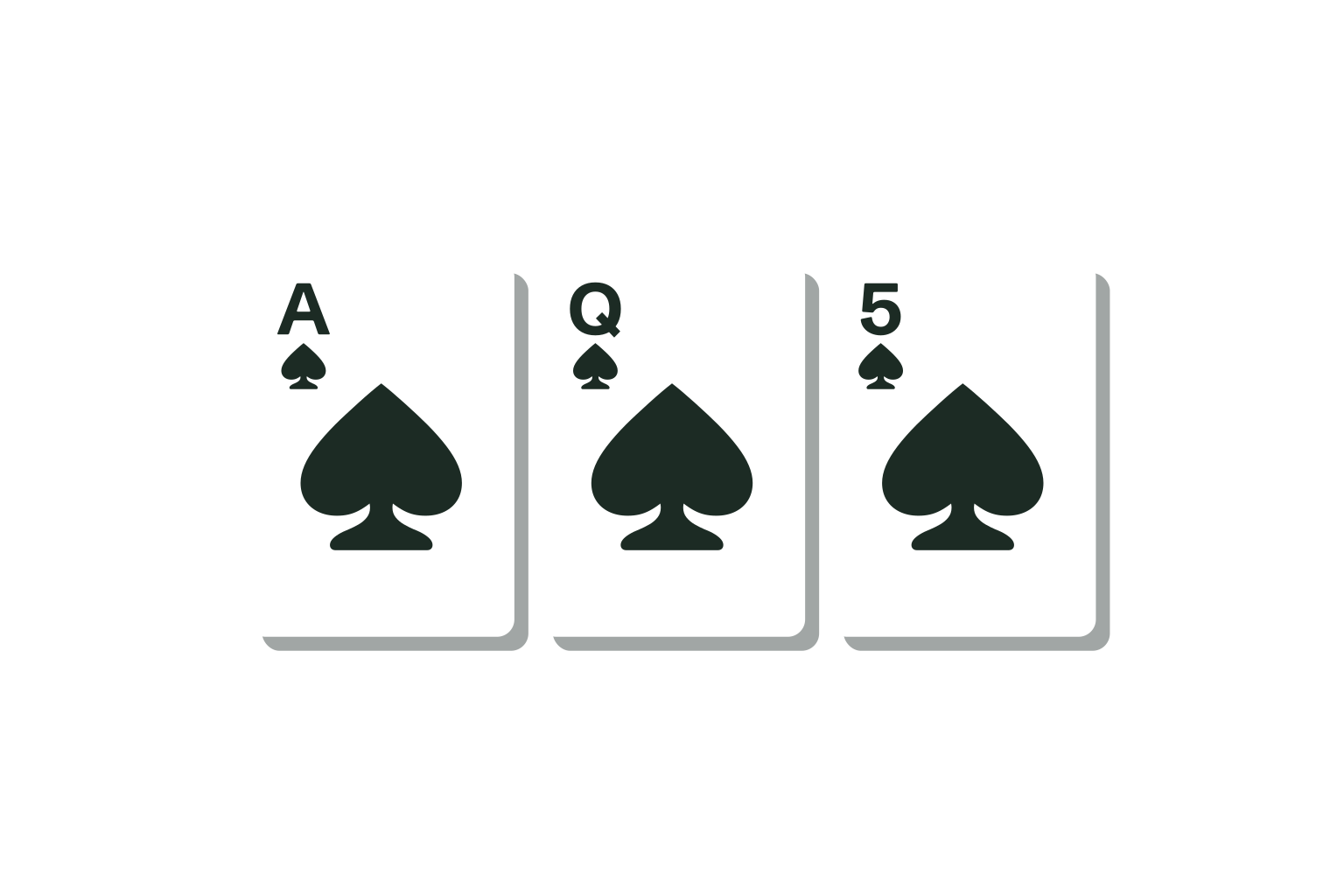
| xxx | 3 | Four or more small cards still count only three |
Add the losers in the four suits. A minimum opening hand usually has 7 losers, and everything else in the method is measured from there.
Half losers and other refinements
The basic count deals only in whole losers, which makes it quick but rough. Many players refine it by counting some holdings as half a loser more or less than the table above says. These are the refinements most often quoted.
| Holding | Basic count | Refined count | Credited to |
|---|---|---|---|
| AQ doubleton | 1 | ½ | Ron Klinger |
| Kx doubleton | 1 | 1½ | |
| KJ10 | 2 | 1½ | Bernard Magee |
| AJ10 | 2 | 1 | Maurice Harrison-Gray |
| Qxx | 2 | 2½ or 3, except in the trump suit |
- Qxx is the holding the basic count flatters most, because an unsupported queen rarely takes a trick. Partner's support in the suit makes it worth more.
- A singleton king counts as one loser, the same as a small singleton. Many players also value it at less than its 3 points, since it rarely takes a trick.
- Some players add half a loser when the hand has more queens than aces, and take off half a loser when it has more aces than queens.
- Other tens and jacks do not change the count.
From losers to tricks
Subtract the combined losers of both hands from 24, and the result is the number of tricks the partnership can expect in its trump fit. Two hands with 7 losers each give 24 - 14 = 10 tricks, enough for four of a major. Hands of 8 and 7 losers should produce 9 tricks.
In the auction you only know your own losers, so you assume partner's from the bidding so far. Most players work from these figures:
| Hand | Losers |
|---|---|
| Minimum opening bid | 7 |
| Strong opening, about to reverse or jump | 5 or 6 |
| Strong 2♣ opening | 4 or fewer |
| Single raise of opener's suit | 9 |
| Limit raise | 8 |
| Game-forcing raise | 7 or fewer |
Responder has a quicker version. Add your losers to opener's 7 and subtract the total from 18, and the result is the level to bid. Holding 9 losers, 18 - 16 = 2, so you make a single raise. Eight losers is worth a raise to three, and 7 is worth game. Opener does the same after a raise, assuming 9 losers for a single raise and 8 for a limit raise.
| Hand | Spades | Hearts | Diamonds | Clubs | Losers | HCP |
|---|---|---|---|---|---|---|
| ♠AKJ854 ♥K83 ♦A72 ♣6 | 1 | 2 | 2 | 1 | 6 | 15 |
| ♠Q972 ♥5 ♦KJ843 ♣874 | 2 | 1 | 2 | 3 | 8 | 6 |
| ♠AQ5 ♥KJ64 ♦872 ♣A93 | 1 | 2 | 3 | 2 | 8 | 14 |
| ♠- ♥AQJ9763 ♦KQ54 ♣84 | 0 | 1 | 1 | 2 | 4 | 12 |
The balanced 14-count in the third row has as many losers as the 6-count in the second, and the shapely 12-count in the last row has fewer losers than either opening hand above it.
Losing trick count in practice
A game that points miss
Now give South ♠Q97 ♥Q5 ♦K843 ♣8742, about the same strength but with three trumps and no singleton. That hand has 9 losers, so South makes a single raise, and North counts 24 - 15 = 9 tricks and stops in a partscore. Here the count is too cautious, because North's long trumps still bring in 4♠ on most layouts.
Flat hands with plenty of points
Limitations of the losing trick count
- The count needs a fit. Without eight trumps between the hands it has nothing to say, so do not use it for notrump or misfits.
- Duplication goes unnoticed. Two hands with singletons in the same suit both count few losers there, but the shortness only saves tricks once.
- Wasted honors count in full. A king opposite partner's singleton counts as a winner, but it rarely takes a trick.
- Flat hands come out too well. Two balanced hands with an eight-card fit often take a trick fewer than the formula suggests.
- A long side suit that can be set up is worth more than the count gives it.
A different weakness, that the basic count treats a missing ace, king and queen as one loser each, led Johannes Koelman to publish the New Losing Trick Count in The Bridge World in May 2003. In his count a missing ace costs 1.5 losers, a missing king 1 and a missing queen 0.5, and the total is subtracted from 25 instead of 24. Aces end up worth more and queens less. The new count is more accurate, but it is a little harder to do at the table, and plenty of good players still use the original.
LTC fits naturally with conventions that show a raise in steps. Bergen raises separate constructive raises from limit raises, and Jacoby 2NT handles the game-forcing ones, so a loser count of 9, 8 or 7 maps to a bid in each.
Common questions
Short answers to what readers ask most.
- What is the losing trick count in bridge?
- The losing trick count is a hand evaluation method for suit contracts with a trump fit. Each partner counts the losers in their hand, and the partnership subtracts the combined total from 24 to estimate how many tricks it can take.
- How do you count losing tricks in bridge?
- Take each suit in turn and check its top three cards. The ace, king and queen are the only cards that count, and each one absent from those three is a loser. A singleton has at most one loser, a doubleton at most two, and a longer suit at most three.
- What is the losing trick count formula?
- Add your losers to partner's and subtract the total from 24. The result is the number of tricks the partnership can expect in its trump fit.
- How many losers does an opening hand have?
- A minimum opening hand usually has 7 losers. A hand with 5 or 6 losers is worth a strong rebid, and 4 or fewer is in the range of a strong 2♣ opening.
- Does the losing trick count work in notrump?
- No. The method assumes ruffs and a trump fit. For notrump contracts, use high-card points.
- What is the New Losing Trick Count?
- A refinement that counts a missing ace as 1.5 losers, a missing king as 1 and a missing queen as 0.5, and subtracts the total from 25. It values aces more and queens less than the original.
Practice: the losing trick count
Eight quick questions on what you just read. For a longer session, take the hundred-question quiz.