Hand evaluation
Bergen Points
Marty Bergen, an American champion and bridge teacher, wrote several books arguing that players trust the plain point count too much. His corrections, known as Bergen points, follow a hand through the auction, from the decision to open to the raise and on to the search for slam. They make the most difference on borderline hands, where high-card points alone can mislead.
The Bergen point count at a glance
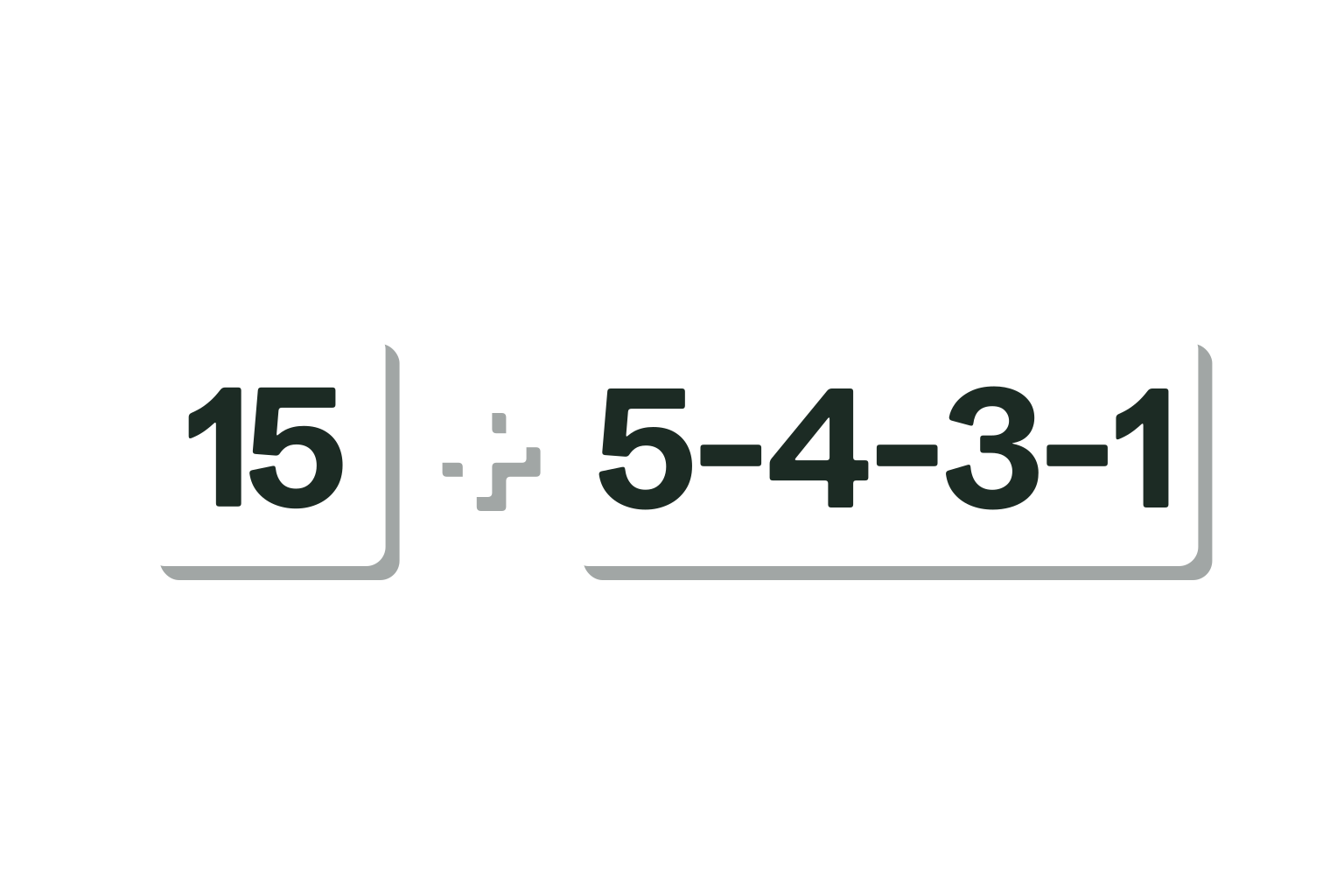
The method has three stages. Every hand starts with its starting points. Once a fit is found, the player who will be dummy counts dummy points and the opener, who will usually be declarer, recounts with what lesson notes based on his books call Bergen points. The two totals are then added and compared with the usual targets for game and slam.
| Count | Who uses it | What you add or subtract |
|---|---|---|
| Starting points | Every hand, before a fit is found | High-card points, then up to two points up or down for aces and tens against queens and jacks, 1 for each card over four in a suit, 1 for each quality suit, minus 1 for each short honor holding |
| Dummy points | The player who raises partner's suit | Starting points, plus 1 for each doubleton, 2 for a singleton with three trumps or 3 with four, and as many points for a void as you hold trumps |
| Bergen points | The opener, after partner shows a fit | Starting points, plus 1 for each trump over five, 1 for each side suit of four or five cards, 2 for a singleton, 4 for a void, and 1 in total for two or more doubletons |
Strictly, "Bergen points" is the opener's recount, but many players use the name for the whole method. Bergen's early books, starting with Points Schmoints!, which also made the rule of 20 famous, argued that the plain count misjudges many hands. He set out the full method, step by step, in Slam Bidding Made Easier (2008).
Starting points: valuing a hand before a fit
Starting points are what you count to decide whether to open, overcall or respond. Take your high-card points (ace 4, king 3, queen 2, jack 1) and apply four corrections. In lesson notes on Slam Bidding Made Easier, a hand with 12 or more starting points and at least two quick tricks opens at the one level in first or second seat. Bergen's older rule of 20 gives a different answer on some hands near the borderline, so agree with partner which test you use.
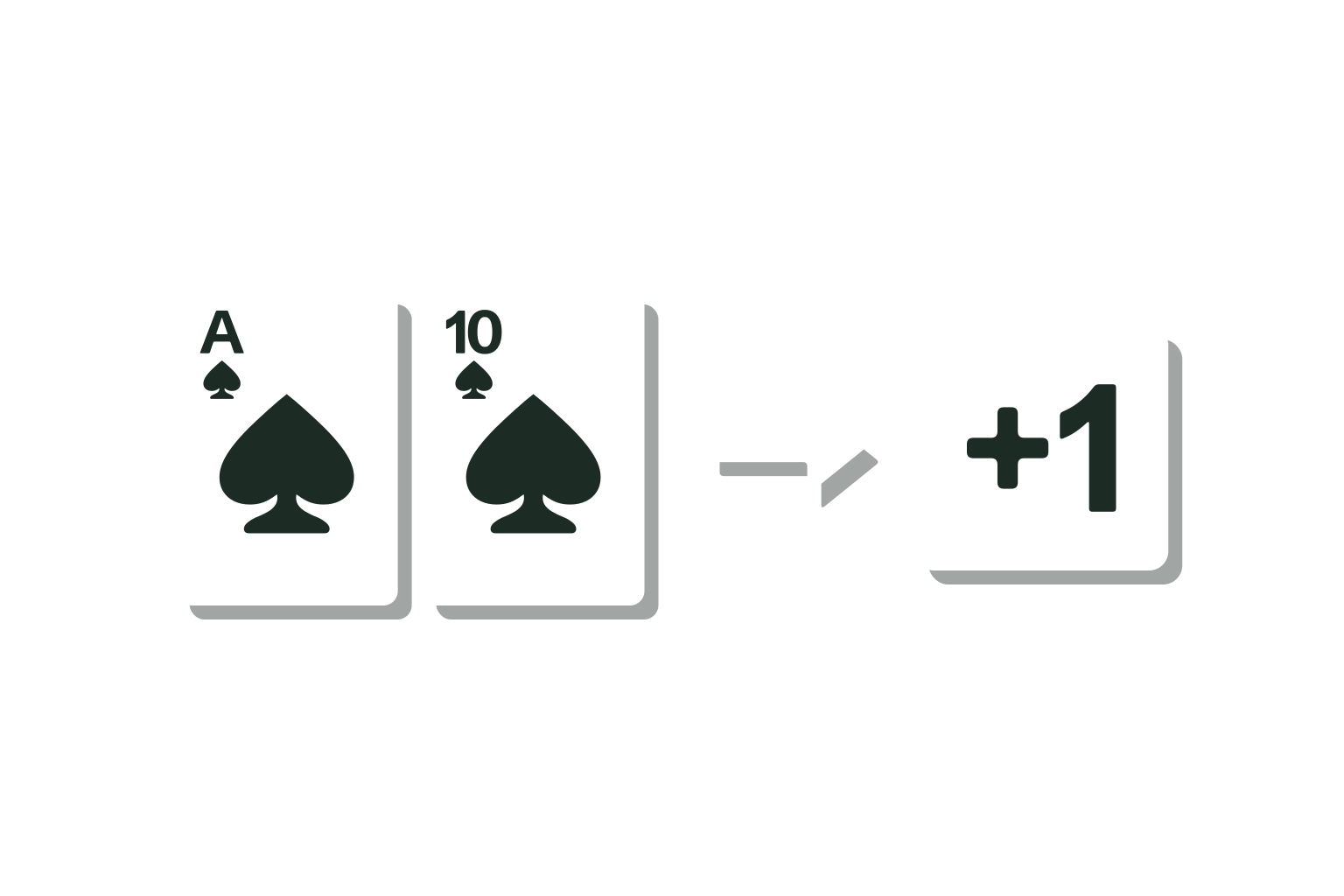
Aces and tens against queens and jacks
Bergen argues that the 4-3-2-1 scale is off in a steady direction. Aces and tens take more tricks than their points say, and queens and jacks fewer. In Hand Evaluation: Points Schmoints! (2002), and again in a 2019 Bridge Bulletin column, he gives a more exact scale that keeps the total of each suit at ten points.
| Card | Usual count | Bergen's scale |
|---|---|---|
| Ace | 4 | 4.5 |
| King | 3 | 3 |
| Queen | 2 | 1.5 |
| Jack | 1 | 0.75 |
| Ten | 0 | 0.25 |
Nobody adds quarter points at the table, so Bergen turned the scale into a count he calls adjust-3. Count your aces and tens together, then your queens and jacks together, and take the smaller number from the larger. A difference of two or less changes nothing. A difference of three to five is worth one point, and six or more (rare) is worth two. You add when aces and tens are ahead and subtract when queens and jacks are ahead. This is the count from Slam Bidding Made Easier. In the 2019 column Bergen gave a shorter rule of thumb, adding 1 with at least three aces or three tens and taking off 1 with at least three queens or three jacks, which can differ from adjust-3 by a point. The hands here use adjust-3.
Long suits
Add 1 point for every card over four in a suit, so a five-card suit adds 1 and a six-card suit adds 2. Most players already know this length count from hand evaluation. It applies to every suit of five or more cards in the hand.
Quality suits
A suit of four or more cards holding three of the top five honors (ace, king, queen, jack, ten) is a quality suit, and each one adds 1 point. AK1095 and AQ104 qualify. AQ863 does not, because it has only two of the five. Some teachers describe it more loosely as three or more honors in a long suit, which gives the same answer on almost every hand.
Honors in short suits
Honors pull more weight in long suits, where they help the small cards turn into tricks. A queen or jack in a short suit often falls under the opponents' higher honors. Bergen therefore subtracts 1 point for each of these holdings, which the method calls dubious or short honors.
- Doubletons KQ, KJ, QJ, Qx and Jx.
- A singleton king, queen or jack.
- Some lesson notes add AJ doubleton to the list. AK, AQ, Ax and Kx never lose a point.
Some lesson notes also take a point off flat shapes (4-3-3-3, 5-3-3-2, 6-3-2-2 and 7-2-2-2) for a suit contract, and a point off 4-3-3-3 for notrump as well. Other summaries leave this out, so treat it as optional.
Dummy points: valuing support for partner
Once partner opens a suit you support, usually a major, short suits become useful because dummy can ruff in them. Add short-suit points to your starting points. The values depend on how many trumps you hold, since a ruff costs a trump and three trumps cannot ruff as often as four.
| Shortness | Three trumps | Four or more trumps |
|---|---|---|
| Each doubleton | 1 | 1 |
| Singleton | 2 | 3 |
| Void | 3 | Number of trumps (4 with four, 5 with five) |
The older table found in many textbooks, and in our hand evaluation guide, gives a void 3 points with three trumps and 5 with four or more. Bergen counts 5 only when dummy holds five trumps, so the two differ only when you hold exactly four trumps and a void.
Dummy points are only for raising partner's suit. After a 1♣ or 1♦ opening, which may be a short suit, or after 1NT, Bergen's followers keep dummy points equal to starting points. Bergen keeps the length points inside dummy points, where some simpler counts drop them once a fit is found. A short honor is counted both ways, so a singleton king first loses a point as a short honor and then earns the singleton points.
The total chooses your raise. Playing Bergen raises, four trumps and about 7 to 10 dummy points bid 3♣, 10 to 12 bid 3♦ (reverse Bergen swaps these two), and 13 or more bid Jacoby 2NT or a splinter. Three trumps and 10 to 12 dummy points make a limit raise.
Bergen points: the opener's recount after a fit
When partner raises, the opener recounts too, but with smaller values for shortness. The opener is usually declarer and holds the long trumps, and ruffs in the hand with long trumps add fewer tricks than ruffs in dummy's short trumps. The extra value lies in trump length and in side suits that can be set up once trumps are drawn.
- 1.Start from your starting points, which already include your length points.
- 2.Add 1 point for each trump over five, so a sixth trump adds 1 and a seventh adds 2.
- 3.Add 1 point for each side suit of four or five cards.
- 4.Add 2 points for a singleton and 4 for a void (some teachers count a void as the number of trumps instead). A single doubleton adds nothing, and two or more doubletons add 1 point in total.
Short-suit points count only in a suit contract. If the fit leads to notrump, an opener can still add for a side suit that may run, but not for a singleton.
| Opener plus responder | Contract |
|---|---|
| About 26 | Game in a major or in notrump |
| About 29 | Game in a minor |
| About 33 | Small slam |
These are the same targets that ordinary point counts use. The difference is that both hands arrive at them with adjusted totals, so a fitting hand with good shape reaches game and slam on fewer high cards.
Worked hands
Each hand below is counted in the same order: high-card points, the adjust-3 count, length, quality suits, short honors, and then shortness once a fit is known.
Hand 1: aces and tens
♠AK1095 ♥A1062 ♦83 ♣72 has 11 HCP. It holds four aces and tens and no queens or jacks, a difference of four, so add 1. The fifth spade adds 1, and AK1095 is a quality suit for 1 more. No short honors. That is 14 starting points, a sound 1♠ opening rather than a light one, and the hand is worth accepting an invitation later.
Hand 2: queens and jacks
♠QJ4 ♥KJ3 ♦QJ62 ♣KQ5 has 15 HCP and looks like a 1NT opening in a 15 to 17 range. Six queens and jacks against no aces or tens is a difference of six, so subtract 2. There is no long suit, no quality suit and no short honor, which leaves 13 starting points. Followers of Bergen's count open 1♦ and treat the hand as a minimum. Teachers who also take a point off for 4-3-3-3 shape count it as 12. Many players would still open 1NT, and on balanced hands full of queens and jacks the two counts often disagree.
Hand 3: honors in short suits
♠KQ ♥J4 ♦K9863 ♣Q752 has 11 HCP and meets the rule of 20 exactly, 11 plus five plus four. Starting points give a lower figure. Three queens and jacks against no aces or tens takes off 1, the five diamonds add 1, and the KQ and J4 doubletons cost 1 each. The hand is worth 9 starting points, and it passes. Larry Cohen, in an article on the rule of 20 published by the ACBL, also advises discounting singleton kings and doubleton queens or jacks.
Hand 4: dummy points with four trumps and with three
Partner opens 1♠ and you hold ♠K1074 ♥5 ♦A9643 ♣872. That is 7 HCP. Two aces and tens against no queens or jacks changes nothing, and the five diamonds add 1, for 8 starting points. The singleton heart with four trumps adds 3, so the hand is worth 11 dummy points, a limit raise (3♦ in Bergen raises).
Move one card to make the hand ♠K107 ♥5 ♦A9643 ♣8742. The starting points are still 8, but the singleton with three trumps adds only 2, for 10 dummy points. It is the bottom of a three-card limit raise. On high-card points alone, 7 points would make only a simple raise to 2♠.
Hand 5: the opener finds slam
You hold ♠AKJ86 ♥5 ♦AQ1073 ♣K4, 17 HCP. Three aces and tens against two queens and jacks is a difference of one, no change. Each five-card suit adds 1, and both are quality suits (AKJ and AQ10) for 2 more, which makes 21 starting points. You open 1♠ and partner bids 3♦, a Bergen limit raise with four spades and 10 to 12 dummy points.
Now recount. Five trumps add nothing. The five diamonds add 1 as a side suit, the singleton heart adds 2, and the single doubleton adds nothing, for 24 Bergen points. Opposite at least 10, the total is 34, past the 33 that suggests slam, so you go on with Roman Key Card Blackwood rather than settle for game. Counting high-card points only, 17 opposite 10 to 12 adds up to 27 to 29, and most players would simply bid 4♠.
Bergen points, plain HCP, the rule of 20 and losers
The same opening hands look different under each method. The losing trick count is shown with its basic count.
| Hand | HCP | Rule of 20 | Losers | Starting points |
|---|---|---|---|---|
| ♠AK1095 ♥A1062 ♦83 ♣72 | 11 | 20 | 7 | 14 |
| ♠QJ4 ♥KJ3 ♦QJ62 ♣KQ5 | 15 | 22 | 7 | 13 |
| ♠KQ ♥J4 ♦K9863 ♣Q752 | 11 | 20 | 7 | 9 |
| ♠AKJ86 ♥5 ♦AQ1073 ♣K4 | 17 | 27 | 4 | 21 |
Plain HCP rates the second hand as the best of the first three. The rule of 20 opens all three. The basic loser count gives all three the same 7 losers. Only the starting points tell the first and third hands apart, ranking the hand with aces, tens and a strong suit well above the one whose honors sit in short suits.
The methods are close relatives. The rule of 20 is Bergen's own shortcut for one decision, whether to open, and it counts length but not honor quality. The loser count judges a hand by its top cards in each suit and works only once a trump fit is known. Bergen points cover the whole auction but need more arithmetic. Many players count starting points only on close hands and use plain HCP everywhere else. The hand evaluator shows HCP, the rule of 20 and the loser count side by side for any hand you type.
Common mistakes
- Counting shortness before a fit. A singleton is worth nothing extra until partner has shown a suit you can support or has raised yours.
- Using dummy's values as opener. Opener counts 2 for a singleton and 4 for a void, whatever the trump length, and nothing for one doubleton.
- Adding the rule of 20 on top of length points. Both reward length, so use one or the other to decide whether to open.
- Counting short-suit points for notrump. A singleton is a weakness in notrump, not a source of tricks.
- Mixing up the two Bergen methods. Bergen raises are a bidding convention for raising a major, and Bergen points are a way of counting a hand. Dummy points decide which of the raises to make.
Common questions
Short answers to what readers ask most.
- What are Bergen points in bridge?
- They are Marty Bergen's adjustments to high-card points. Every hand first counts starting points, which correct the count for honor quality, length and short honors. After a fit, dummy adds short-suit points and opener recounts for extra trumps, side suits and shortness.
- Are Bergen points the same as Bergen raises?
- No. Bergen points are a way of valuing a hand. Bergen raises are a bidding convention in which 3♣ and 3♦ show four-card support for partner's major at different strengths. Both come from Marty Bergen, and the raises are measured in dummy points.
- How many points is a void worth with Bergen points?
- As dummy, a void is worth as many points as you hold trumps, so 3 with three trumps and 4 or 5 with more. The older textbook table gives a flat 5 with four or more trumps. As opener after a fit, a void is usually worth 4.
- How many Bergen points do you need to open?
- Lesson notes on Slam Bidding Made Easier open at the one level in first or second seat with 12 or more starting points and two quick tricks. Bergen's older rule of 20 asks for a total of 20 instead, and the two tests can give different answers on light hands.
- Which book explains Bergen points?
- Slam Bidding Made Easier (2008) sets out starting points, adjust-3, dummy points and the opener's recount in detail, and Bergen also wrote about them in his Bridge Bulletin columns. His earlier Points Schmoints! books introduced the rule of 20 and his view that the usual count overrates queens and jacks.
- Do Bergen points work in notrump?
- Partly. The starting-point corrections for aces, tens, long suits and short honors apply to any contract. Short-suit points do not, because a singleton or void takes no ruffing tricks in notrump.
Practice: Bergen points
Eight quick questions on what you just read. For a longer session, bid a hundred hands or take the hundred-question quiz.