Limit raises
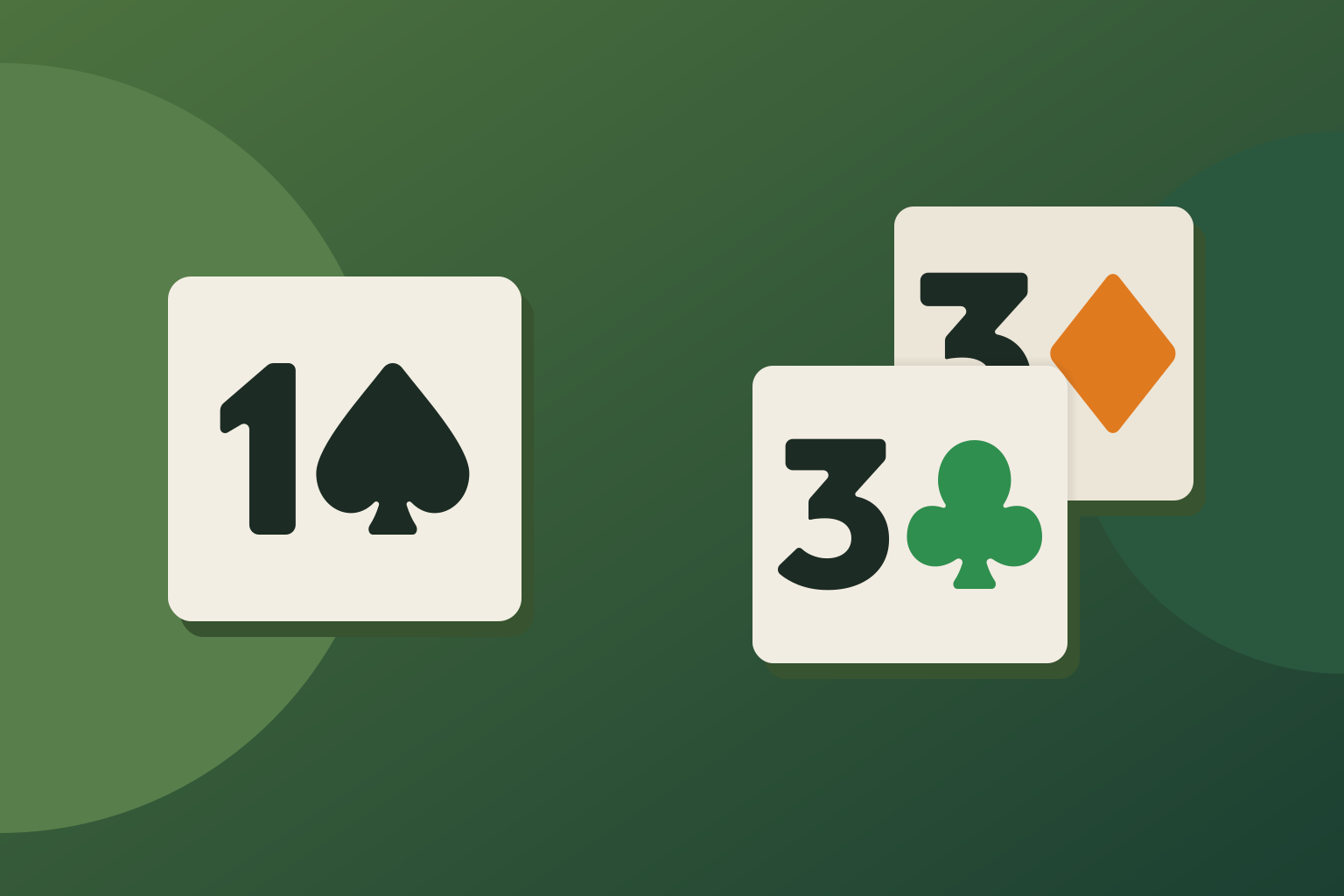
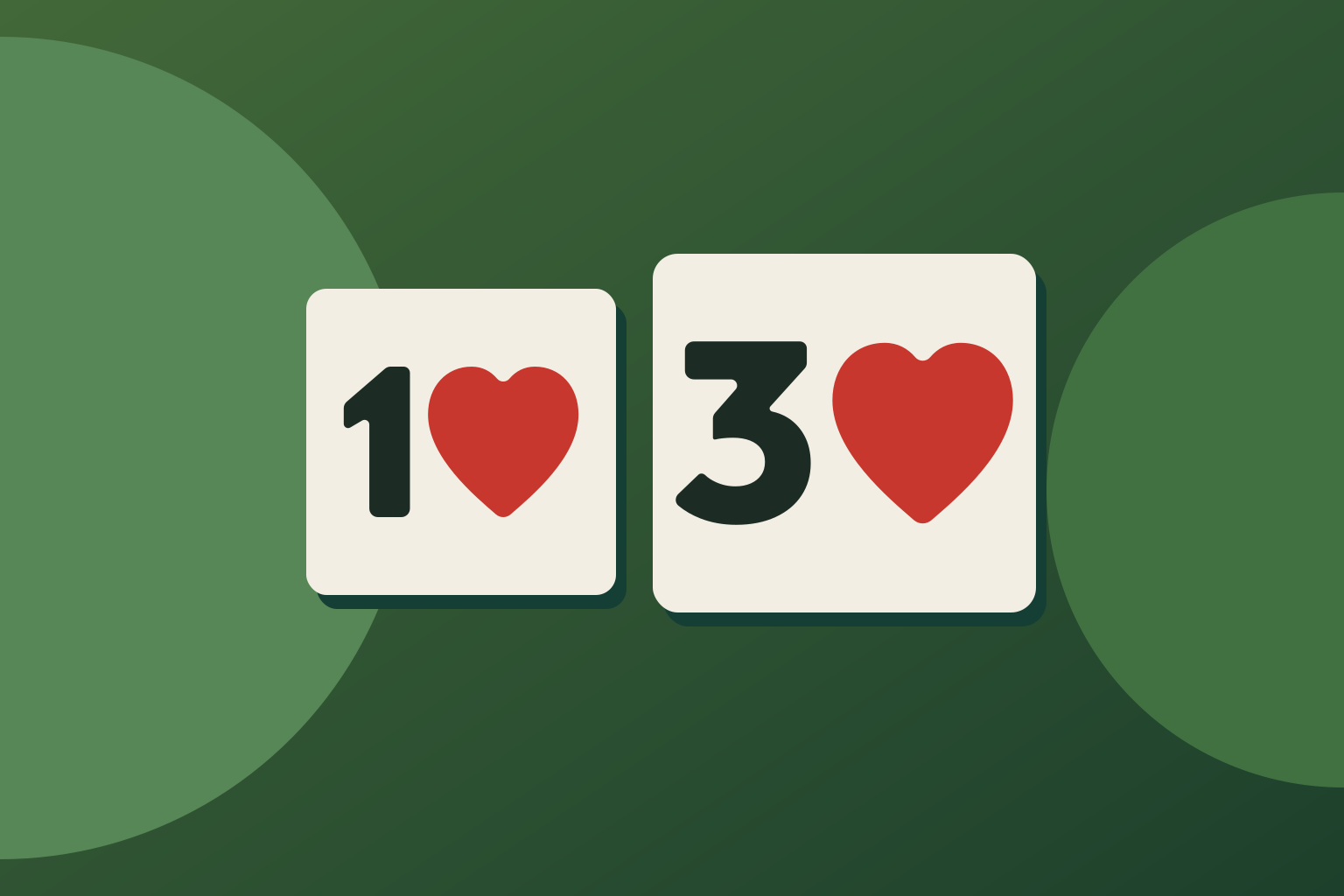
A limit raise is a jump raise of partner's opening suit, such as 1♥ - 3♥, showing about 10 to 12 points with trump support. It invites game, and opener passes with a minimum or bids game with extra values.
Updated 14 October 2026
American players spent most of the twentieth century treating 1♥ - 3♥ as forcing to game. Charles Goren taught it that way, with about 13 to 16 points and trump support. British players using Acol made the same jump a limit bid, invitational and passable, and that version won. Today the jump raise of partner's opening suit is a limit raise for nearly every partnership that does not play Bergen raises, and the strong raises have moved to Jacoby 2NT and splinter bids.
The name says what the bid does. It limits responder's hand to a narrow range, about 10 to 12 points with support, and hands the decision to opener, who knows almost exactly what the partnership holds.
What a limit raise shows
Partner opens one of a suit, the next player passes, and responder jumps to three of partner's suit. In standard bidding that jump promises:
- Invitational values, about 10 to 12 points counting shortness (dummy points). The SAYC card sets the range a shade lower, at 10 to 11.
- Trump support, four or more cards over a major in most modern partnerships. Over a minor, usually five cards, though four good diamonds are often enough.
- No four-card major to show first when the opening was 1♣ or 1♦. A major-suit fit is worth more than a minor-suit one, so responder bids the major and supports the minor later.
- An unpassed hand and a quiet auction. After a pass by responder or a bid by the opponents, other bids take over (see below).
The limit raise sits between the simple raise and the game-forcing raises. A hand too good for 2♠ but not good enough to insist on game goes through 3♠. Responder has described the hand in one bid and will usually pass whatever opener does next.
Counting dummy points
Once a fit is found, responder adds points for shortness, because a short suit lets dummy ruff. Holding four or more trumps, count 5 for a void, 3 for a singleton and 1 for a doubleton. Holding three trumps, count 3, 2 and 1. The full method is in the hand evaluation guide.
Take ♠Q1074 ♥6 ♦KJ52 ♣Q983 after partner opens 1♠. The high cards come to 8, a simple raise on their own. The singleton heart adds 3, and the hand is now worth 11, a limit raise. The same cards facing a 1♥ opening would be worth much less, since the singleton is in partner's suit and there is no fit to ruff with.
Opener's rebid after a limit raise
Opener adds the two hands together. A limit raise shows 10 to 12, and game in a major needs about 25 or 26 points between the two hands, so a minimum opener of 12 or 13 has no game opposite most limit raises and passes. An opener of 15 or more bids game, because even the bottom of responder's range brings the total to 25.
| Opener holds | Bid | Meaning |
|---|---|---|
| 12 or 13 points, no extra shape | Pass | Game is unlikely opposite 10 to 12 |
| 14 points | Pass or 4♠ | Judgment: bid game with a sixth trump, a good second suit or a singleton |
| 15 or more points | 4♠ | To play |
| A strong hand with slam interest | 4♣, 4♦ or 4♥ | A control cue bid, asking responder to cooperate |
| A strong hand, controls in every suit | 4NT | Blackwood for aces or key cards |
The 14-point hands are where good players earn their results. A hand like ♠AKJ84 ♥K5 ♦QJ3 ♣862 has 14 points, five decent trumps and a doubleton, and most players would pass. Give opener a sixth spade instead of a small club, and the extra trump is worth about a trick, which is reason enough to bid 4♠. Shape and trump quality count as much as the point total once the fit is known. Vulnerable at IMPs, where a bid game is worth more, many players also stretch to bid 4♠ with a good 14.
Opener does not need a game try after a limit raise. Responder has already invited, and a new suit at the three level by opener is usually played as a slam try or, over a minor, a stopper bid on the way to 3NT. Game tries such as help suit game tries belong to the simple raise.
Three trumps or four
Here partnerships differ, and it is worth settling before you sit down. Traditional Standard American allows a limit raise with three trumps. The modern trend is to promise four, because opener then knows the partnership has at least nine trumps and can compete or bid game with more confidence.
Players who promise four need another route for the three-card limit raise. In 2/1 game force, responder bids a forcing 1NT and then jumps to three of the major. In Standard American without a forcing 1NT, responder can bid a new suit at the two level and support the major next time. Either way the delayed jump shows the same 10 to 12 points with three trumps, and opener treats it like a limit raise.
Over a minor the answer is different again. A 1♣ opening can be made on three cards, so a limit raise of clubs normally shows five. A 1♦ opening almost always has four or more, and many players raise with four diamonds.
Limit raises of a minor
After 1♦ - 3♦ or 1♣ - 3♣, the target is usually 3NT, not five of the minor. Eleven tricks need about 29 points with a good fit, while nine tricks in notrump often come home on 25 or 26. So opener's first thought after a minor-suit limit raise is whether every suit is stopped.
- Pass with a minimum hand and no shape.
- 3NT with stoppers in the unbid suits and more than a bare minimum.
- A new suit at the three level to show a stopper and ask partner to bid 3NT with the other suit held.
- Five of the minor with a shapely hand, where notrump looks wrong.
Responder's four-card major comes first. Holding ♠KJ83 ♥74 ♦AQ952 ♣J4 opposite 1♦, responder bids 1♠, not 3♦, and shows the diamond support later if no spade fit appears.
Pairs who play inverted minors move the limit raise down to 2♣ or 2♦. The single raise becomes strong and forcing, with no upper limit, and the jump to three becomes weak. The inverted raise covers both the limit raise and stronger hands, so opener with a minimum shows that first and lets responder decide.
Limit raises in competition and by a passed hand
When the opponents come in, most partnerships turn the jump raise into a weak, pre-emptive bid. A weak jump takes bidding space away from them when your side has a fit and little strength. The limit raise does not disappear. It moves to another bid.
| Situation | The limit raise goes to | The jump raise now shows |
|---|---|---|
| 1♥ - (1♠) | 2♠, a cue bid of their suit (limit raise or better) | Weak, four or more hearts |
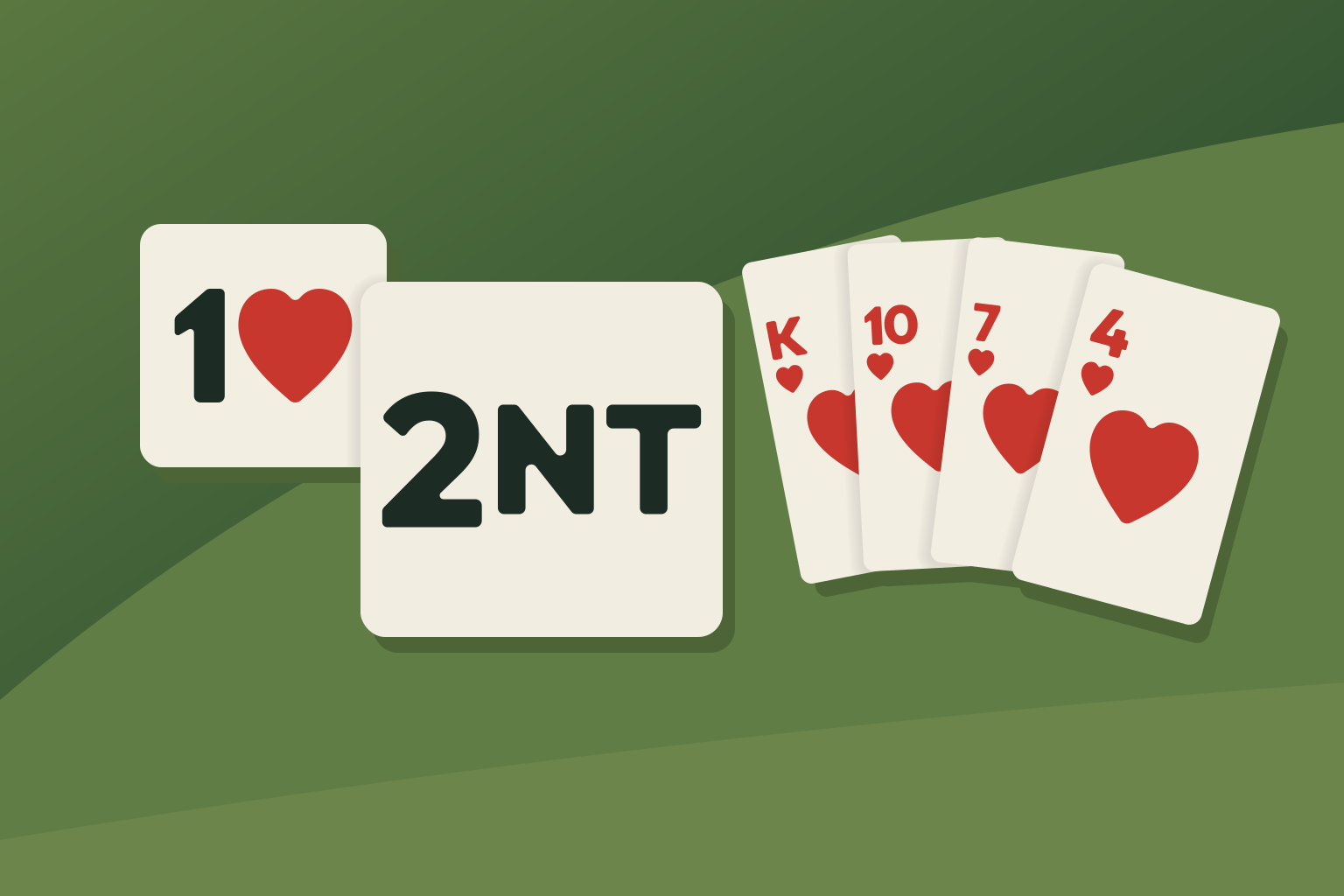
| 1♥ - (X) | 2NT (Jordan), four or more hearts (limit raise or better) | Weak, four or more hearts |
| Responder has passed, partner opens 1♥ | 2♣ (Drury) | Usually still a limit raise if you do not play Drury |
| 1♥, playing Bergen raises | 3♦ with four trumps (3♣ in reverse Bergen) | Pre-emptive, 0 to 6 |
After a takeout double, responder with three trumps and 10 or more points usually redoubles first and supports opener next time. After an overcall, the cue bid shows any hand with support and limit-raise values or more, and opener rebids his suit at the cheapest level to show a minimum. A passed hand has a separate problem. Third and fourth seat openings are often light, and a jump to the three level opposite a 10-point opening can go down, so Drury lets opener sign off at the two level.
Limit raise examples
Opener passes with a minimum
Opener accepts
A minor-suit limit raise reaches 3NT
Common mistakes
- Treating the limit raise as forcing. It is an invitation. Opener with a minimum passes, and responder must not expect another chance to bid.
- Counting shortness without a fit, or twice. Dummy points apply only once trumps are agreed, and a singleton king counts as a high card or as shortness, never both.
- Making a limit raise of a minor with a four-card major. Bid the major first. A 4-4 major fit usually plays better than a minor-suit game.
- Jumping by a passed hand without agreement. Opposite a light third-seat opening, 3♥ can be too high. Agree in advance if you play Drury.
- Keeping the meaning after an overcall. Most pairs play the jump raise as weak in competition. If you do, the cue bid carries the limit raise.
- Raising with three trumps when partner expects four. Opener may then compete to the three level on an eight-card fit. Agree how many trumps the jump promises.
Common questions
Short answers to what readers ask most.
- What is a limit raise in bridge?
- A limit raise is a jump raise of partner's opening suit, such as 1♥ - 3♥, that shows about 10 to 12 points with trump support. It invites game, and opener passes with a minimum or bids game with extra values.
- How many points do you need for a limit raise?
- About 10 to 12 points, counting shortness once a fit is found. The SAYC card uses 10 to 11, and with 13 or more responder bids a game-forcing raise such as Jacoby 2NT instead.
- Is a limit raise forcing?
- No. A limit raise is invitational, and opener may pass it. The old forcing jump raise, which showed about 13 to 16 points, has been replaced in modern bidding by Jacoby 2NT and splinter bids.
- Can you make a limit raise with three trumps?
- It depends on the partnership. Traditional Standard American allows it, but many modern pairs promise four trumps and show three-card limit raises with a forcing 1NT, or a new suit, followed by a jump to three of the major.
- What is a limit raise in a minor?
- It is a jump from 1♣ to 3♣ or 1♦ to 3♦ showing 10 to 12 points, usually with five-card support and no four-card major. Opener's aim is 3NT with the unbid suits stopped. Pairs playing inverted minors show the limit raise with the single raise instead.
- What is the difference between a limit raise and a pre-emptive raise?
- Both are jumps to three of partner's suit, but a limit raise shows 10 to 12 points and invites game, while a pre-emptive raise shows a weak hand with four or more trumps. Pairs playing Bergen raises use the jump as pre-emptive and show the limit raise with 3♦.
Practice: limit raises
Eight quick questions on what you just read. For a longer session, bid a hundred hands or take the hundred-question quiz.