Bridge Hand Evaluator
A bridge hand evaluator counts a hand every way players count it. Type your thirteen cards and read the high-card points, the length and shortness points, the controls and quick tricks, the losing trick count, the rule of 20, the Zar points and the Kaplan-Rubens evaluation, the computer method experts quote when a 13-count is really an 11.
Updated 14 October 2026
Type a hand in the box, spades first, and every count updates as you type. The default is the hand from the hand evaluation guide, twelve high-card points with two five-card suits. Put a space or a dot between the suits, a hyphen for a void and an x for any small card. The Random hand button deals a fresh hand, which is a fair way to test your own judgment against the methods below.
| Count | Value | How it is counted |
|---|---|---|
| High-card points | 12 | 4-3-2-1; the hand is 5-5-2-1, unbalanced |
| With length points | 14 | one for each card over four in a suit, the count to open with |
| With shortness points | 15 | void 3, singleton 2, doubleton 1, the count once a fit is found |
| Controls | 3 | aces 2, kings 1; twelve in the deck |
| Quick tricks | 2 | AK 2, AQ 1.5, A 1, KQ 1, K 0.5 |
| Losing trick count | 5 | up to three a suit, one for each missing ace, king or queen |
| Rule of 20 | 22 | points plus the two longest suits; opens |
| Zar points | 29 | 6-4-2-1 plus shape; opens (26) |
| Kaplan-Rubens | 14.35 | ♠8 ♥3.6 ♦1.75 ♣2 -1 |
What each count measures
High-card points are the 4-3-2-1 count that every bidding system quotes. The length line adds a point for each card over four in a suit, the count opener uses, and the shortness line adds 3, 2 and 1 for a void, a singleton and a doubleton, the count responder uses once a fit is found. Controls (aces 2, kings 1) and quick tricks show how fast the hand takes its tricks, which decides slams and tells you what the hand is worth on defense. The losing trick count and the rule of 20 each have a guide of their own.
Zar points, from Zar Petkov, give the honors 6, 4, 2 and 1 and add the two longest suits plus the gap between the longest and the shortest. A hand with 26 opens. The evaluator shows the basic count and leaves out the adjustments for honors in short suits.
The Kaplan-Rubens evaluation
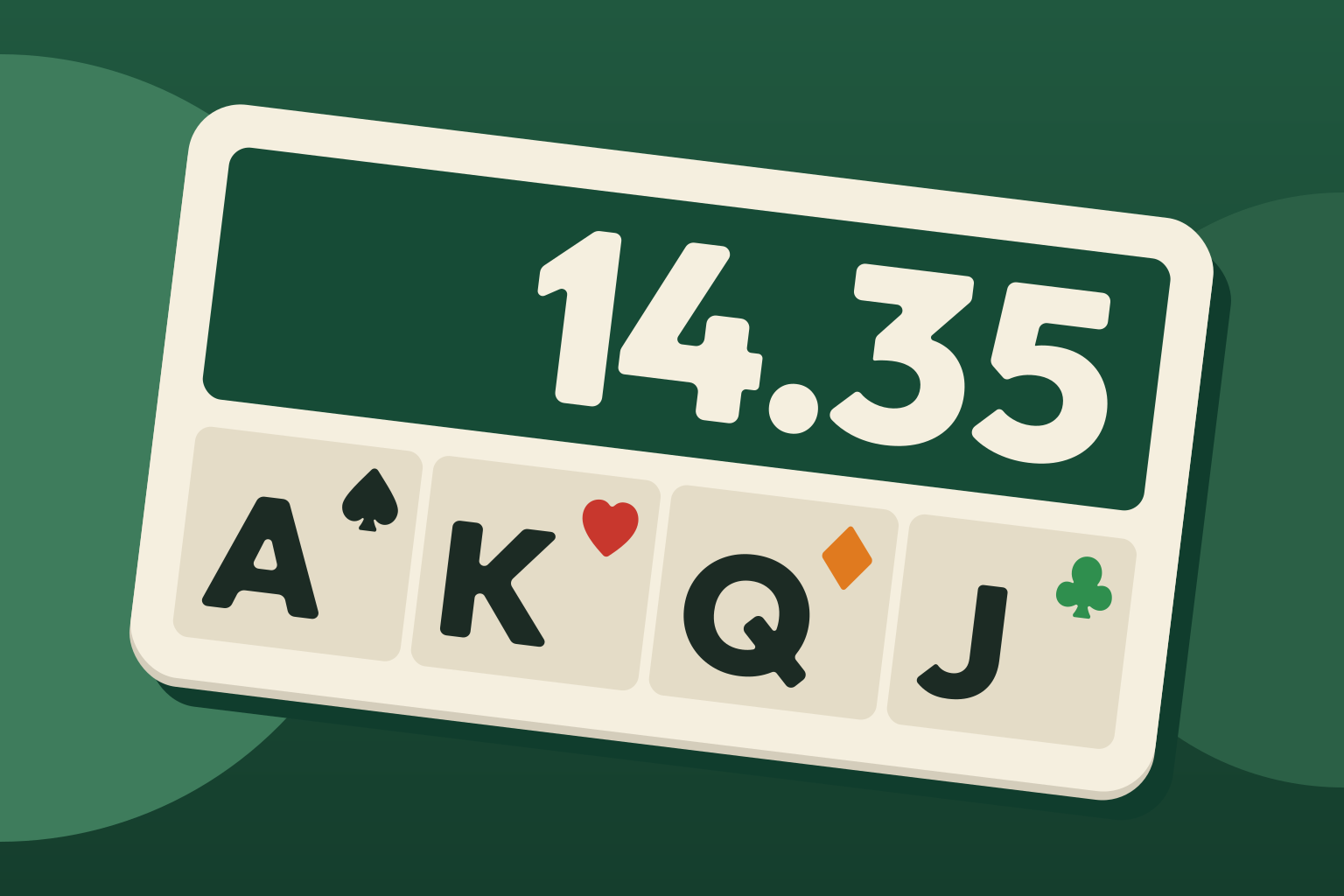
Kaplan-Rubens comes from a series of articles by Edgar Kaplan and Jeff Rubens in The Bridge World. Each suit is valued on its own in 26 steps. The honors count 4, 3, 2, 1 and a half for the ten, nines and eights that fill a suit add half points, the running total is weighted by the length of the suit, and each honor then earns a second amount for how well it is placed. A guarded king is worth more than a bare one, a queen beside the ace or king more than a queen alone, and a jack earns little unless two higher honors sit in front of it. Each short suit adds 3, 2 or 1, the four suits are added, one point comes off, and a 4-3-3-3 hand gets half of it back.
The result reads on the familiar 40-point scale but moves in twentieths. A flat 13-count built on queens and jacks, such as QJx QJx QJxx KJx, comes out near 9, and a flat 13-count of three aces with tens and nines, A109 A109 A109 J1098, comes out at 15. The figures agree with Richard Pavlicek's evaluator and Jeff Goldsmith's to the last 0.05, and the method is tested against both in the code.
Common questions
Short answers to what readers ask most.
- What is a good Kaplan-Rubens score to open?
- About 12, the same line most players use for high-card points. The method sets no opening standard of its own. It runs a little above the point count on average, about 10.9 against 10 on a random hand, because it counts shortness too.
- Why does the evaluator show several counts?
- Because each one answers a different question. HCP and length points decide whether to open, shortness points apply once a fit is found, controls and quick tricks matter for slams and defense, and the losing trick count sets the level in a suit contract.
- How do I enter a ten or a void?
- Type T or 10 for the ten and a hyphen for a void, so a hand with no clubs reads AKJ82 Q973 J654 -. An x stands for any card below the eight.
- Does the evaluator count distribution for Kaplan-Rubens?
- Yes. Length weights every suit, and a void, a singleton and a doubleton add 3, 2 and 1 points, with no need to wait for a fit.
Practice: hand evaluation counts
Eight quick questions on what you just read. For a longer session, take the hundred-question quiz.