Partner's Hand Calculator
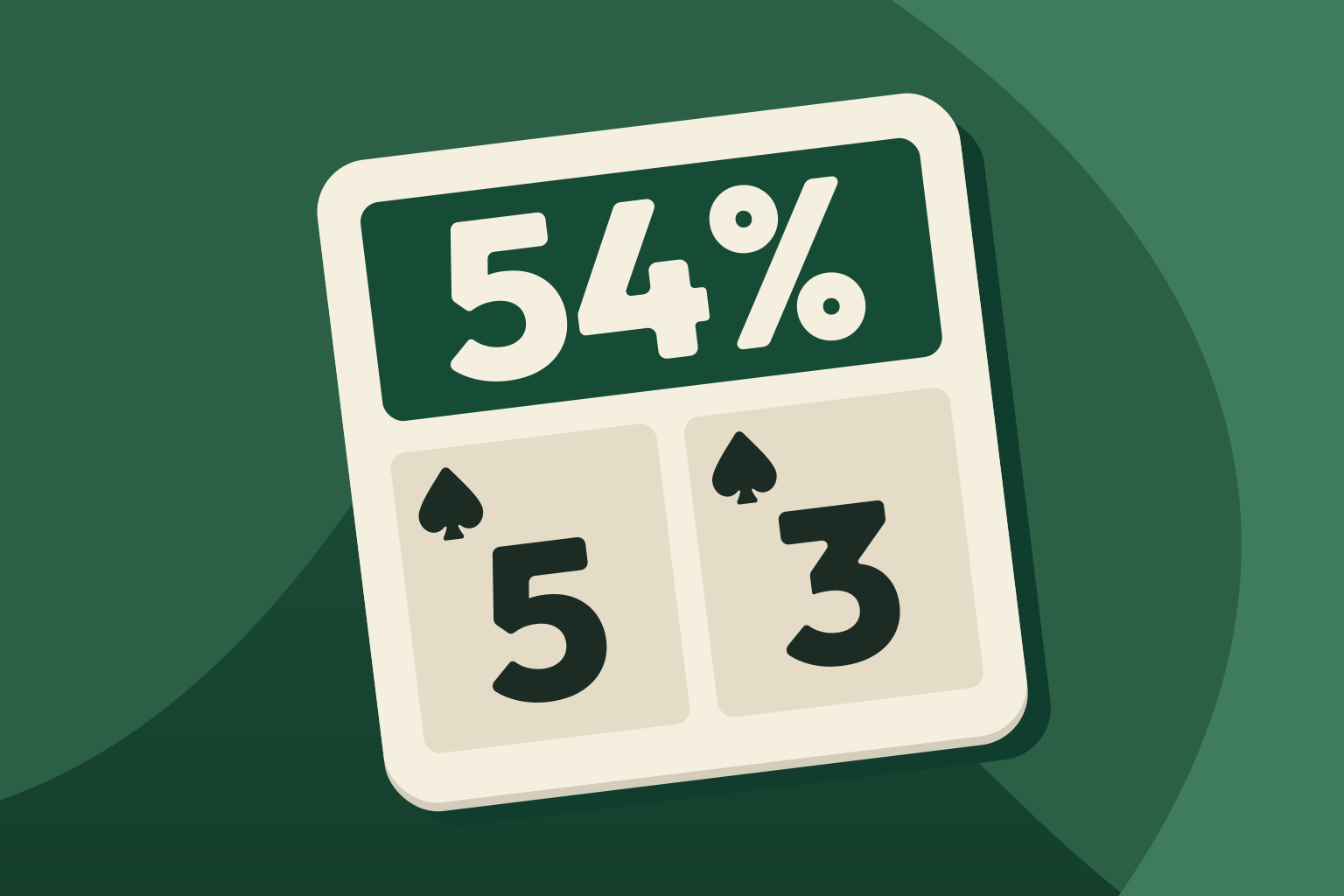
A partner's hand calculator takes your own thirteen cards and gives the chance that partner holds a given length in each suit and a given range of points. Opposite a five-card major, partner has three or more cards in it 54 percent of the time. Every figure is an exact count over the 8,122,425,444 hands partner can hold.
Updated 14 October 2026
Set your own thirteen cards and the conditions on partner, and the calculator gives the chance that partner was dealt a hand like that. Out of the box it asks how often partner holds three or more spades opposite the five-card suit in the sample hand, and the answer is 54.37 percent, the odds that a 1♠ opening has an eight-card fit before anyone bids. Change any suit, the point range or the hand itself and the figure updates.
Partner holds 3 or more spades 54.37% of the time, about one hand in 2. You hold 12 of the 40 points, so partner averages 9.3.
| Suit | 0 | 1 | 2 | 3 | 4 | 5 or more |
|---|---|---|---|---|---|---|
| ♠ Spades (8 out) | 2.5% | 13.9% | 29.2% | 30.6% | 17.4% | 6.4% |
| ♥ Hearts (11 out) | 0.5% | 4.1% | 14.5% | 26.7% | 28.1% | 26.2% |
| ♦ Diamonds (8 out) | 2.5% | 13.9% | 29.2% | 30.6% | 17.4% | 6.4% |
| ♣ Clubs (12 out) | 0.2% | 2.6% | 10.6% | 22.9% | 28.6% | 35.2% |
How the figures are counted
Once your hand is fixed, 39 cards are left and partner holds 13 of them, chosen at random before the auction. There are 8,122,425,444 ways to pick them, and the calculator counts exactly how many meet the conditions. Which honors you hold matters as much as how many points. If the ace and king of spades are in your hand, partner cannot have them, and the point ranges take that into account.
Lengths and points are counted together, so three or more spades with 6 or more points is a single exact figure, 43.86 percent on the sample hand, and not two separate figures multiplied. The table under the result shows partner's length in each suit on its own, which is a plain count on the cards you cannot see. Nothing is simulated, so the numbers never move between visits.
Reading the result at the table
The numbers are a priori, before anyone has bid, and they are the right basis for a partnership agreement. Opposite a five-card major, partner holds three or more cards in it just over half the time and four or more about once in four deals. Opposite a six-card suit the two-card fit comes up three times in four. A bid that only works when partner holds a particular shape is worth pricing here before you adopt it.
Points follow the same pattern. The 28 points you do not hold on the sample hand are shared by three players, so partner averages a third of them, and partner has 6 or more 83.19 percent of the time and an opening bid of 12 or more 28.48 percent. Once the auction starts the other hands stop being random, and the figures here become the starting point rather than the answer. Hand patterns and high-card points give the same counts for a hand picked at random.
Common questions
Short answers to what readers ask most.
- How likely is partner to have three-card support for my five-card major?
- 54.37 percent. Eight cards in the suit are out among the 39 you cannot see, and partner holds three or more of them a little more than half the time.
- How many points does partner have on average?
- A third of the points you do not hold. Holding 12 yourself leaves 28 for three players, so partner averages 9.3.
- Are the odds exact or simulated?
- Exact. Every figure is a count of partner's possible hands divided by the 8,122,425,444 there are, so there is no sampling error.
- Do the figures change once the bidding starts?
- Yes. Each bid and pass rules out hands, so the a priori figure is only the starting point. The calculator describes the deal before anyone has spoken.
Practice: partner's hand odds
Eight quick questions on what you just read. For a longer session, take the hundred-question quiz.