Odds
Bridge Hand Patterns
Sort your suit lengths from longest to shortest and you have the hand's pattern. It tells you whether a hand is balanced or shapely, and together with the high cards it steers the bidding, from the choice between notrump and a suit to how high to compete. Knowing how often each pattern is dealt helps you judge what partner and the opponents are likely to hold.
Hand patterns by frequency
| Rank | Pattern | Chance |
|---|---|---|
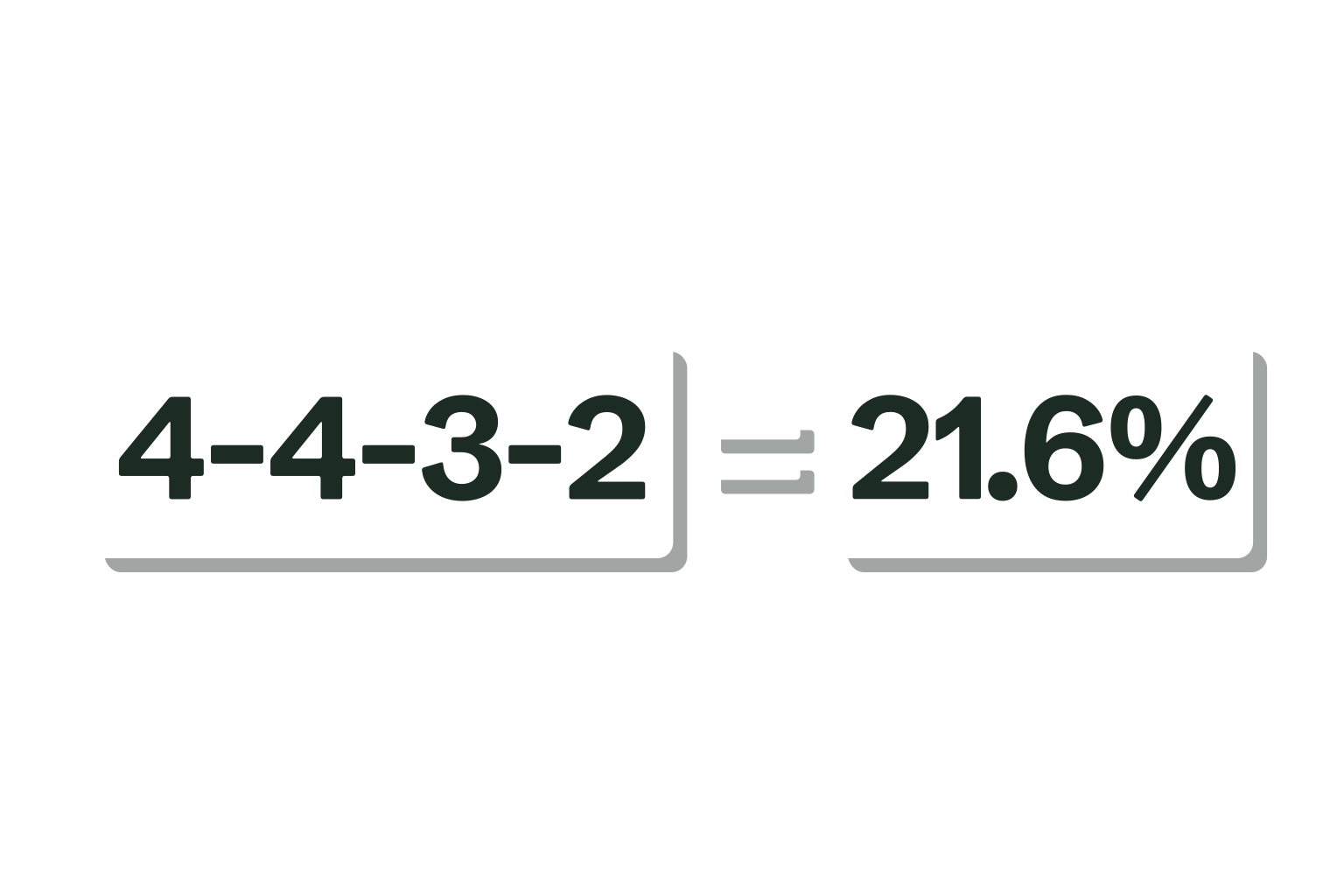
| 1 | 4-4-3-2 | 21.55% |
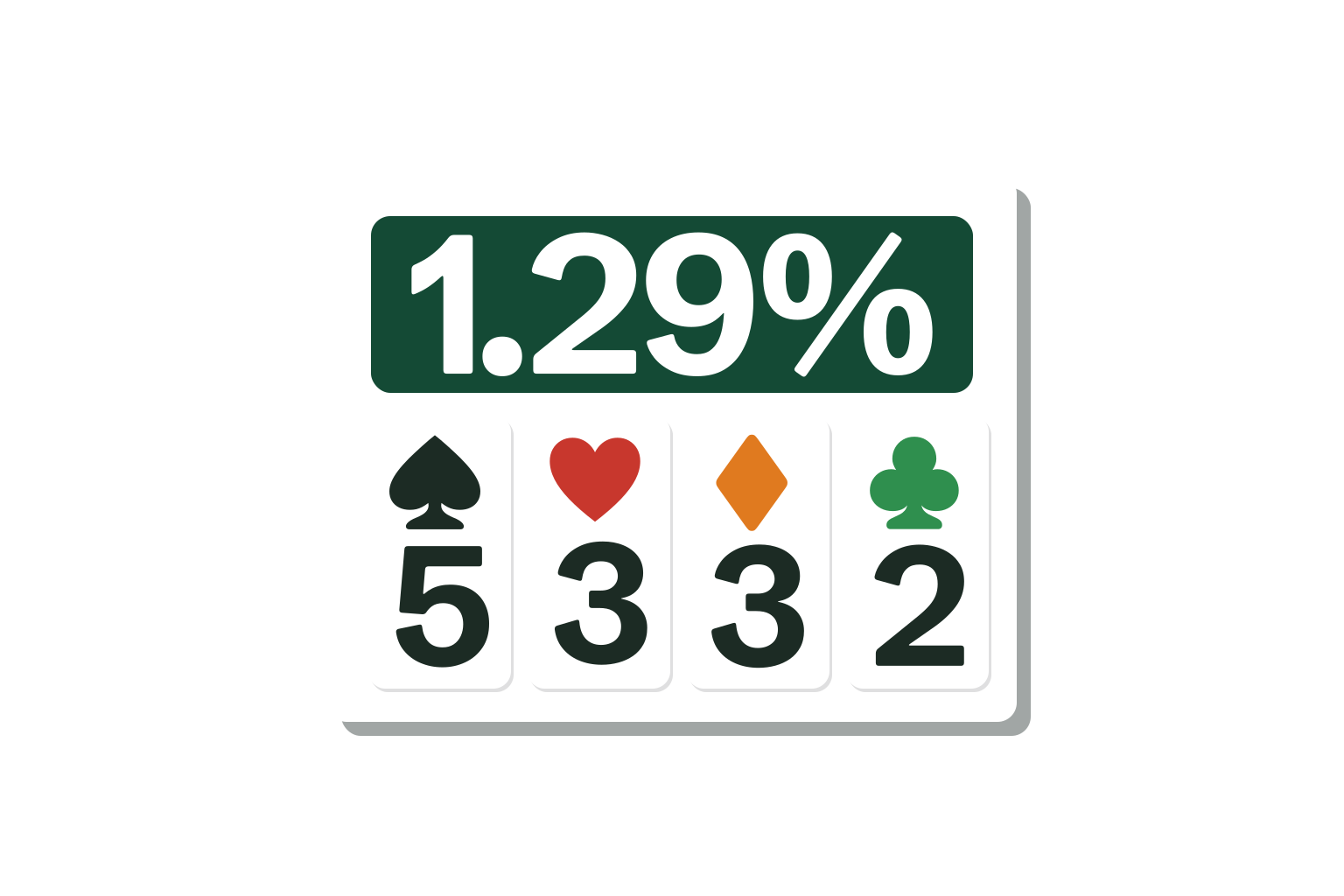
| 2 | 5-3-3-2 | 15.52% |
| 3 | 5-4-3-1 | 12.93% |
| 4 | 5-4-2-2 | 10.58% |
| 5 | 4-3-3-3 | 10.54% |
| 6 | 6-3-2-2 | 5.64% |
| 7 | 6-4-2-1 | 4.70% |
| 8 | 6-3-3-1 | 3.45% |
| 9 | 5-5-2-1 | 3.17% |
| 10 | 4-4-4-1 | 2.99% |
The ten most common patterns show first. Tap Show all 39 patterns for the full list.
Reading the pattern table
A pattern ignores which suit is which. The 5-4-3-1 row at 12.93 percent counts five spades and four hearts exactly as it counts five clubs and four diamonds, so any one specific arrangement is much rarer than its row. The flat 4-3-3-3 comes in at 10.54 percent, only fifth, behind 4-4-3-2, 5-3-3-2, 5-4-3-1 and 5-4-2-2. Toward the bottom the figures shrink fast, and 13-0-0-0 is so rare that it shows as zero.
Balanced hands, singletons and voids
Three patterns are balanced: 4-3-3-3, 4-4-3-2 and 5-3-3-2. Together they account for 47.60 percent of hands, so almost every second hand you pick up is balanced. Whether it then opens or rebids in notrump depends on its points. Some players also call 5-4-2-2 and 6-3-2-2 semi-balanced and open 1NT with them now and then.
At least one singleton turns up in 30.79 percent of hands. A void is rarer, at 5.11 percent, or about one hand in twenty. Both feed straight into the bidding, because a short suit in a hand with a trump fit adds tricks that the point count does not see.
Shape in the bidding
Most hand evaluation starts from points and then adjusts for pattern, and hand evaluation covers how much each feature is worth. The rule of 20 folds the two longest suits into the decision to open. To price a pattern and a point range together, the bridge odds calculator does the counting, and the high-card points table gives the point side alone.
Common questions
Short answers to what readers ask most.
- What is the most likely hand pattern in bridge?
- 4-4-3-2 turns up most often, in 21.55 percent of deals. Behind it are 5-3-3-2 with 15.52 percent and 5-4-3-1 with 12.93 percent.
- How many hand patterns are there in bridge?
- There are 39 patterns, counting each set of four suit lengths once in descending order, from 4-3-3-3 to 13-0-0-0.
- How often is a bridge hand balanced?
- A hand is balanced 47.60 percent of the time. The figure adds 4-4-3-2, 5-3-3-2 and 4-3-3-3 together.
- What are the odds of a void in bridge?
- A single hand holds at least one void 5.11 percent of the time, about once in twenty deals. A singleton is far likelier, at 30.79 percent.
Practice: hand patterns
Eight quick questions on what you just read. For a longer session, take the hundred-question quiz.