 Odds
Game and Slam Odds
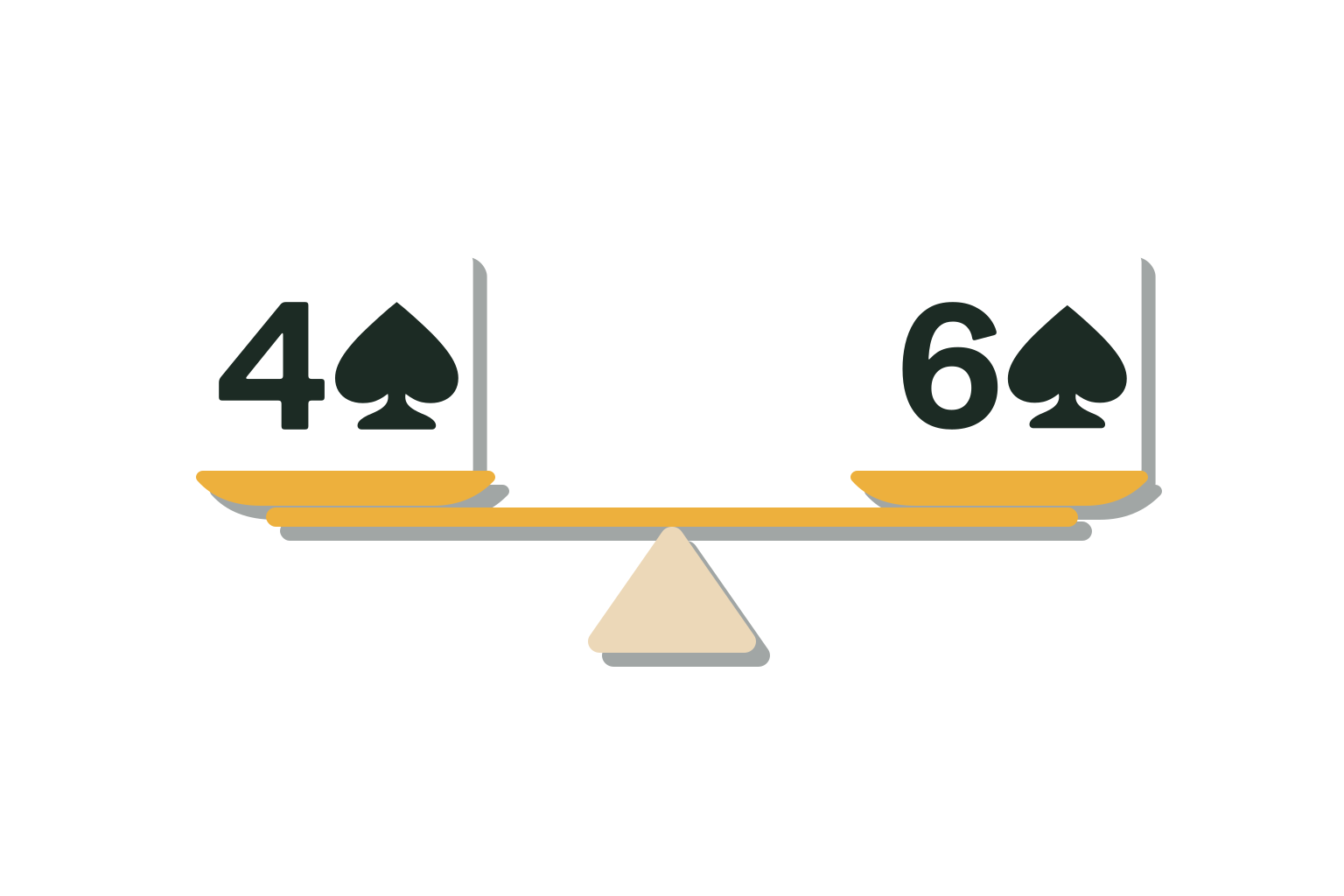
Game and slam odds tell you how often a contract has to make to be worth bidding. Going down in a game or slam costs points, and stopping short of one that would have made costs points too, so the decision turns on the chance of success. Knowing where the break-even lies helps you judge when to push on and when to settle for a safer contract.
Break-even odds for games and slams
| Decision | Not vulnerable (green) | Vulnerable (red) |
|---|---|---|
| Game in a major (4♥ or 4♠) | 45.5% | 37.5% |
| Game in notrump (3NT) | 45.5% | 37.5% |
| Game in a minor (5♣ or 5♦) | 45.5% | 37.5% |
| Small slam in a major (6♥ or 6♠) | 50.0% | 50.0% |
| Small slam in a minor (6♣ or 6♦) | 47.6% | 48.0% |
| Small slam in notrump (6NT) | 50.0% | 50.0% |
| Grand slam in a major (7♥ or 7♠) | 56.0% | 56.7% |
| Grand slam in a minor (7♣ or 7♦) | 56.0% | 55.2% |
| Grand slam in notrump (7NT) | 56.0% | 56.7% |
Where the percentages come from
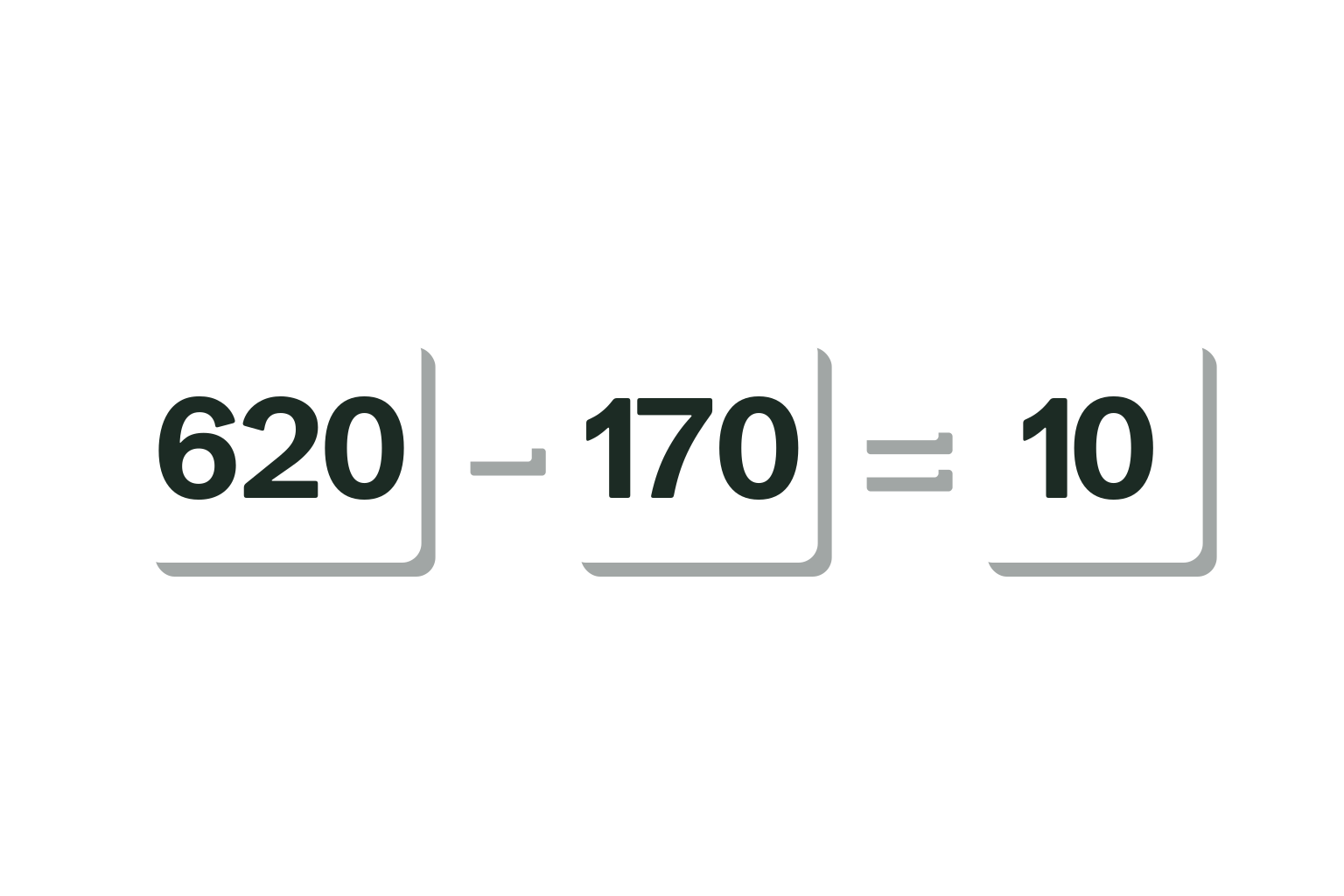
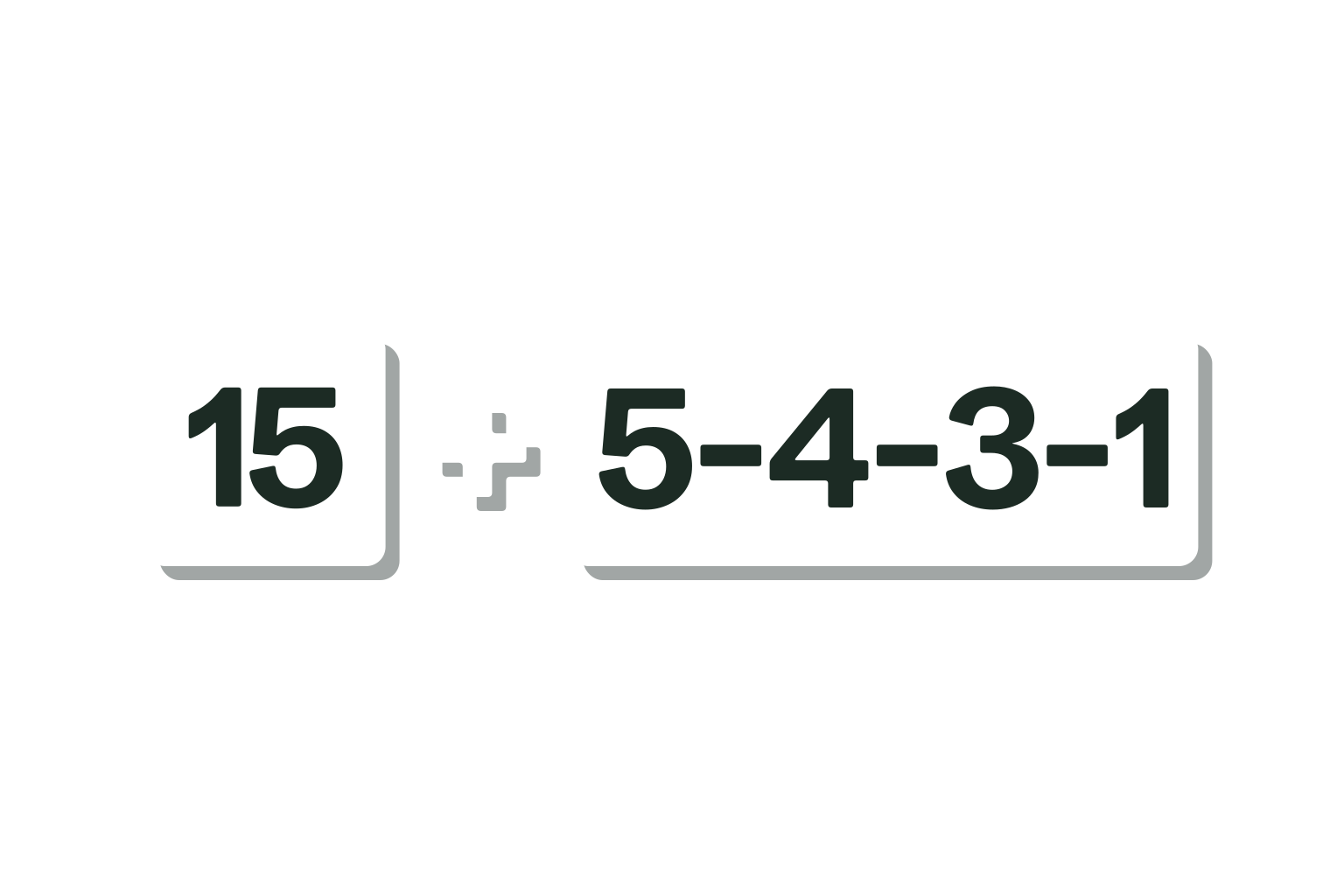
Every row weighs two outcomes on the IMP table. Take 4♠ vulnerable against stopping in 2♠. When ten tricks make, the game scores 620 and the part score 170, a gain of 450 or 10 IMPs. When only nine make, the game goes one down for minus 100 while the part score would have taken 140, a loss of 240 or 6 IMPs. Bidding the game breaks even when it makes 6 times in 16, which is 37.5 percent.
The level you stop at makes no difference to the bar. Stopping in 3♠ and making ten tricks scores 170, the same as stopping in 2♠ and making ten, so the gain and the loss are unchanged whichever part score you stop in. Only vulnerability and the size of the bonus at stake move it.
Not vulnerable the gain shrinks to 6 IMPs and the loss to 5, so game needs 45.5 percent. A small slam in a major or notrump needs 50 percent at either vulnerability (a minor-suit slam slightly less, 47.6 or 48.0), because the slam bonus gained and the game score lost come to about the same number of IMPs. A grand slam in a major or notrump needs 56.0 percent not vulnerable and 56.7 vulnerable (a minor-suit grand 56.0 and 55.2), since going down in seven throws away a small slam that was already made.
Red, green and white
Players call a vulnerable side red and a non-vulnerable side green or white, after the colors on the boards.
At matchpoints none of this applies in the same way. Each board is ranked against the field, a game is a gain only when it beats the tables that stopped lower, and the break-even sits at roughly 50 percent for every decision in the table.
Using the numbers in the auction
At teams, bid the vulnerable game when it is close. A game that depends on one of two finesses is comfortably over 37.5 percent. Slams need an even chance, and a grand that rests on a single finesse is a losing bet. Before a slam, use Blackwood to check the aces, and see hand evaluation for judging when the values are there. The scoring guide covers the bonuses behind each row.
Common questions
Short answers to what readers ask most.
- What percentage do you need to bid a vulnerable game?
- At IMPs a vulnerable game breaks even at 37.5 percent. Bid it whenever it makes more often than that.
- What are the odds needed for a non-vulnerable game?
- About 45.5 percent at IMPs. The smaller game bonus not vulnerable makes the gain from bidding it smaller.
- When should you bid a grand slam?
- When it makes about 56 percent of the time or more at IMPs, 56.0 not vulnerable and 56.7 vulnerable in a major or notrump. A grand that needs a single finesse falls short.
- Are the break-even odds different at matchpoints?
- Yes. At matchpoints the break-even is roughly 50 percent for games and slams alike, because each board is ranked against the field rather than scored by the size of the swing.
Practice: game and slam odds
Eight quick questions on what you just read. For a longer session, take the hundred-question quiz.