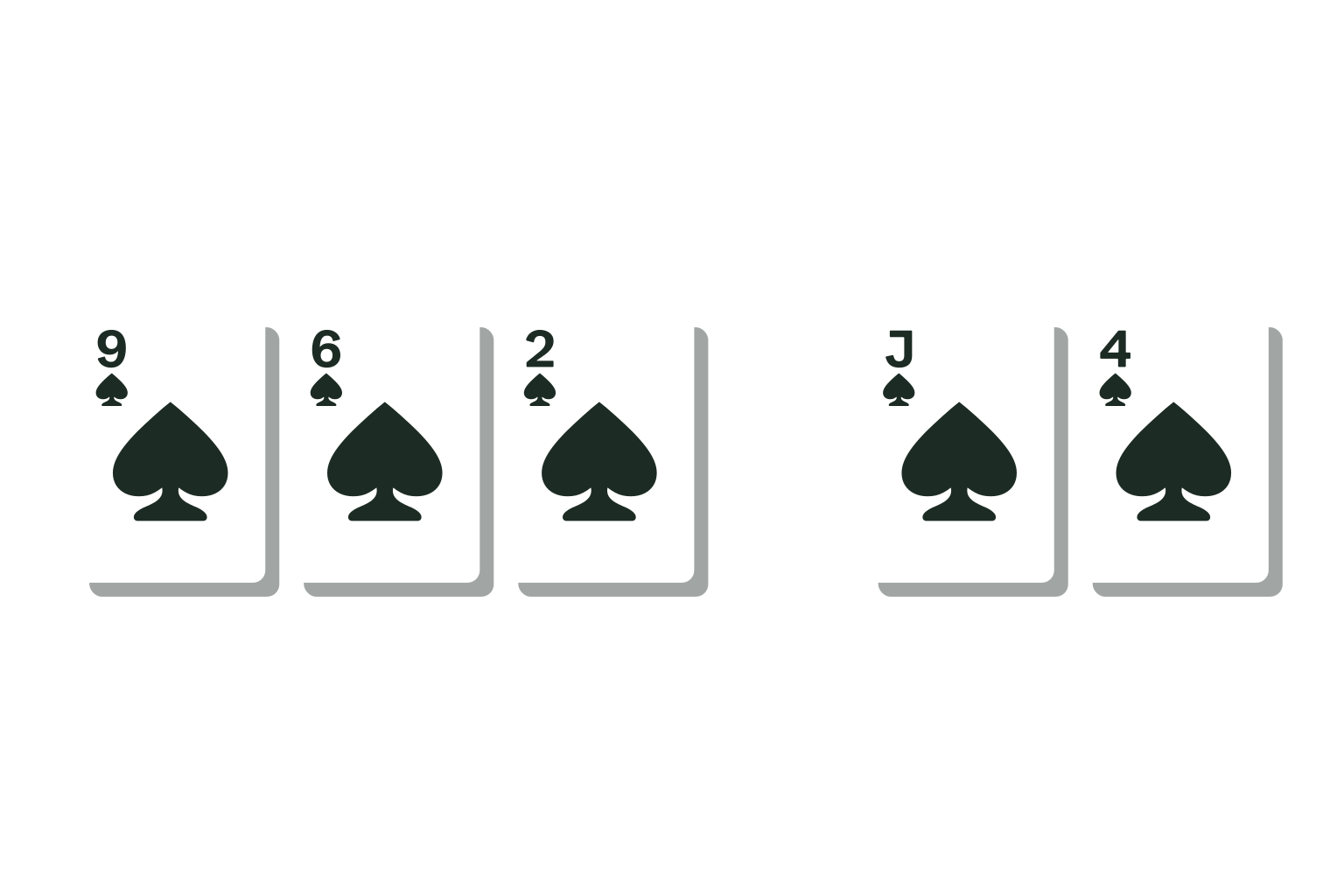
 Odds
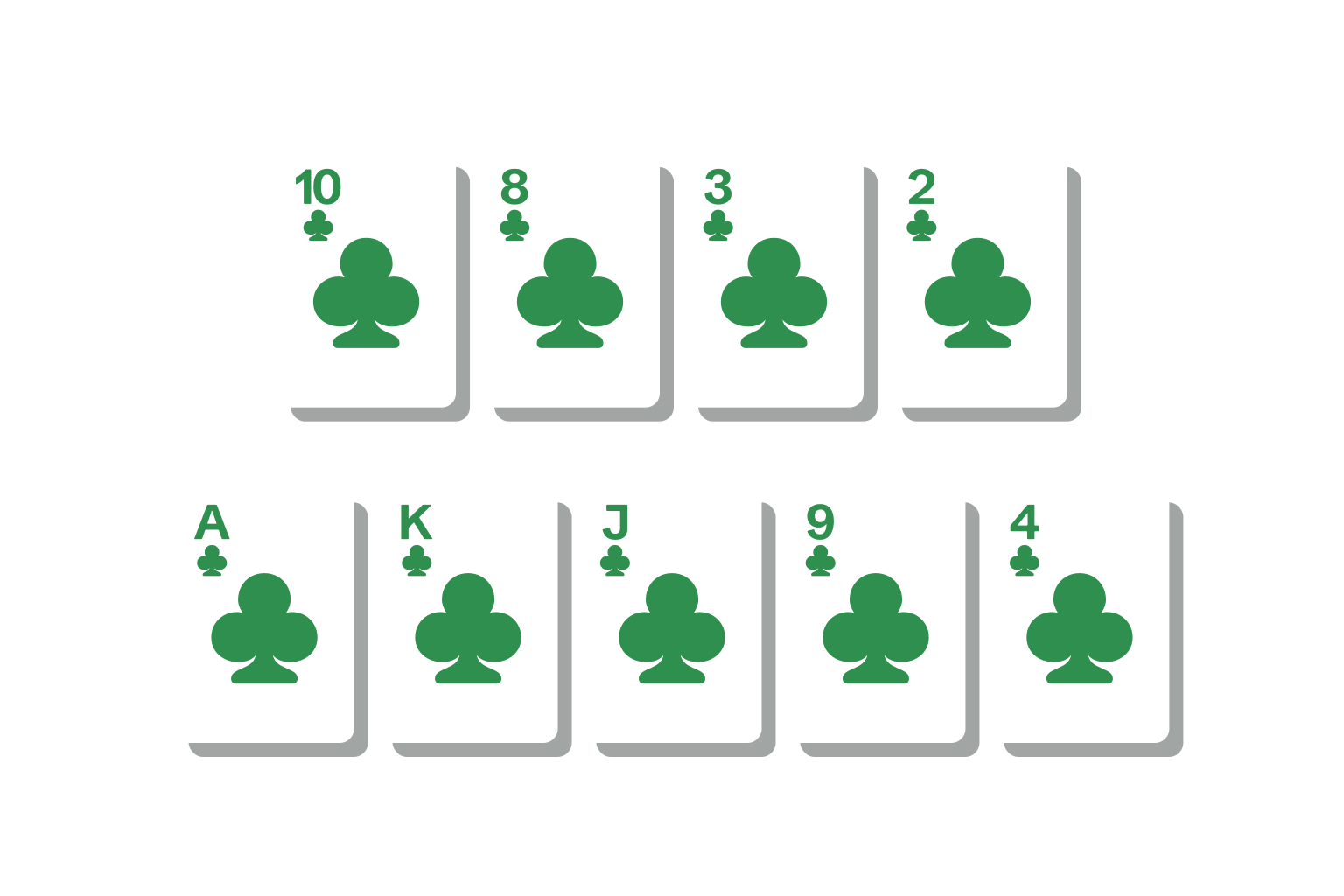
Finesse or Drop
Finesse or drop is the choice declarer faces when the opponents hold the queen of a suit and your side holds the ace, king and jack. You can cash the top honors and hope the queen falls, or finesse and hope it sits with a particular defender. Which line is better depends mostly on how many cards your side holds in the suit, and a short rule of thumb settles the common cases.
Why nine never and eight ever
Holding nine cards, four are missing. The queen drops in two rounds if it is doubleton, which covers every 2-2 break at 40.70 percent, or if it is singleton, which is a quarter of the 3-1 breaks and adds 12.43. Together they come to 53.13 percent. That is a little better than the even-money finesse, but the margin is small and easy to overturn.
Holding eight, five are missing and the drop does much worse. The queen now has to be doubleton, two fifths of the 3-2 breaks (27.13 percent), or singleton, a fifth of the 4-1 breaks (5.65). The total of 32.78 is well short of 50, so the finesse is the percentage play.
When to break the rule
Eight ever, nine never is the right play before anything is known. It gives way to any real information. If one defender has bid a long suit, the vacant places make the queen likelier to sit with the other defender, and declarers often play that defender for it even holding nine. A defender who shows out of another suit early has more room left for yours, so the queen becomes likelier to be with that defender.
Entries matter too. A finesse needs the lead from the right hand, and if the only way to get there costs a trick elsewhere, the drop can be the better line even holding eight. The suit break odds table gives the splits behind these figures. Many holdings also offer extra chances, such as a lower card that guards against one bad break, and those are covered in suit combinations and safety play.
Common questions
Short answers to what readers ask most.
- What does eight ever, nine never mean?
- It is a rule for a missing queen. Holding eight cards, always finesse. Holding nine, never finesse and play the ace and king hoping the queen drops.
- What are the odds of the queen dropping with nine cards?
- A little over half the time: 53.13 percent, which beats the 50 percent of a simple finesse. It falls whenever the suit breaks 2-2 or the queen is singleton.
- What are the odds of the queen dropping with eight cards?
- Only 32.78 percent. Five cards are missing, so the queen needs to be singleton or doubleton, and the finesse at 50 percent is much better.
- Should you ever finesse with nine cards?
- Yes, when the bidding or the early play tells you where the length lies. The edge for the drop is small, so a single clue about the defenders' shape can be enough to tip the choice.
Practice: finesse or drop
Eight quick questions on what you just read. For a longer session, take the hundred-question quiz.