 Card play
Safety Plays
A bridge safety play is a way of handling a suit that gives up a small chance of an extra trick to protect the contract against a bad split of the opponents' cards. It comes up when declarer can afford to lose one trick in the suit but not two. At teams and rubber bridge, where making the contract counts for far more than an extra trick, it is usually the right choice.
What a safety play is
You give up a trick you might have made, and in return a bad split of the missing cards can no longer beat the contract. The play starts from the question every suit combination starts from, which is how many tricks you need from this suit. If you need all of them, play for the maximum. If you can afford to lose one, look for the line that never loses two.
Some safety plays cost nothing at all. They change only the order of your plays, for example which honor you cash first, and the bad break shows up while you can still deal with it. Others cost an overtrick on the normal layouts. Both kinds come from the same habit. Before you lead the suit, picture the worst layout you can still handle, and play to handle it.
When to take a safety play
Whether the insurance is worth its price depends on the form of scoring. The bridge scoring guide covers the details.
| Scoring | Take the safety play? | Why |
|---|---|---|
| IMPs (teams) | Yes, almost always | An overtrick is worth 1 IMP; a failed game or slam costs 10 or more. |
| Rubber bridge | Yes, almost always | The contract and the game bonus dwarf an overtrick. |
| Matchpoints (pairs) | Usually no | An overtrick can beat every pair in the same contract, so it counts as much as making the contract on many boards. |
At matchpoints there are still two cases for taking one. The first is a safety play that costs nothing. The second is a contract the rest of the field will not reach, such as a thin game or a slam, where making it is a good score whatever the overtricks. Outside those two, most pairs players go for the overtrick.
A safety play in action
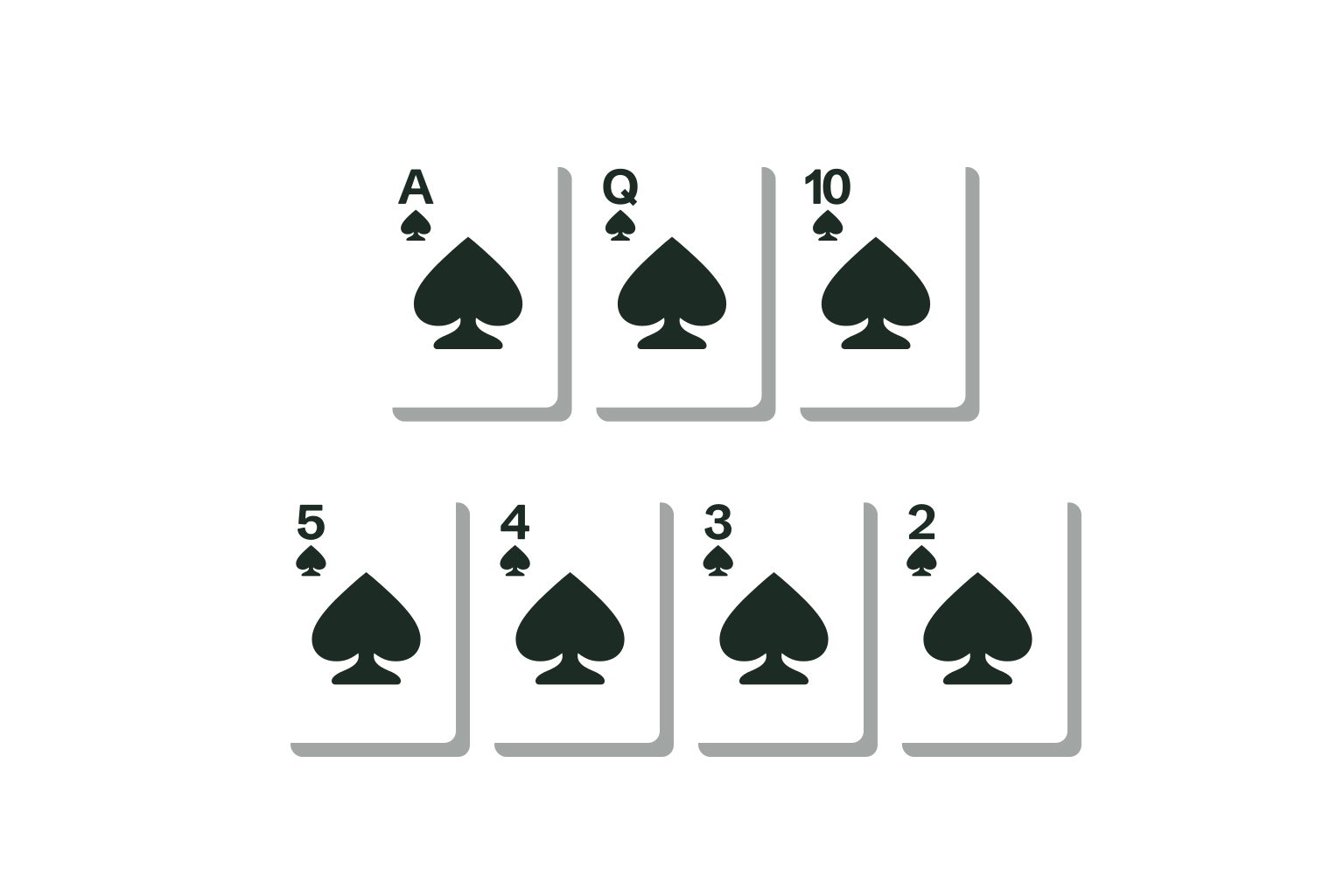
The classic case is nine trumps missing the queen, in a hand where you can afford to lose one trump trick but not two.
If you were playing for eleven tricks, the best start is the ♠K from South, which gives the best chance of no trump loser, about 58 percent. If West shows out on the king, though, East holds Q106 behind North's ace and jack, and you lose two trump tricks.
The safety play is to cash the ♠A first, which handles any 4-0 break:
- If West shows out, East has Q106 left. Lead from North toward South's king. East must play before South, and whatever East does you lose only one trick.
- If East shows out, West has Q106 sitting in front of North's jack and nine. Lead twice from South toward them and you lose only the queen.
- If both follow, play the king next. At most the queen is left outstanding.
Ten tricks are now certain. The price is a little of your overtrick chance. The ace-first line makes all five trump tricks about 53 percent of the time instead of 58. At IMPs that trade is easy.
More classic safety plays
Lead low toward the honors
K10987 in North and A432 in South leaves you missing QJ65. Cashing either top honor first makes four tricks about 95 percent of the time. Leading the 2 from South makes them every time. If West follows low, play the 7. Against the missing QJ65, North's 10, 9, 8 and 7 are all the same card, so the lowest one does the job. If East wins it, the ace and king take the rest, and if West holds all four, their queen and jack can take only one trick between them. If West shows out, win the king and lead toward the ace, which forces East to play before South. The safety play is not free: it cuts the chance of five tricks from about 53 percent, when you cash a top honor first, to about 19 percent.
Keep the honors over the length
A general rule covers many safety plays. When a 4-0 or 5-0 break is possible, cash first the honor that leaves your remaining tenace sitting over the defender who might hold the length. If you cannot cover both defenders, cover the one whose length you can pick up. Playing the wrong honor first is a common way to lose a contract to a bad break.
Safety plays with the whole hand
Not every safety play is a one-suit technique. Holding up an ace in notrump so that the dangerous defender runs out of the suit, drawing a round of trumps before taking a ruff, or ducking a trick to keep communication with dummy are all forms of the same idea. Each gives up a chance of an extra trick to make the contract safe. An endplay is often the safest line of all, because it can replace a finesse that might lose.
Common mistakes
- Playing the suit before counting your tricks. A safety play only exists once you know how many tricks you can afford to lose.
- Taking a costly safety play at matchpoints in a normal contract, where the overtrick is usually worth more.
- Skipping a free safety play. If one order of plays is never worse, use it every time, at any form of scoring.
- Cashing the honor from the wrong hand. Cash the one that keeps the tenace over the defender who can still hold length.
- Forgetting the rest of the hand. A safety play in trumps is useless if it gives the defenders time to cash a side suit.
The finesse guide explains the plays most safety plays are built from.
Common questions
Short answers to what readers ask most.
- What is a safety play in bridge?
- A safety play is a way of playing a suit that guards against a bad break at the cost of a possible overtrick. You take it when making the contract matters more than the extra trick.
- Should I make safety plays at matchpoints?
- Usually not, because an overtrick can be worth as much as the contract at pairs. Take a safety play at matchpoints when it costs nothing or when you are in a contract most of the field will not bid.
- Are safety plays always right at IMPs?
- Almost always. An overtrick is worth 1 IMP, while going down in a game or slam costs 10 or more, so a small premium for safety is a good investment.
- What is the safety play with nine cards missing the queen?
- It depends on the spots, but in general you cash the honor that keeps your tenace over the defender who might hold all four missing cards. With AJ987 opposite K432, cash the ace first and you can never lose two tricks.
- Is a hold-up play a safety play?
- Yes. Holding up an ace in notrump until one defender has no cards left in the suit gives up nothing in most layouts and protects the contract when the dangerous defender gets the lead. The rule of 7 says how long to hold up.
Practice: safety plays
Eight quick questions on what you just read. For a longer session, take the hundred-question quiz.