Card play
The Finesse
A finesse is a way of winning a trick with a lower honor while the opponents still hold a higher one. It succeeds only when the missing card is in the right opponent's hand. Knowing when to finesse, which way to do it and when to try another line is a large part of declarer play.
How a finesse works in bridge
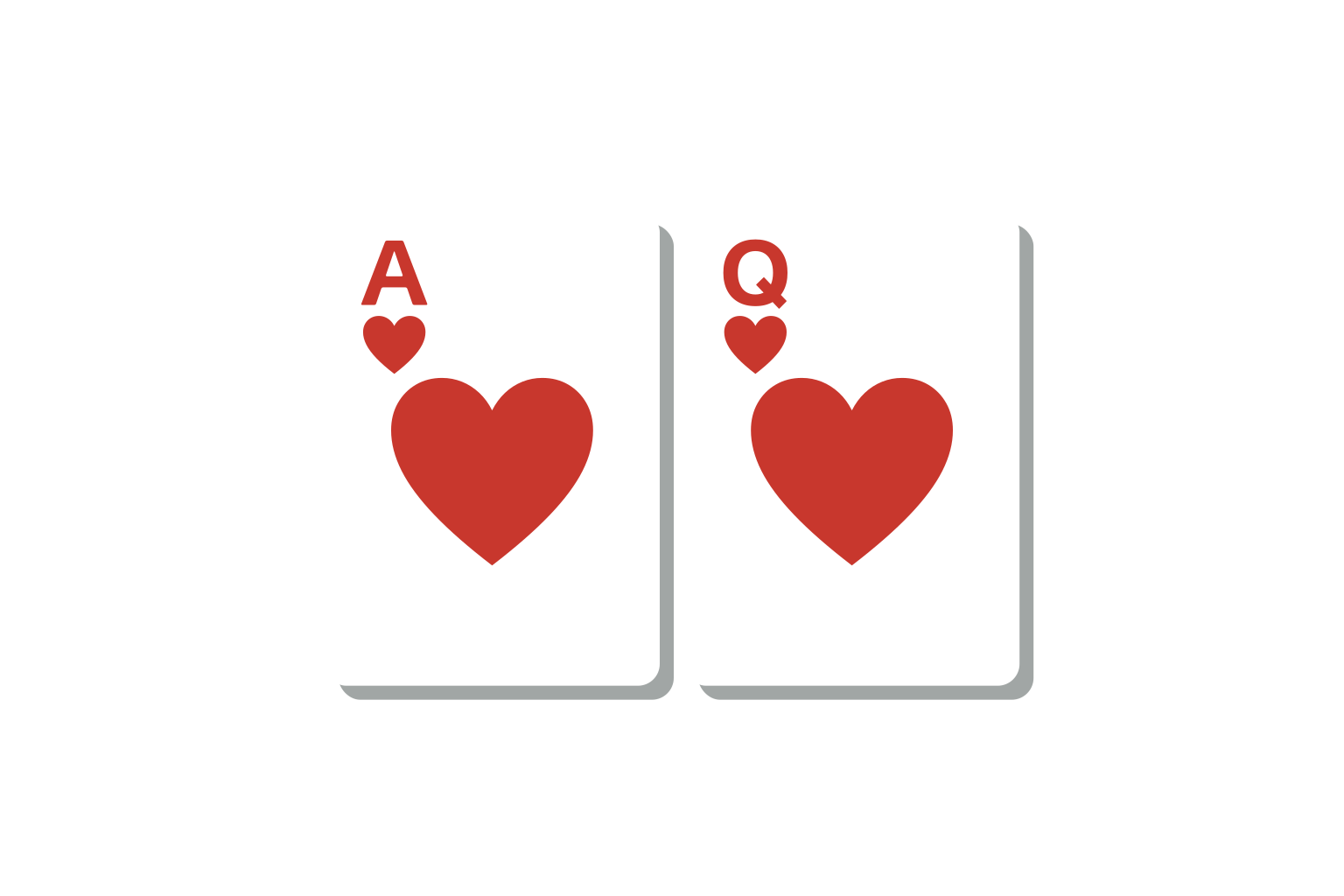
A finesse uses position. The defenders play in turn, and the defender on your left plays before the hand you are leading toward. Lead from South toward North's AQ and West must commit a card before you choose between the ace and the queen. If West holds the king, the queen wins whatever West does. West plays low and you put in the queen, or West plays the king and you win the ace, after which the queen is high.
Lead toward the card you hope will win, and never lead the card itself. If you lead the queen from North, whichever defender holds the king can take it, and you are left with only the ace.
Finessing against a king
AQ opposite three small is the textbook case. It gives a 50 percent chance of an extra trick and puts the ace at no risk. The same idea works with the honors split between the hands. Holding Kx in North and small cards in South, lead from South toward the king, and the king scores whenever West has the ace. Lead the king out from North and the ace takes it wherever it is.
The double finesse
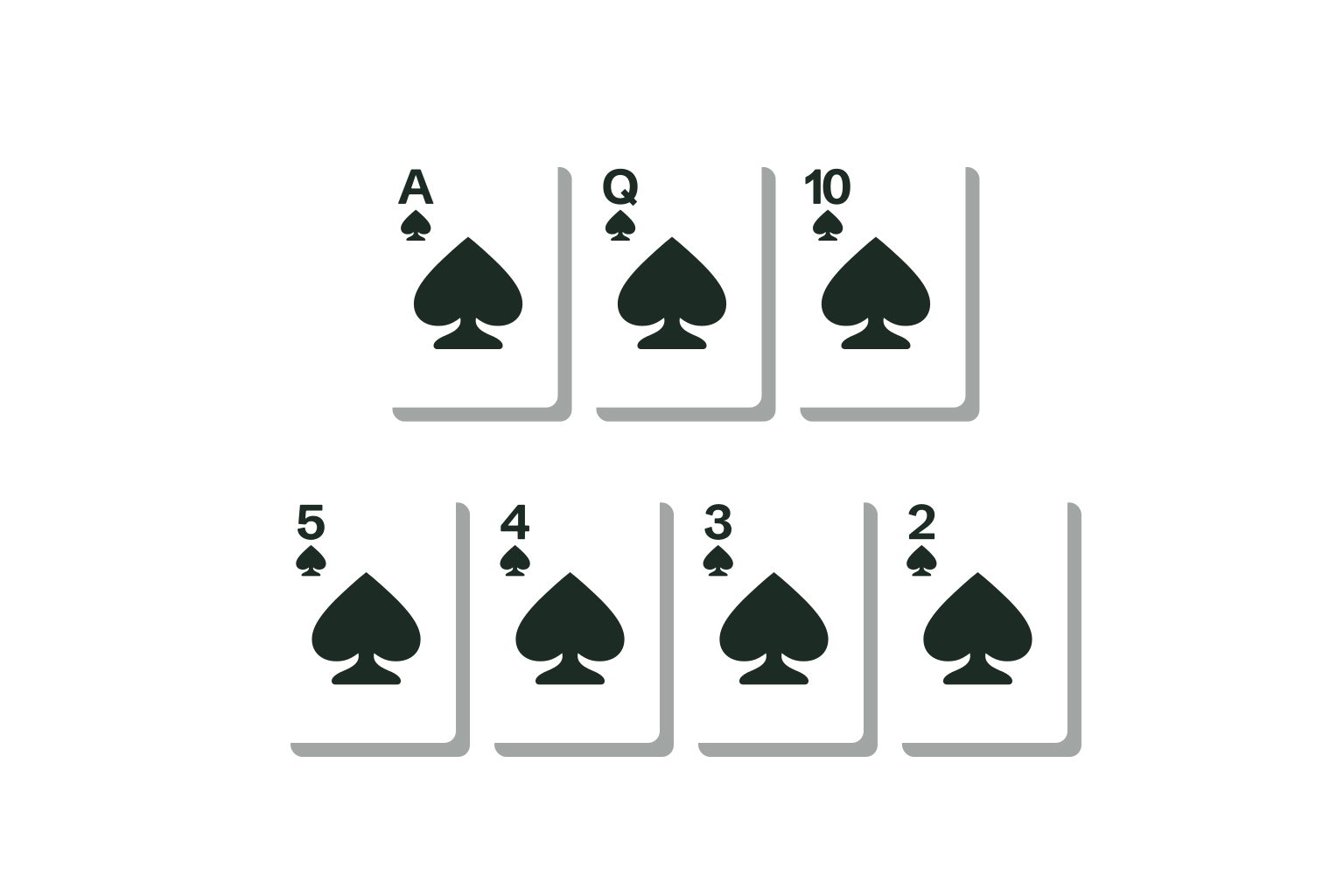
AQ10 opposite three small leaves you missing the king and the jack. In a double finesse you finesse twice. Lead low and play the ten, then come back to hand and lead low again toward the AQ. You lose only when East holds both the king and the jack, so two tricks come home about 76 percent of the time. If you need all three tricks, West must hold both the king and the jack, and then both finesses win whichever you take first.
The two-way finesse
Sometimes you can finesse against a missing queen in either direction. Take KJ3 in North and A102 in South. You can lead low toward the KJ, playing West for the queen, or low toward the A10, playing East for it. The cards alone give no reason to prefer one side, so the decision has to come from the rest of the hand.
Three sources of information decide a two way finesse:
- Count. The defender with more cards in the suit is more likely to hold the queen. Play off your other suits first and note who follows. If East turns out to hold five clubs and West only one, West has more room for hearts and is the favorite to hold the queen.
- The auction. A defender who opened the bidding holds most of the missing high cards. A defender who passed throughout, and has already shown up with two aces and a king, would have opened with the queen as well, so play the other defender for it.
- The opening lead. A lead from a sequence places the honors around it, and a short-suit lead suggests the leader has length elsewhere. Both tell you something about where the other high cards and the long suits are.
When none of these helps, take the finesse that keeps your other options open, or the one that keeps the dangerous defender off lead if it loses.
When not to finesse
A simple finesse is a 50 percent play before you know anything about the hand, and sometimes cashing your top cards and hoping the missing honor falls does better. The old saying is eight ever, nine never. Holding eight cards missing the queen, finesse. Holding nine, play for the drop. Like any rule of thumb it gives way when the auction or the play tells you where the queen is.
| Your cards | Missing | Finesse | Play for the drop |
|---|---|---|---|
| 8 cards | Q and four others | about 50% | about 33% |
| 9 cards | Q and three others | about 50% | about 53% |
When you hold nine cards the drop wins if the suit splits 2-2 or the queen is singleton, and those cases add up to slightly more than a finesse. When you hold eight, the queen falls in two rounds only if it is doubleton or singleton, and that is too rare. Missing the king, the break point moves up. Play for the drop with eleven cards (the king falls on a 1-1 break, 52 percent) and finesse with ten or fewer. The suit combinations guide has the full table of splits behind these numbers.
Other reasons to refuse a finesse have nothing to do with the suit. If a losing finesse lets the dangerous defender gain the lead and cash tricks, or if you can make the contract by a line that cannot fail, the finesse is a needless risk. A safety play or an endplay often replaces a finesse entirely. Put a defender on lead at the right moment and the defender has to lead the suit for you.
The ruffing finesse
In a suit contract you can finesse against a king without holding the ace and queen together. Put AQJ10 in North and a void in South, and lead the queen from North. If East covers with the king you ruff, and the jack and ten are now winners. If East plays low you discard a loser from South. The ruffing finesse works when East holds the king, the opposite of a normal finesse in the same suit, When the other hand also has a small card, as with AQJ opposite a singleton, you can take either finesse, and the auction and the count decide which.
Common mistakes
- Leading the honor you want to protect. Leading the queen from AQ lets whichever defender holds the king take it. Lead toward the honor, from the other hand.
- Leading an unsupported honor for a finesse. Leading the jack from Jxx toward AQx only works if you can afford a cover. Without the ten, lead low toward the honors.
- Finessing before gathering information. In a two-way guess, every suit you play first is free information. Take the guess last.
- Using up the entry you need to repeat it. A double finesse needs two entries to the hand you lead from. Count them before the first finesse.
- Finessing with nine cards missing the queen when nothing in the auction points to one defender. The drop is better.
Common questions
Short answers to what readers ask most.
- What is a finesse in bridge?
- A finesse is an attempt to win a trick with a card that is not the highest one out. You lead toward that card, and the defender holding the higher card has to play before you choose. If you hold AQ in one hand and low cards in the other, you lead from the low cards and put in the queen unless the king shows up.
- What are the odds of a finesse working?
- A simple finesse succeeds about half the time, because the missing honor is equally likely to be in either defender's hand. A double finesse, such as AQ10 opposite small cards, produces two tricks about 76 percent of the time.
- What does eight ever, nine never mean?
- It is a rule of thumb for missing the queen. Holding eight cards in the suit, take the finesse. Holding nine, cash the ace and king and hope the queen drops. The drop with nine cards succeeds about 53 percent of the time against about 50 percent for the finesse.
- How do I decide which way to take a two-way finesse?
- Gather information first by playing your other suits. The defender with more cards in the suit is more likely to hold the queen, and a defender who opened the bidding is more likely to hold any missing high card.
- What is a ruffing finesse?
- In a suit contract, you lead an honor from a sequence such as AQJ10 toward a void in the other hand. If the next defender covers with the king you ruff, and if not you discard a loser. It works when the king is with the defender who plays second.
Practice: the finesse
Eight quick questions on what you just read. For a longer session, take the hundred-question quiz.