Bridge Puzzles
A bridge puzzle sets you one decision from a bridge deal, such as how to play a suit, what to lead, or how to make or defeat a contract, and asks you to find the play with the best chance of success.
Updated 14 October 2026
Thirteen problems follow, one for each card in a hand: three opening leads, two declarer hands and one defense, then seven suit combinations you play out against perfect defense right here on the page. Every answer has been checked, the suit combinations against our solved store of every combination and the full deals with a double dummy solver, so the percentages come from the solver and not from a rule of thumb. None of them needs an account.
How to use these puzzles
The first six puzzles are full deals. They show you only the cards you would see at the table. Decide on your play, answer the question, and then look at the whole deal. Each one has a button that hands the deal to our double dummy solver, which works out how many tricks each side can take with all four hands in view.
The last seven are suit combinations. Each gives you North's and South's cards in one suit and the number of tricks you need from it, the target. Assume you can reach either hand whenever you like through the other suits, and assume the defenders see all the cards and defend perfectly. Play the suit on the board first, then answer the question under it. The answer and its explanation appear only after you pick.
The board deals a layout of the missing cards that beats you if it can, so a line that fails on some layouts will often fail here. If you lose, the board shows how, and you can play the suit again. A puzzle is solved when you find the line with the best chance, even if no line works every time.
Opening lead puzzles
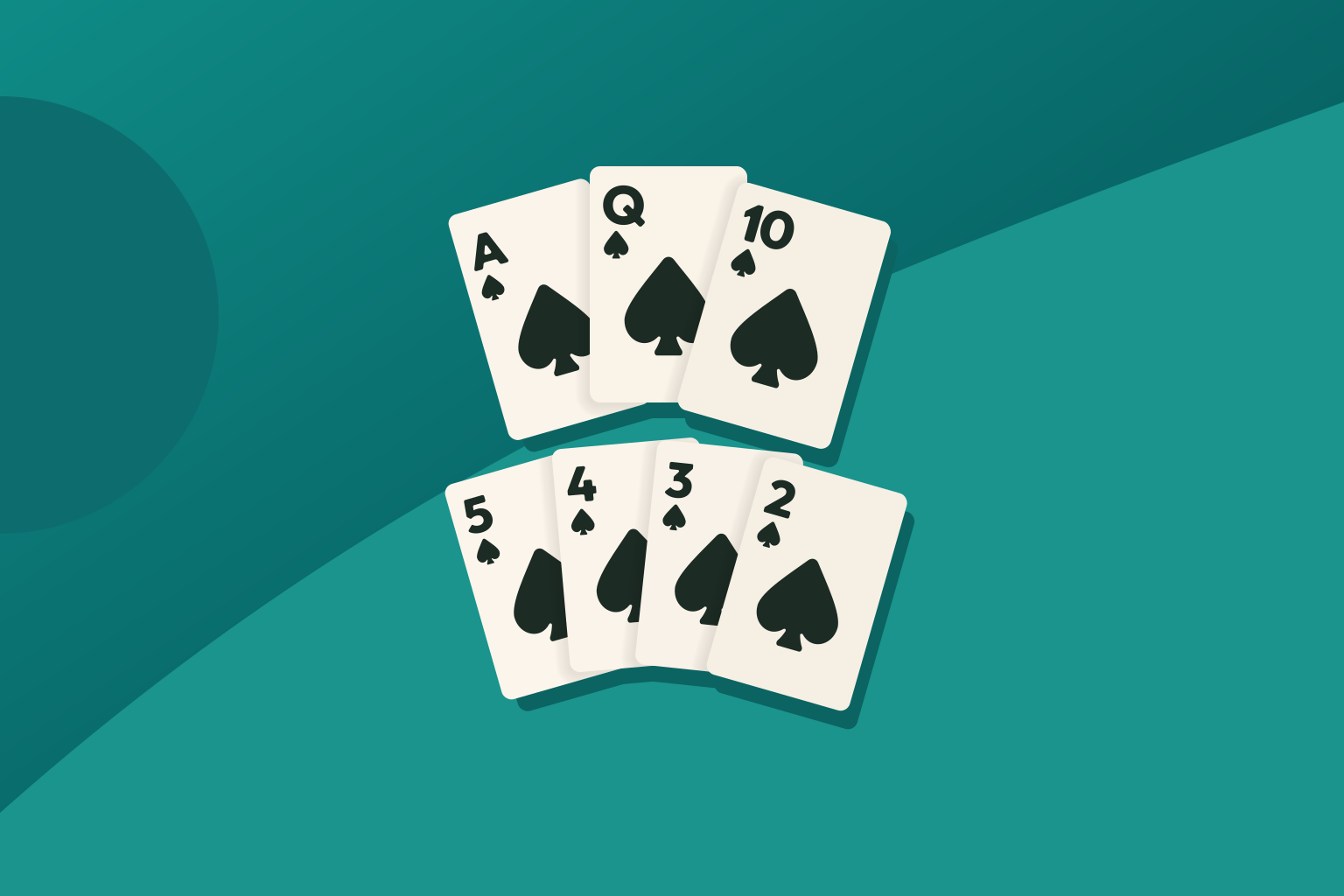
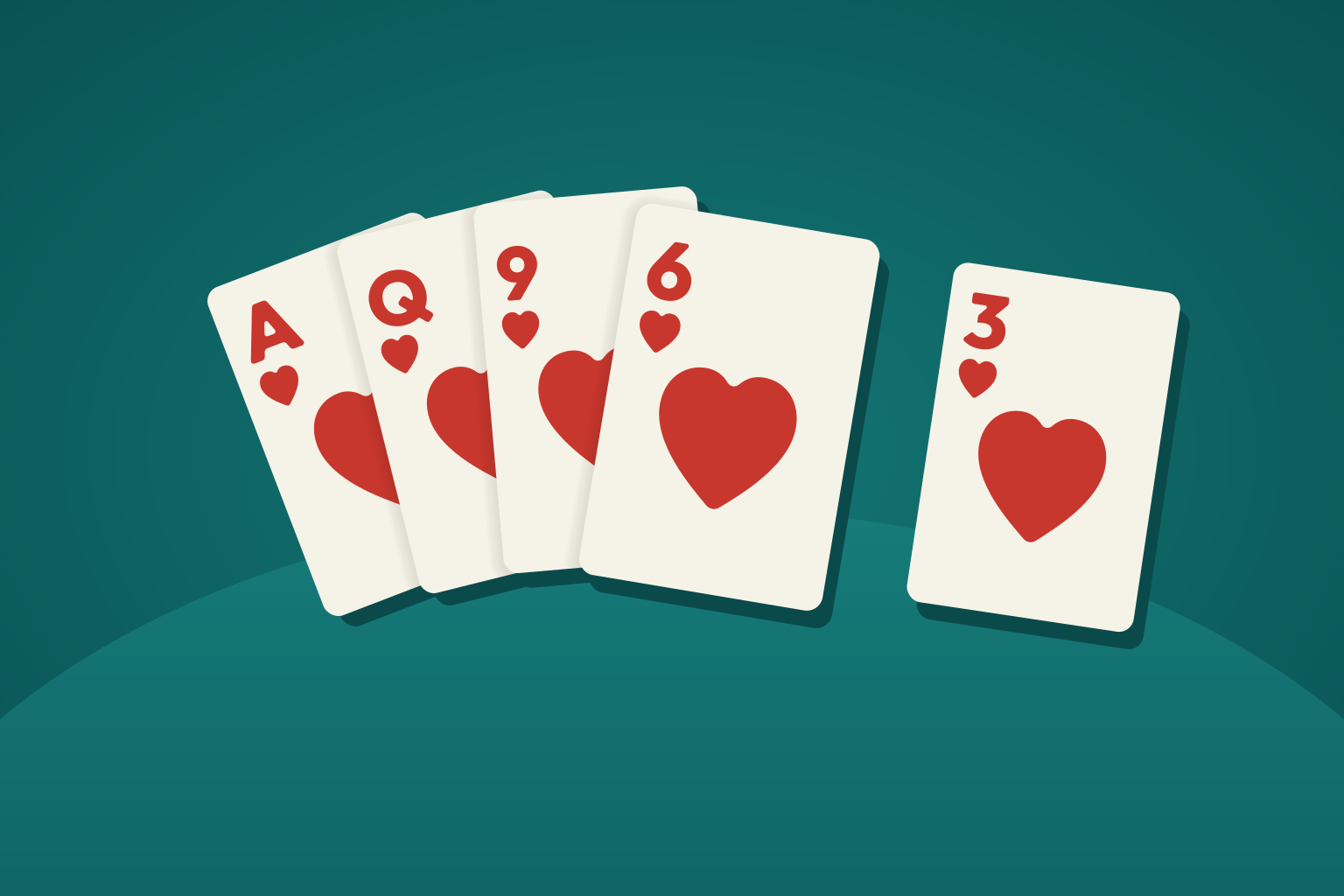
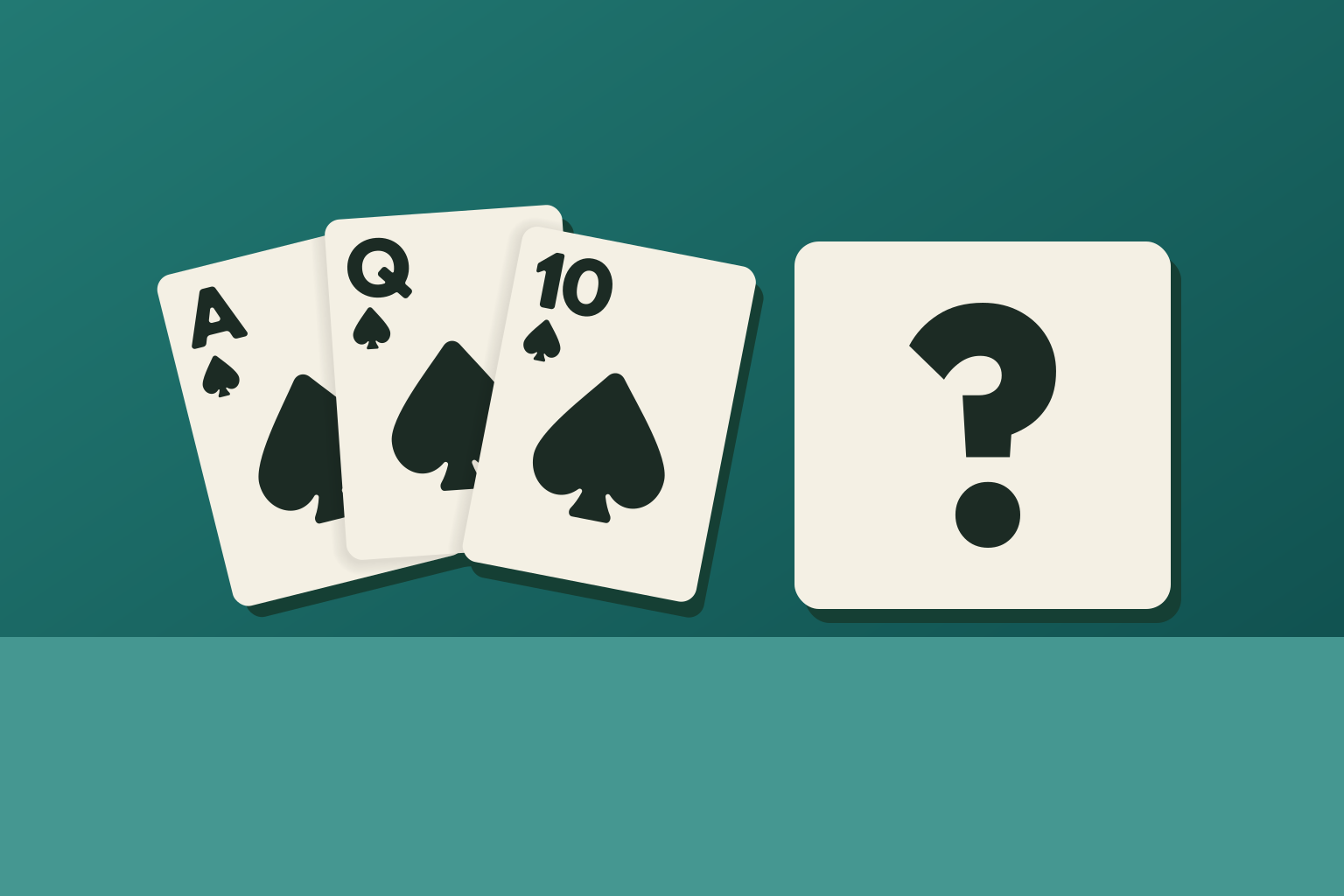
You are West in all three. Opening leads are single dummy problems, so the right answer is the lead that works best across the hands partner and declarer could hold, which is why each answer here follows a standard principle from the opening leads guide.
Puzzle 1: partner has overcalled
Puzzle 2: a preference to the first suit
Puzzle 3: against a small slam
The Lead Trainer grades leads on real auctions by simulating the hands that fit the bidding, and two problems are free without an account.
Try two lead problems in the Lead TrainerDeclarer play puzzles
Here you see dummy and your own hand, as at the table. Plan the play before you touch a card. Count your sure tricks, find the danger, and play to whatever stops it.
Puzzle 4: one stopper in 3NT
You need the diamonds for nine tricks, and the diamond finesse may lose to East. West's lead suggests a long spade suit headed by the king, queen and jack.
Puzzle 5: ruff first or draw trumps?
Count the tricks before you play to trick two. You have one spade, five hearts in your hand, one diamond and one club, which is eight. The other two have to come from somewhere.
A defense puzzle
Defense puzzles are the hardest kind, because you see only dummy and your own hand. Partner's lead and the auction have to fill in the rest.
Puzzle 6: in with the ace of trumps
Count the defense's tricks. You have the ♠A. Once trumps are drawn, dummy's clubs will give declarer discards for losers in hearts and diamonds, so the defense has to take its tricks now.
Suit combination puzzles
These run from easy to hard. The first two are warm-ups that most club players know. The last two catch out a good share of experienced players. The background for all of them is in the guides to suit combinations, the finesse and the safety play.
Puzzle 7: nine cards missing the queen
North holds AKJ32 and South 7654. Four cards are out, the queen among them, and you want all five tricks.
Puzzle 8: three honors, one ace missing
North holds KQJ8 and South 432. The defenders have the ace and will win one trick with it. You need three.
Puzzle 9: a long suit and a short ace
North holds A3 and South KQJ986. Eight cards, the 10, 7, 5, 4 and 2 are out, and you need all six tricks.
Puzzle 10: two honors to finesse against
North holds AK42 and South 1098. The queen and jack are both out and you need three tricks.
Puzzle 11: insure the contract
North holds AJ987 and South K432. The queen, 10, 6 and 5 are out. You need four tricks and can afford to lose one, but not two.
Puzzle 12: the king and the 10
North holds K1094 and South 765. The ace, queen and jack are out and you need two tricks. You lead low from South and West plays low.
Puzzle 13: three cards to the ace
North holds AJ9 and South 5432. The king, queen and 10 are out and you need two tricks. Again you lead low from South and West plays low.
The Suit Trainer has thousands more of these, each with its exact chance. You can play two of them without an account.
Try two combinations in the Suit TrainerHow to solve a bridge problem
Most bridge problems give way to the same few questions, asked in order.
- 1.How many tricks do I need? Fix the target first. The best line for all the tricks is often the wrong line when you can afford a loser, as puzzle 11 shows.
- 2.What can go wrong? Picture the worst layout you can still beat, such as a bad break, a king on the wrong side or a defender with a long suit, and look for the play that copes with it.
- 3.Which card first? Many problems turn on the order of plays, not the plays themselves. Cash the honor from the short hand, lead toward honors rather than leading them, and keep a finesse for later.
- 4.What does the auction say? In a full deal the bidding and the opening lead place cards. In a single-suit puzzle there is no auction, so play for the layouts that are most likely.
- 5.How do I check? For a suit combination, the suit solver lists every line with its exact chance. For a full deal, a double dummy solver shows the most tricks each side can take.
Double dummy and single dummy answers can differ. A double dummy solver sees all four hands, so it always finds the finesse that works. A puzzle at the table asks for the line that works most often without seeing them. That is why the full deals above are built so the right single dummy play is also the one the solver confirms.
Where to find more puzzles every day
- The Suit Trainer Daily at /suit-trainer/daily sets a small group of suit combinations each day, the same for everyone. Your first attempt at each one counts, and afterwards a chat opens where players compare lines. Playing needs a free account.
- The Lead Trainer Daily at /lead-trainer/daily gives five opening lead problems a day, scored at IMPs or matchpoints on alternate days. It also needs a free account.
- Without an account, you can play two combinations in the Suit Trainer and two hands in the Lead Trainer, and look up any holding in the suit solver.
Puzzles on a page get solved once. The daily sets change every day, and you can compare your answers with other players.
Common questions
Short answers to what readers ask most.
- What is a bridge puzzle?
- A bridge puzzle is a problem taken from one decision in a bridge deal: how to play a suit, what to lead, or how to make or defeat a contract. You find the play with the best chance of success, and the answer explains why it works.
- Where can I solve bridge puzzles online for free?
- On this page, with no sign-up: seven suit combinations play out against perfect defense, and every full deal opens in a double dummy solver. For new puzzles each day, the Suit Trainer and Lead Trainer Dailies need only a free account.
- What is the difference between a bridge puzzle and a bridge problem?
- Nothing, they are the same thing. Older books and newspaper columns usually say bridge problem, and newer sites more often say puzzle.
- What is a double dummy problem?
- A double dummy problem shows all four hands and asks you to make or defeat a contract against any defense. A single dummy problem shows only what a player sees at the table, so its answer is the line that works most often.
- Are bridge puzzles good practice for beginners?
- Yes, if they start easy. Simple suit combinations such as a finesse or leading toward honors teach the habits that most card play rests on, and puzzles 1 and 2 above are a good place to start.
Practice: bridge puzzles
Eight quick questions on what you just read. For a longer session, take the hundred-question quiz.