The Rule of 17
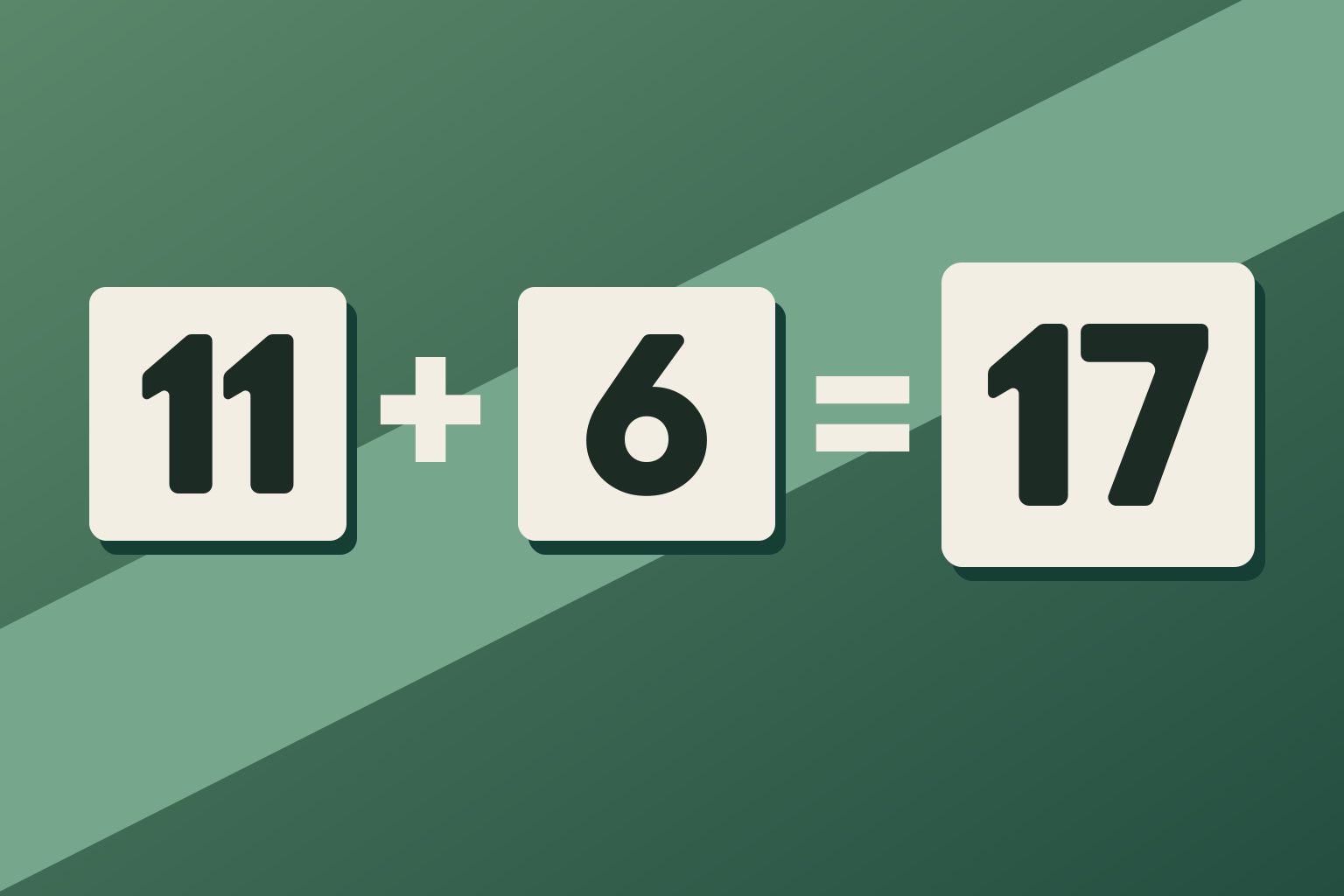
The rule of 17 is a guideline for responding to partner's weak two bid in a major: add your high-card points to the number of cards you hold in partner's suit, and if the total is 17 or more, look for game.
Updated 14 October 2026
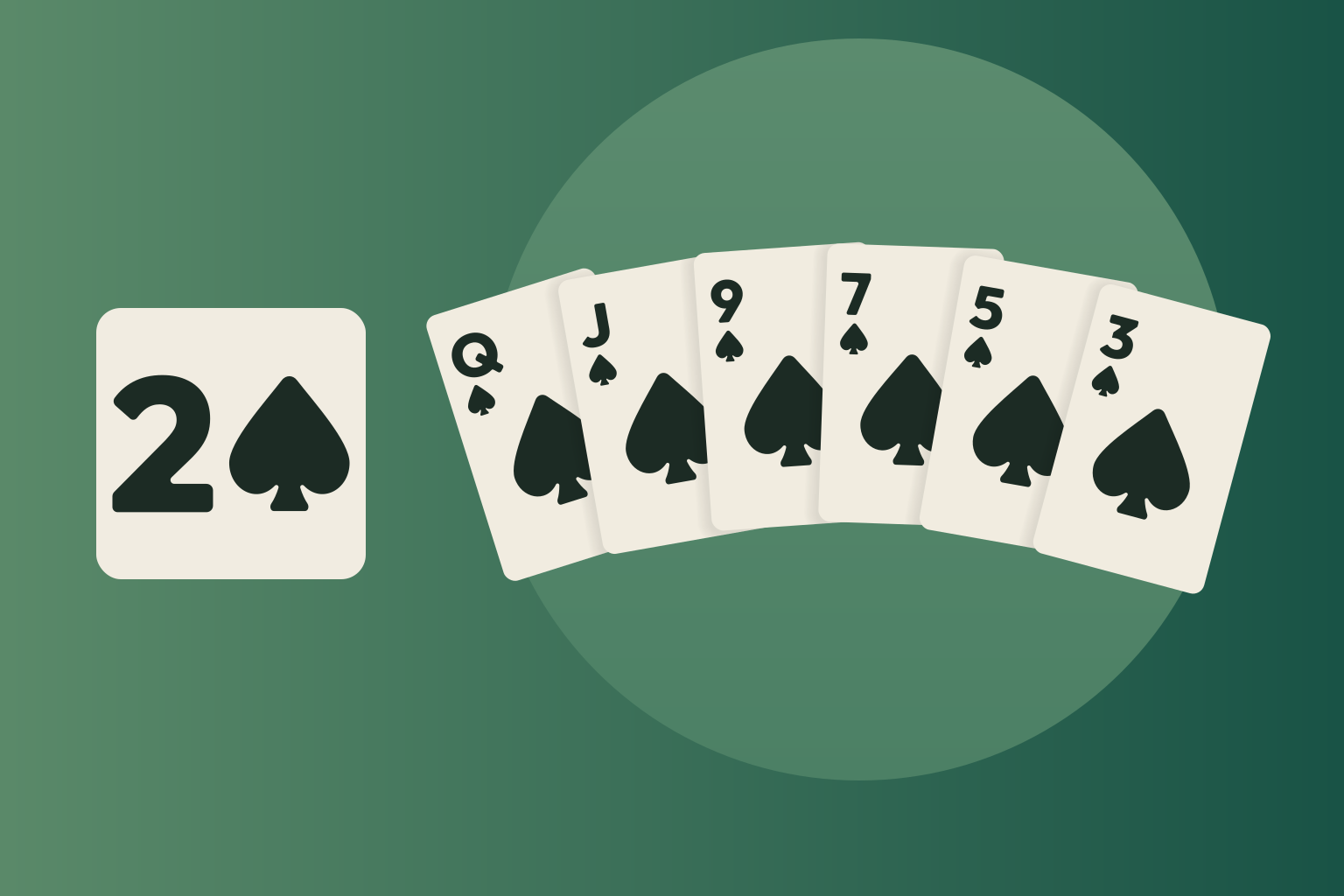
Partner deals and opens 2♠, a weak two. You hold a decent hand of your own, and now you have to decide whether there is a game or whether partner should be left to play a part score. The rule of 17 gives a quick first answer. Add your high-card points to the number of cards you hold in partner's suit. If the total is 17 or more, look for game. If it is less, there is no game, and the only question left is how high to raise to get in the opponents' way.
How the rule of 17 works
The rule is for responder after partner opens a weak two in a major, 2♥ or 2♠. Count your high-card points the usual way, four for an ace, three for a king, two for a queen and one for a jack. Then add your trumps, meaning the cards you hold in the suit partner opened. Holding no card in partner's suit adds nothing.
| Your hand | HCP | Spades | Total | Action |
|---|---|---|---|---|
| ♠Q4 ♥AK73 ♦KQ82 ♣J65 | 15 | 2 | 17 | Look for game, 2NT |
| ♠5 ♥AKJ4 ♦KQ73 ♣Q862 | 15 | 1 | 16 | Pass |
| ♠J84 ♥K3 ♦AJ752 ♣964 | 9 | 3 | 12 | Raise to 3♠ to obstruct |
| ♠AQ5 ♥K7 ♦AK842 ♣J63 | 17 | 3 | 20 | Bid 4♠ |
Why 17? A weak two shows about 5 to 10 HCP, 7 or 8 on average, and a six-card suit. A major-suit game with a fit usually wants around 25 points between the two hands, and a six-card suit opposite two or three cards is worth more than its high cards because the long trumps win tricks of their own. Your trumps stand in for that extra value. Fifteen HCP and two trumps make 17, and so do fourteen HCP and three trumps. Opposite an average weak two either hand is close to game, and opposite a maximum it is game.
The first two hands in the table are both strong, and they differ by one card in partner's suit. That one card is the difference between a hand that helps partner's suit and a misfit.
What to bid after you count
A total of 17 or more
Seventeen says game is possible, and partner's hand decides whether it is there. The usual tool is the 2NT response, which asks opener to describe the weak two. Playing the feature ask from our weak two bids guide, opener rebids the suit with a minimum and names an outside ace or king with a better hand. Playing Ogust, opener shows the range and the quality of the suit in steps. A minimum answer usually ends the game hunt, and a good one sends you to game.
When the total is well clear of 17 and you hold three trumps, many players skip the ask and bid game at once. Asking tells the opponents about both hands, and it gains nothing when game is right opposite any weak two.
A total below 17
There is no game, so the decision is about obstruction. The raises follow the law of total tricks, which says to bid for as many tricks as your side holds trumps.
- Two trumps or fewer: pass. Eight trumps or fewer between you belong at the two level.
- Three trumps: raise to the three level. Partner treats it as a preempt and passes.
- Four or more trumps: jump to game. Ten trumps usually make game a sound sacrifice when it fails, and the opponents have to find their best contract at a high level.
When the count misleads
The rule treats every high card the same and ignores shape. Most experienced players use the total as a starting point, especially at 16 or 17, and then adjust for what the count cannot see.
- Shortness with a fit. A singleton or void is worth extra when you hold three or more trumps, because opener can ruff losers in your hand. Opposite a misfit the same shortness is worth nothing.
- Aces and kings. A total built on aces and kings plays better than one built on queens and jacks in short side suits, which a weak opener rarely helps.
- Honors in partner's suit. The ♠Q or ♠J fills in a six-card suit headed by the ace or king. The same cards in a side doubleton may take no trick at all.
- A long suit of your own. A strong six-card suit is a second source of tricks. If partner holds two small cards in it, those tricks come home once trumps are drawn.
- Vulnerability and seat. A vulnerable weak two in first or second seat tends to be sound, so a good 16 can look for game. Not vulnerable in third seat partner may be light, and a bare 17 full of queens and jacks can pass. Partnerships differ on how light a third-seat weak two can be, so know your partner's style.
Worked hands
The same responding hand sits South in both deals below. It holds 15 HCP and three spades, a total of 18, so after partner opens 2♠ it asks with 2NT. Only the answer changes.
Weak twos in diamonds
The rule is written for the majors. After 2♦ the realistic game is usually 3NT, which needs stoppers in the other suits and a diamond suit that runs, or 5♦, which needs eleven tricks. Players who apply the count to 2♦ treat 17 as a reason to ask, never as a reason to bid game on its own. The deciding question is whether partner's diamonds will take six tricks, and Ogust or the feature ask is how you find out.
Common mistakes
- Treating 17 as an order to bid game. The total says game is possible. Ask with 2NT and let opener's answer decide, unless the total is well past 17.
- Adding length or shortness points on top. Your trumps are already in the count. Adjust for a singleton or void with judgment instead of adding three more points and counting the fit twice.
- Raising to three as an invitation. After a weak two, 2♥ then 3♥ is a preempt and opener passes. A hand that wants opener to bid game with a maximum asks with 2NT.
- Bidding your own suit to rescue a weak two. A new suit is forcing for one round, so it does not rescue anything, and a misfit hand with 16 points or fewer usually does best to pass.
- Using the rule after a one-level opening. It is built on what a weak two promises. After 1♠, count your points the usual way and use limit raises and the other standard tools.
Common questions
Short answers to what readers ask most.
- What is the rule of 17 in bridge?
- The rule of 17 is a guideline for responding to partner's weak two in a major. Add your high-card points to the number of cards you hold in partner's suit. At 17 or more, look for game, usually by bidding 2NT. Below 17, pass or make a preemptive raise.
- What do you bid with 17 or more opposite a weak two?
- Usually 2NT, which asks opener to describe the hand. A minimum answer ends the search and a good one sends you to game. When the total is well past 17 and you hold three trumps, many players simply bid game.
- Does the rule of 17 apply to a weak two in diamonds?
- It is meant for 2♥ and 2♠. After 2♦ the game is usually 3NT or 5♦, so 17 is at most a reason to ask partner about the diamond suit and stoppers.
- What is the difference between the rule of 17 and the rule of 20?
- They answer different questions. The rule of 20 decides whether to open the bidding with a light, shapely hand. The rule of 17 decides whether responder should look for game after partner has opened a weak two. The rule of 15 covers opening in fourth seat.
- Is the rule of 17 the same as the law of total tricks?
- No. The rule of 17 asks whether your side can make game. The law of total tricks tells you how high to raise when it cannot, bidding for as many tricks as the two hands hold trumps.
Practice: the rule of 17
Eight quick questions on what you just read. For a longer session, bid a hundred hands or take the hundred-question quiz.