Pearson points and the rule of 15
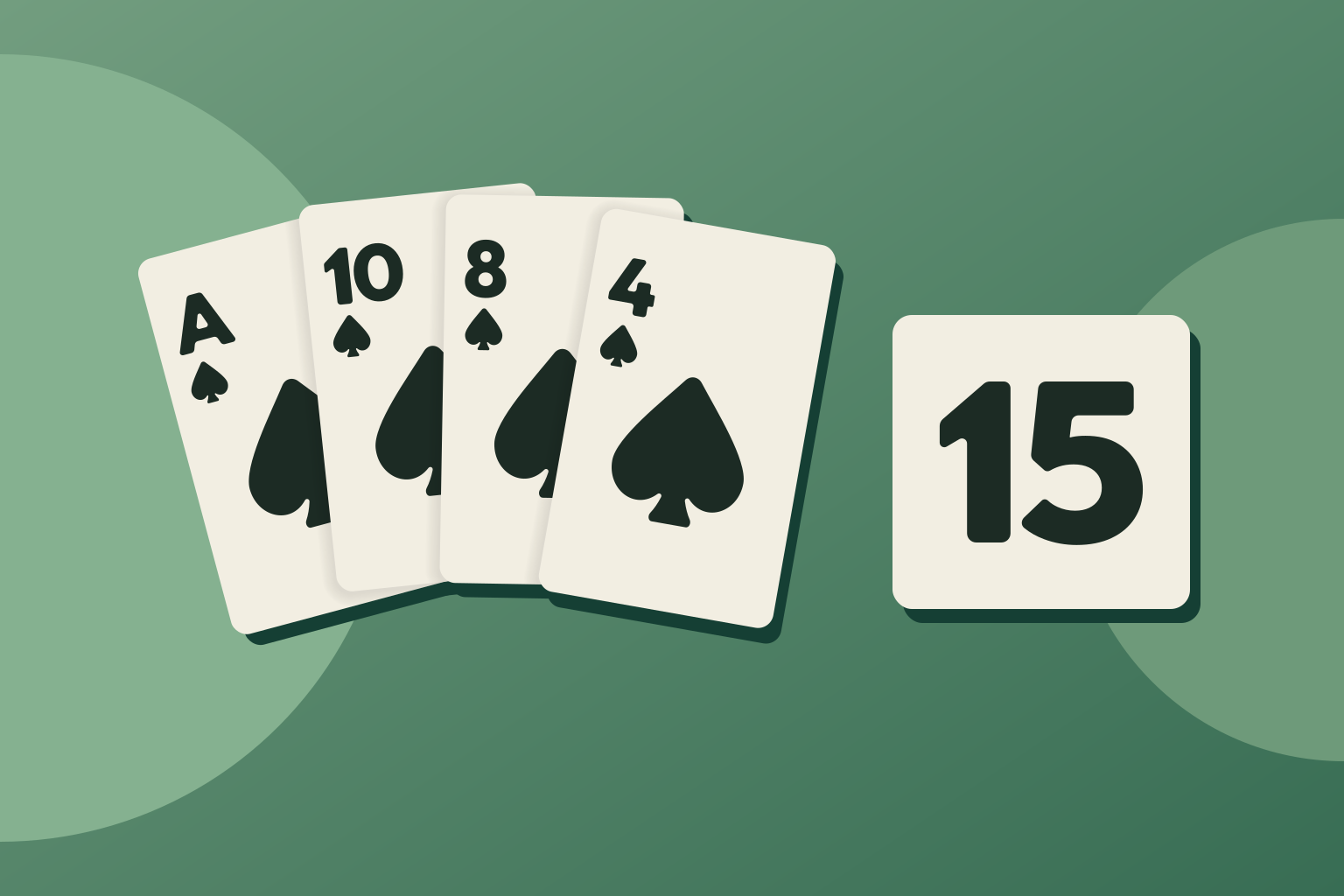
Pearson points, or the rule of 15, decide whether to open in fourth seat after three passes: add your high-card points to the number of spades you hold and open if the total is 15 or more.
Updated 14 October 2026
Three passes, and the deal now rests with you. If you pass as well, the cards are thrown in and both sides score zero. If you open, the deal is played and somebody will score a part score. Whether that somebody is your side depends on more than your high-card points, and the rule of 15, also called Pearson points, is the standard way to decide.
How to count Pearson points
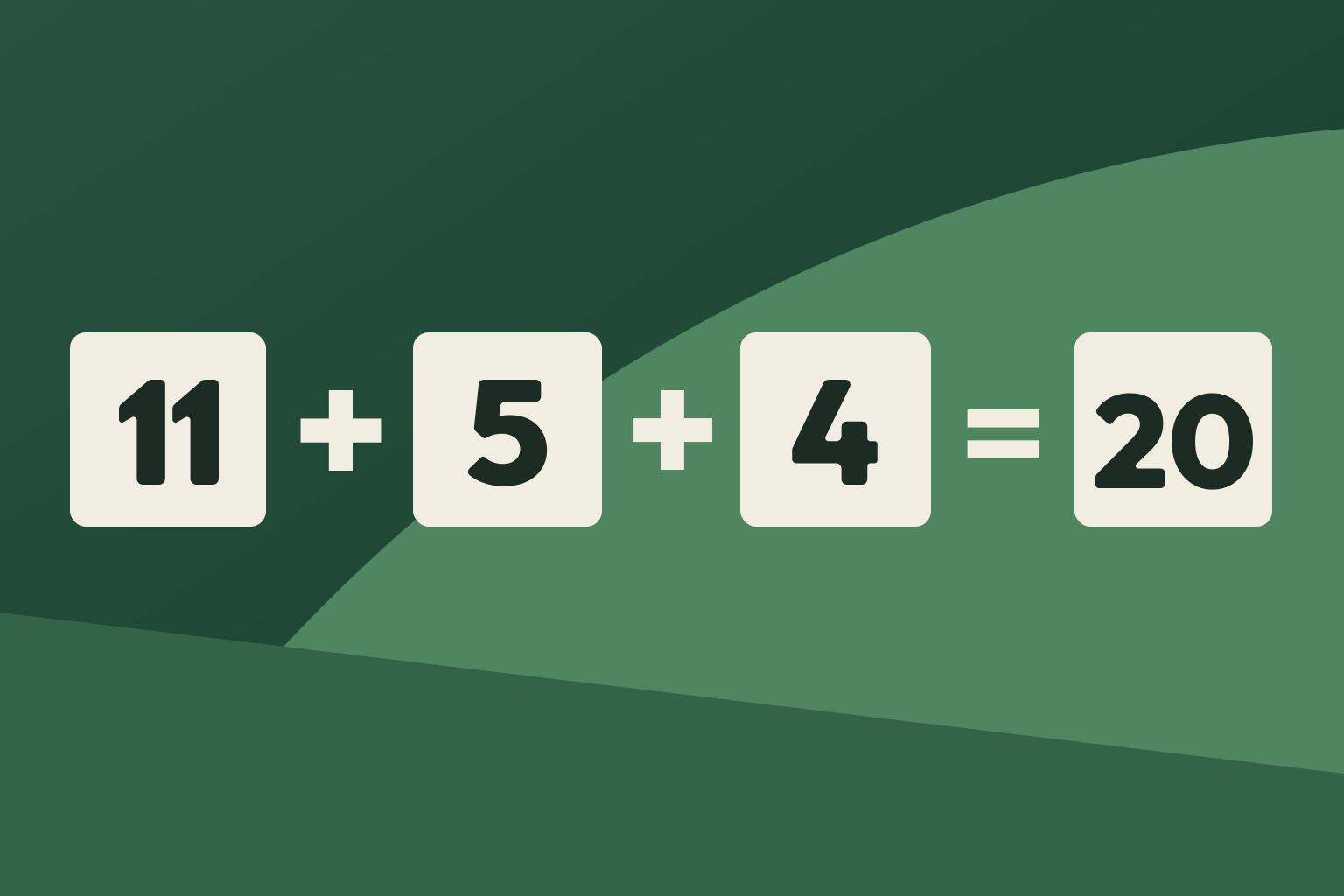
Count your high-card points the usual way, four for an ace, three for a king, two for a queen and one for a jack. Add the number of spades you hold. If the total is 15 or more, open the bidding. If it is 14 or less, pass the deal out.
| Hand | HCP | Spades | Total | Decision |
|---|---|---|---|---|
| ♠KQ1086 ♥A4 ♦J73 ♣962 | 10 | 5 | 15 | Open 1♠ |
| ♠Q1095 ♥K6 ♦AJ74 ♣J82 | 11 | 4 | 15 | Open 1♦ |
| ♠AJ5 ♥K1062 ♦Q84 ♣K73 | 13 | 3 | 16 | Open 1♣ |
| ♠J10 ♥KQ7 ♦AQ862 ♣943 | 12 | 2 | 14 | Pass |
| ♠7 ♥AQ1084 ♦KJ63 ♣Q52 | 12 | 1 | 13 | Pass |
The last two rows are the hands the rule exists for. Twelve points and a five-card suit would open in first or second seat for most players, yet in fourth seat both hands pass because the spades are missing. The first row shows the other side of it. Ten points is a pass almost anywhere else, but five spades headed by the king and queen turn it into an opening bid.
The rule only decides whether to open. Once the answer is yes, you choose the opening bid exactly as you would in any other seat, so the second row opens its longer minor and the third row, 4-3-3-3 with four hearts, opens 1♣.
Why the spades decide it
When all three other players have passed, the high cards are usually spread fairly evenly. Neither side is likely to have a game, and the deal becomes a fight for the part score. In that fight the side holding spades has an advantage that no other suit gives, because spades outrank everything else. If you open 1♥ and the opponents hold the spades, they can bid 1♠, 2♠ over your 2♥, and so on, always at the same level as you. To outbid spades you have to go one level higher.
That is why a short spade suit counts against you. It makes it more likely that the opponents have spades between them and can use your opening as a springboard into the auction. Long spades work the other way. Holding five of them, you will usually be able to bid 2♠ over their 2♥, and when the opponents have no spade fit they often cannot compete at all.
The other half of the count is ordinary point strength. Opening in fourth seat with 9 or 10 points gives the opponents a chance to win the auction and collect a plus score on a deal that would otherwise have been thrown in. The higher your points, the less that matters.
When the rule applies
- Only in fourth seat, after three passes. In first and second seat partner has not spoken yet, and most players use the rule of 20 there. In third seat many pairs open light for other reasons, mainly to suggest a lead.
- Mostly for hands of 10 to 14 points. With 15 or more the total always reaches 15. Below about 9 points the spade count almost never reaches 15 anyway.
- For one-level openings. The rule does not change what a 1NT or 2♣ opening shows. In fourth seat a weak two bid is not a preempt, since nobody is left to keep out, so most players treat it as a sound hand of about 9 to 12 points with a good six-card suit.
- At any vulnerability and any form of scoring. The rule as usually taught does not change with the colors or between pairs and teams. Some players open a little more freely at matchpoints, where a small plus on a deal everyone else passes out can be worth a lot.
The rule is named after Don Pearson, an American player. In Britain the same count is known as the Cansino count, after the British expert Jonathan Cansino. Marty Bergen helped spread it in the United States alongside his rule of 20.
Hands at the border
A total of exactly 15 deserves a second look. The count treats every point alike, but in a part-score fight aces, kings and honors in long suits pull more weight than scattered queens and jacks. Compare two hands that both score 15.
The South hand has a flat shape, soft values and no suit worth bidding. It will take few tricks on its own and gives the opponents room to come in. North's hand is the opposite. It has a suit to bid twice and a natural place to play if the opponents compete.
Over the line and under it, the same judgment runs the other way. A 14 with two aces, a good five-card suit and three spades is closer to an opening than its total suggests, and some players open it. Strict users of the rule pass, and nobody will blame you for doing so.
Pearson points and the rule of 20
The two rules answer different questions. The rule of 20 rewards length in any two suits, because in first or second seat partner may still hold a good hand and a shapely opening can lead to a game. The rule of 15 rewards spades alone, because in fourth seat game is rare and the part score usually goes to the side with the higher suit.
| Hand | Rule of 20 | Rule of 15 | Fourth seat |
|---|---|---|---|
| ♠6 ♥KQ1083 ♦AJ975 ♣42 | 20 | 11 | Pass |
| ♠KQ1086 ♥A4 ♦J73 ♣962 | 18 | 15 | Open 1♠ |
| ♠AQ85 ♥K73 ♦Q1064 ♣52 | 19 | 15 | Open 1♦ |
| ♠93 ♥AK8 ♦KJ1074 ♣J85 | 20 | 14 | Pass |
The first hand is a clear opening under the rule of 20 and a clear pass under the rule of 15. Its two red suits are lovely if partner has a fit, but the opponents probably hold eight or more spades between them. Open it in fourth seat and they will find their spade fit at a level where your side cannot outbid them cheaply.
After a fourth-seat opening
Partner is a passed hand, so the auction is short. Partner holds at most about 11 points, and a new suit from partner is not forcing. Opener should rebid on the assumption that game is unlikely and stop low unless partner shows a fit and a maximum.
Many pairs play Drury after a fourth-seat major opening as well as after a third-seat one. Partner bids an artificial 2♣ to show support and about 10 to 12 points, and opener can sign off in two of the major with a light opening. Without Drury, a passed partner's jump raise to three of the major can already be too high opposite a hand that opened on 10 points and five spades.
Common mistakes
- Using the rule in the wrong seat. It is only for fourth seat after three passes. In the balancing seat after an opening bid and two passes you are competing against an opener, which is a different decision.
- Counting all your length. Only spades count. Five hearts and five diamonds add nothing to the total.
- Letting the rule choose the bid. A hand that passes the count still opens its normal bid. Five spades and four hearts open 1♠, a 4-4-3-2 hand with four spades and four diamonds opens 1♦.
- Opening every 13-count automatically. A 13-point hand with a singleton spade totals 14, and strict users of the rule pass it. Treat it as a close decision rather than an automatic opening.
- Adding distribution points. The rule already counts spade length, so adding length or shortness points on top counts the same thing twice. Use the plain total.
Common questions
Short answers to what readers ask most.
- What is the rule of 15 in bridge?
- The rule of 15 is a guide for opening in fourth seat after three passes. Add your high-card points to the number of spades you hold, and open if the total is 15 or more. With 14 or less, pass the deal out.
- Why are they called Pearson points?
- The count is named after Don Pearson, the American player who devised it. In Britain it is often called the Cansino count, after the British expert Jonathan Cansino.
- Does the rule of 15 apply in third seat?
- No. In third seat partner has passed but the opponent on your left has not, so passing does not end the deal. Many players open light in third seat for lead-directing reasons instead. The rule of 15 is only for fourth seat.
- Why do spades count in the rule of 15?
- Spades are the highest-ranking suit. The side that holds them can outbid the other side at the same level in a part-score fight, so short spades make it likely the opponents will win the auction after you open.
- What is the difference between the rule of 15 and the rule of 20?
- The rule of 20 adds the lengths of your two longest suits to your points and is used in first and second seat. The rule of 15 adds only your spades and is used in fourth seat, where game is rare and the part score usually goes to the side holding spades.
- Should I open a 13-point hand in fourth seat?
- It depends on the spades. Thirteen points and two or more spades reach 15 and open. Thirteen points with one spade or a void totals 14 or less, and the rule says to pass, although some players open a hand with good aces and kings anyway.
Practice: Pearson points
Eight quick questions on what you just read. For a longer session, take the hundred-question quiz.