Preemptive Bids
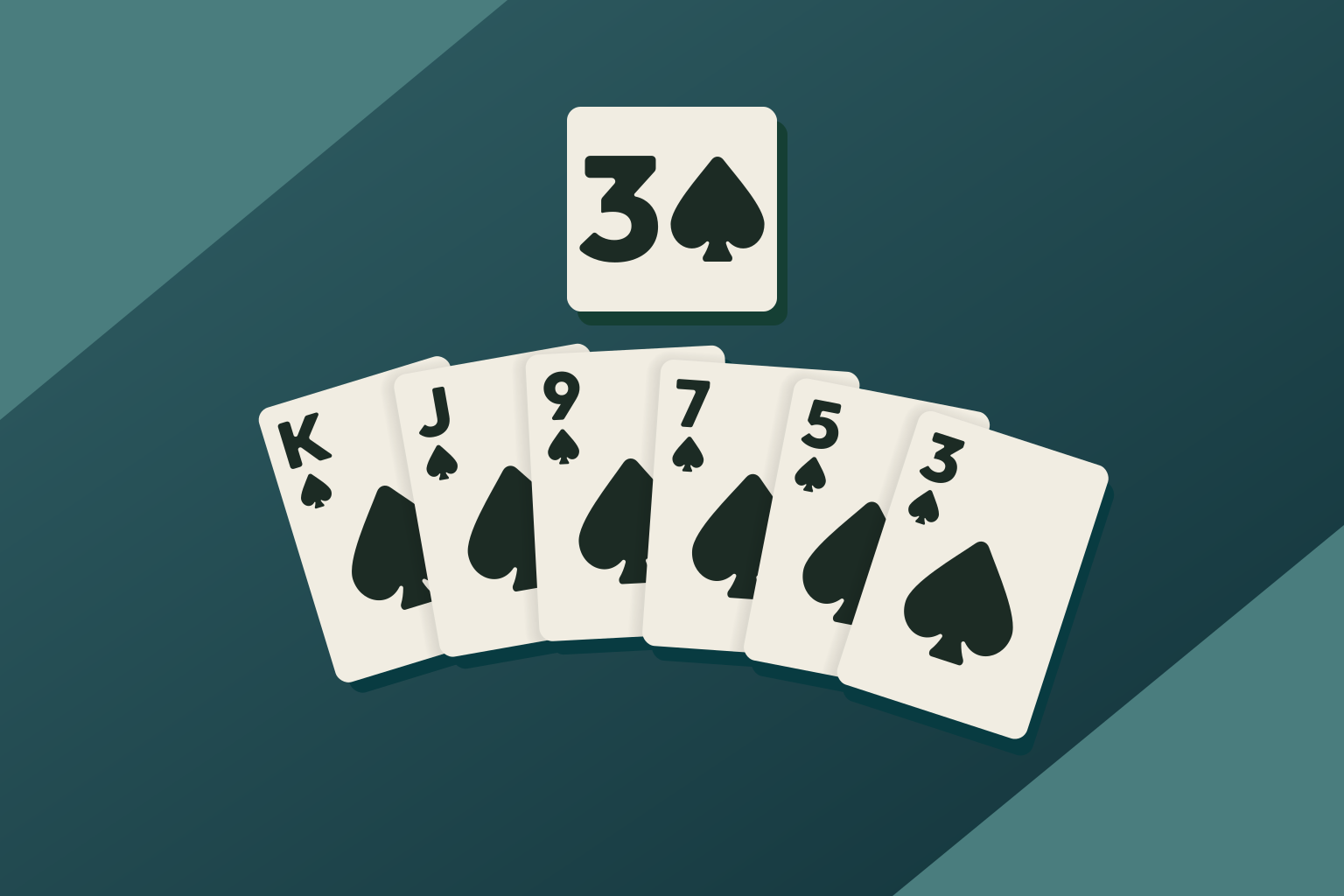
A preemptive bid is an opening at the three level or higher, made on a long suit and a hand too weak to open at the one level, to take bidding space away from the opponents. A three-level preempt usually shows a seven-card suit, a four-level preempt an eight-card suit.
Updated 14 October 2026
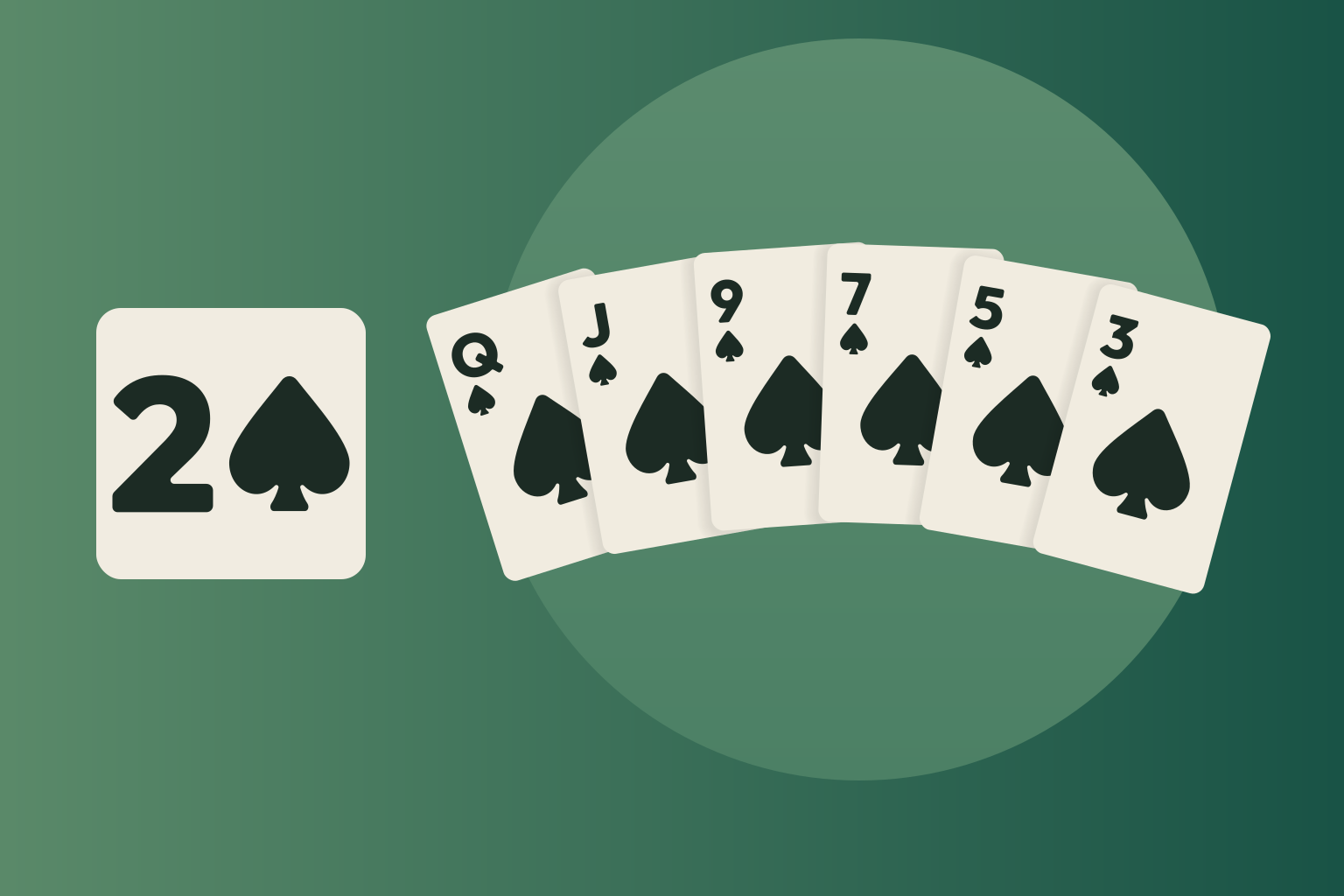
You deal and pick up seven hearts to the king-queen-jack and almost nothing else. Open 1♥ and partner will expect an opening hand that is not there. Pass, and the opponents start their auction at the one level with all the room they need. Open 3♥, and the player on your left has to begin at the three level, guessing, before his side has exchanged a single piece of information.
That is a preemptive bid: you hold a weak hand with one long suit and open it at a high level, so the opponents have less room to find their own contract. It also tells partner almost everything in one call, a long suit, little outside it and not much defense. Two-level preempts are the weak two bids, which have their own guide. This page covers the openings at the three level and higher, how much to risk with them, and what partner does next.
What a preemptive opening shows
A preempt promises length first and points second. The usual standard is a seven-card suit for a three-level opening and an eight-card suit for a four-level opening, with most of the high cards in that suit. A good suit matters because partner will lead it, raise it or play in it, often without seeing more than one bid from you.
| Opening | Suit | Strength |
|---|---|---|
| 2♦, 2♥, 2♠ | Six cards (weak two) | About 5 to 10 HCP |
| 3♣, 3♦, 3♥, 3♠ | Seven cards, a good suit | Below an opening bid, usually 5 to 10 HCP |
| 4♥, 4♠ | Eight cards, or seven with a side singleton or void | Below an opening bid, more playing strength than a three bid |
| 4♣, 4♦ | Eight cards | Weak, aiming at five of the minor or a sacrifice |
| 5♣, 5♦ | Eight or nine cards | Weak and very shapely |
The high-card range is wide on purpose. What counts is the number of tricks the hand takes with its long suit as trumps, which the next section turns into a rule. The ceiling matters more than the floor. Holding opening strength and a good seven-card suit, about 11 or 12 points, open at the one level and rebid the suit. Partner will never play you for that hand after a preempt.
Most partnerships add two agreements in the same space. A gambling 3NT shows a solid seven-card minor such as AKQxxxx and little else, and some experts use 4♣ and 4♦ as Namyats, a transfer to 4♥ or 4♠ showing a strong major-suit preempt. Both are optional. Without that discussion, 3NT is a natural opening and four of a minor is an ordinary preempt.
The rule of 2-3-4
How high to preempt depends on how much you can afford to lose if the opponents double. The classic guide is the rule of 2-3-4, which grew out of Ely Culbertson's older rule of two and three. Count the playing tricks your hand will take with your suit as trumps, then overbid by at most two tricks when vulnerable against not vulnerable, three at equal vulnerability, and four when not vulnerable against vulnerable opponents.
| Vulnerability | Overbid by | 3-level opening | 4-level opening |
|---|---|---|---|
| Unfavorable (you vulnerable, they not) | 2 tricks | 7 tricks | 8 tricks |
| Equal (both or neither vulnerable) | 3 tricks | 6 tricks | 7 tricks |
| Favorable (you not, they vulnerable) | 4 tricks | 5 tricks | 6 tricks |
Counting playing tricks
For a long suit, start from its length and take off one trick for each of the ace, king and queen you are missing. KQJ10xxx is six tricks, since only the ace is missing. AQJ10xxx is six as well. KJ9xxxx is five, losing to the ace and the queen. Then add outside winners you can count on: an ace is one trick, a king-queen is about one, a lone king is half a trick at best.
A hand like ♠7 ♥KQJ9864 ♦Q73 ♣84 is six tricks in hearts and not much else, so 3♥ fits equal vulnerability exactly. Give the same player a hand like ♠Q987532 ♥K4 ♦J3 ♣82, missing the ace, king and jack of spades, and the suit is worth about five tricks at best. That is enough for 3♠ at favorable vulnerability and nowhere near it at unfavorable.
Why the numbers work
The rule counts only your own tricks, and partner usually adds one. If the opponents double and partner does take a trick, the loss stays below the value of the game they would have bid. The table shows the doubled penalty for each case next to the opponents' major-suit game, with the scores from the site's own scoring code.
| Vulnerability | Result | You lose | Their game |
|---|---|---|---|
| Unfavorable | Down 1, vulnerable | 200 | 420 |
| Equal, neither vulnerable | Down 2, not vulnerable | 300 | 420 |
| Equal, both vulnerable | Down 2, vulnerable | 500 | 620 |
| Favorable | Down 3, not vulnerable | 500 | 620 |
Treat the rule as a starting point. Many strong players now preempt more freely than this, especially at favorable vulnerability, on the view that the opponents rarely double a preempt they cannot read. The reverse is true when vulnerable against not. A penalty of 500 or 800 against a part score is a disaster, so most partnerships keep vulnerable preempts close to the rule. Agree a style with your partner, light, normal or sound, and stick to it so partner can judge the hand.
Seat and vulnerability
Who has already passed changes the purpose of the bid. A preempt is aimed at the opponents, but it also takes room from partner, and that cost is highest when partner may hold a good hand.
| Seat | Style | Why |
|---|---|---|
| First | Standard, by the rule of 2-3-4 | Three players still to speak, two of them opponents |
| Second | Sounder than first seat | One opponent has passed, so partner is more likely to hold the strong hand |
| Third | The most liberal seat | Partner has passed, so the player on your left is likely to hold the strength |
| Fourth | Not preemptive | Nobody is left to obstruct. A three bid shows a good seven-card suit and about 10 to 13 HCP, hoping to make it |
Third seat is where preempts earn the most. Partner has passed, the opponents almost certainly have game values, and bidding 3♠ on a hand that would have opened 2♠ in first seat can cost them their best contract. Some players go further at favorable vulnerability and open three on a strong six-card suit. Discipline matters more in first and second seat. Most partnerships avoid a preempt there with a side four-card major, or with two aces outside the long suit, since partner may be planning to play in the other major or to defend.
In fourth seat, after three passes, there is nobody left to preempt. Pass a weak hand and the board is thrown in. A three-level opening there is a constructive bid on a hand that would be too strong for a preempt in any other seat, such as ♠A4 ♥KQJ10973 ♦K5 ♣84.
Responding to a preempt
Responder is the captain. Opener has described the hand within a trick or so, and from here opener does not bid again unless asked. The first habit to unlearn is counting points. Opposite a preempt, queens and jacks in short side suits take nothing. What makes game is aces, kings and trump support. Facing a three-level preempt at equal vulnerability, about six playing tricks, responder needs roughly three or four sure winners to think about game in the major.
A raise is never invitational. Responder bids game expecting to make it, or bids it as a sacrifice, and opener passes either way. The law of total tricks is the guide for the weak raises. Count the combined trumps and take away six, which gives the level to compete to. Opener has seven cards, so three-card support makes ten trumps and a raise to the four level, while a doubleton makes nine and leaves you content at the three level. That raise is safest when the opponents are vulnerable and probably have a game of their own.
A new suit below game is forcing for one round in most partnerships. Opener raises with three-card support or a doubleton honor and otherwise rebids the long suit. After a minor-suit preempt the usual target is 3NT. Responder bids it holding the other suits stopped and either a fitting honor in opener's minor, so the long suit runs, or enough tricks of his own. Over 4♥ or 4♠, responder rarely does anything but pass or look for slam with 4NT.
Example hands
Common mistakes
- Preempting with an opening hand. A good seven-card suit and 12 points is a one-level opening. Partner treats a preempt as weak and will pass with game on.
- Bidding again after the preempt. Opener has told the story. Raising your own preempt when the opponents compete takes the decision away from partner, who knows more.
- Preempting on a broken suit when vulnerable. At unfavorable vulnerability the rule of 2-3-4 wants seven tricks for a three bid. A suit like Q987xxx does not come close.
- Counting points opposite a preempt. Responder's side-suit queens and jacks rarely take tricks. Count aces, kings and trump fit.
- Preempting as freely in second seat as in third. In second seat one opponent has passed and partner is more likely to hold the good hand you are crowding.
When the opponents preempt against you, the main tools are the takeout double, which needs a bit more strength over a three bid, and natural overcalls. Partner has to answer at the four level, so both should promise a sound hand.
Common questions
Short answers to what readers ask most.
- What is a preemptive bid in bridge?
- A preemptive bid is an opening or a jump at a high level with a weak hand and one long suit, made to take bidding room away from the opponents. A three-level opening usually shows a seven-card suit and less than an opening bid, and a four-level opening an eight-card suit.
- What is the rule of 2-3-4 in bridge?
- It is a guide for how high to preempt. Count your playing tricks and overbid by at most two tricks when vulnerable against not vulnerable, three at equal vulnerability and four at favorable vulnerability. A 3♥ opening at equal vulnerability therefore needs about six playing tricks.
- How many points do you need to open a preempt?
- Points are secondary. A three-level preempt usually holds about 5 to 10 high-card points, mostly in the long suit. With about 11 or 12 points and a good suit, open at the one level instead.
- Is a new suit forcing after partner preempts?
- In most partnerships a new suit below game is forcing for one round. Opener raises with support or a doubleton honor and otherwise rebids the long suit. A raise and 3NT are to play.
- What is the difference between a weak two and a preempt?
- A weak two is a preempt at the two level with a six-card suit. Three-level and higher preempts show longer suits, usually seven or eight cards, and take more room away from the opponents.
- Should you preempt in fourth seat?
- Only with a sound hand. After three passes a weak hand should pass the deal out. A three-level opening in fourth seat shows a good seven-card suit and about 10 to 13 points, a hand expected to make its contract.
Practice: preemptive bids
Eight quick questions on what you just read. For a longer session, bid a hundred hands or take the hundred-question quiz.