 Conventions
The XYZ Convention
The XYZ convention in bridge gives responder a set of artificial bids for the second turn when the first three bids of the auction have all been at the one level. It lets responder sign off, invite or insist on game while the bidding is still low, which leaves the partnership room to find the right suit and level.
How the XYZ convention works
The name comes from the three bids. X is opener's opening, Y is responder's one-level response and Z is opener's one-level rebid. After X - Y - Z, responder has two artificial bids:
- 2♣ is a puppet. Opener must bid 2♦. Responder then passes with a weak diamond hand or makes an invitational bid, which opener can pass or accept.
- 2♦ says nothing about diamonds. It commits the partnership to game and asks opener to describe the hand further.
Among the natural rebids, two of responder's own suit or a simple raise of opener's second suit is a weak sign-off, and a jump to 3♣ shows an invitation with six or more clubs. This is one of several versions. Many pairs play a direct 3♣ as a sign-off in clubs instead. A direct 2NT is a natural invitation for Larry Cohen, while other players use it as a relay to 3♣.
Where XYZ applies
In the version used here, XYZ is on whenever the first three bids are at the one level, including a 1NT rebid. Larry Cohen plays it only after a 1♥ or 1♠ rebid and keeps a new minor checkback for 1NT rebids. The starts are:
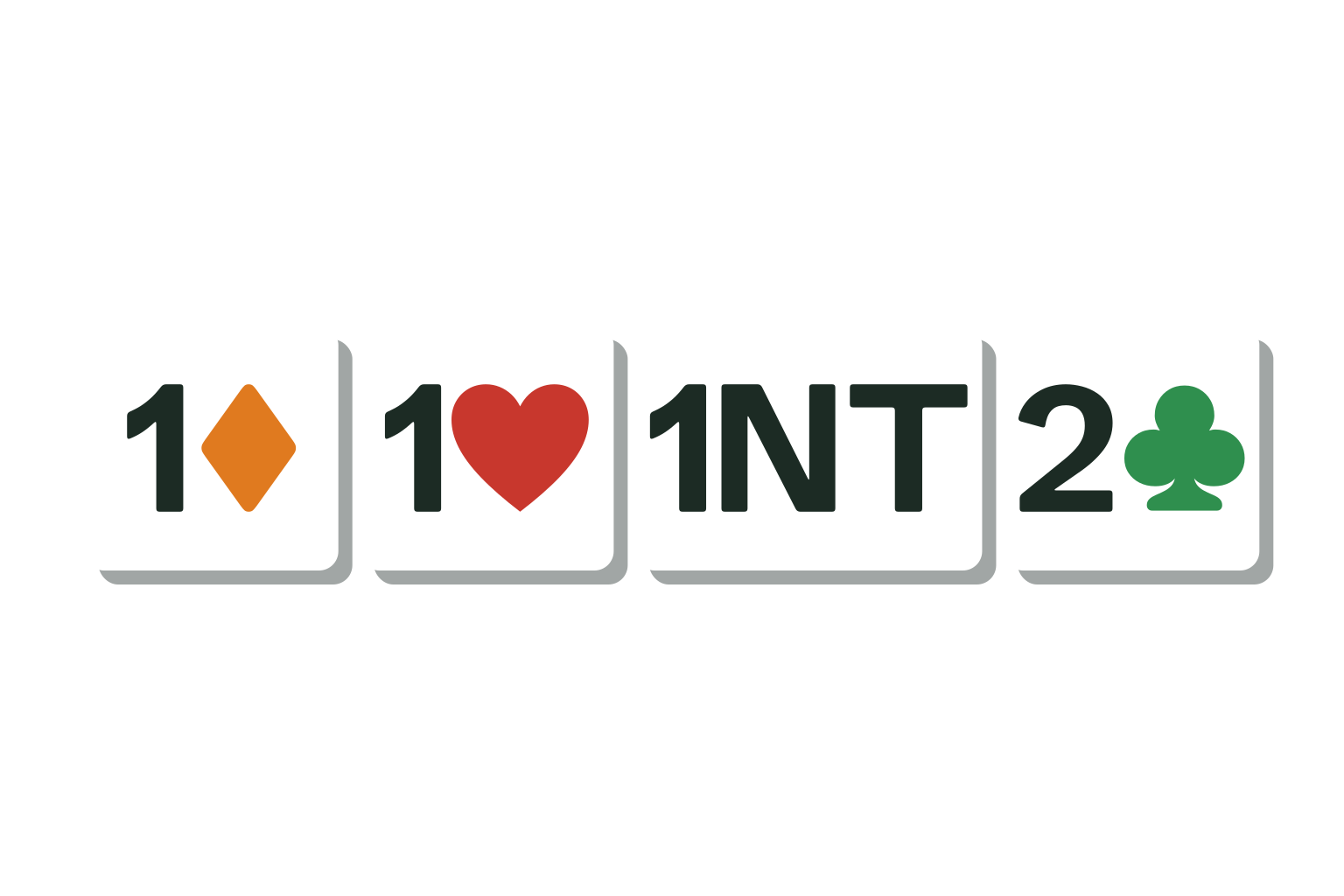
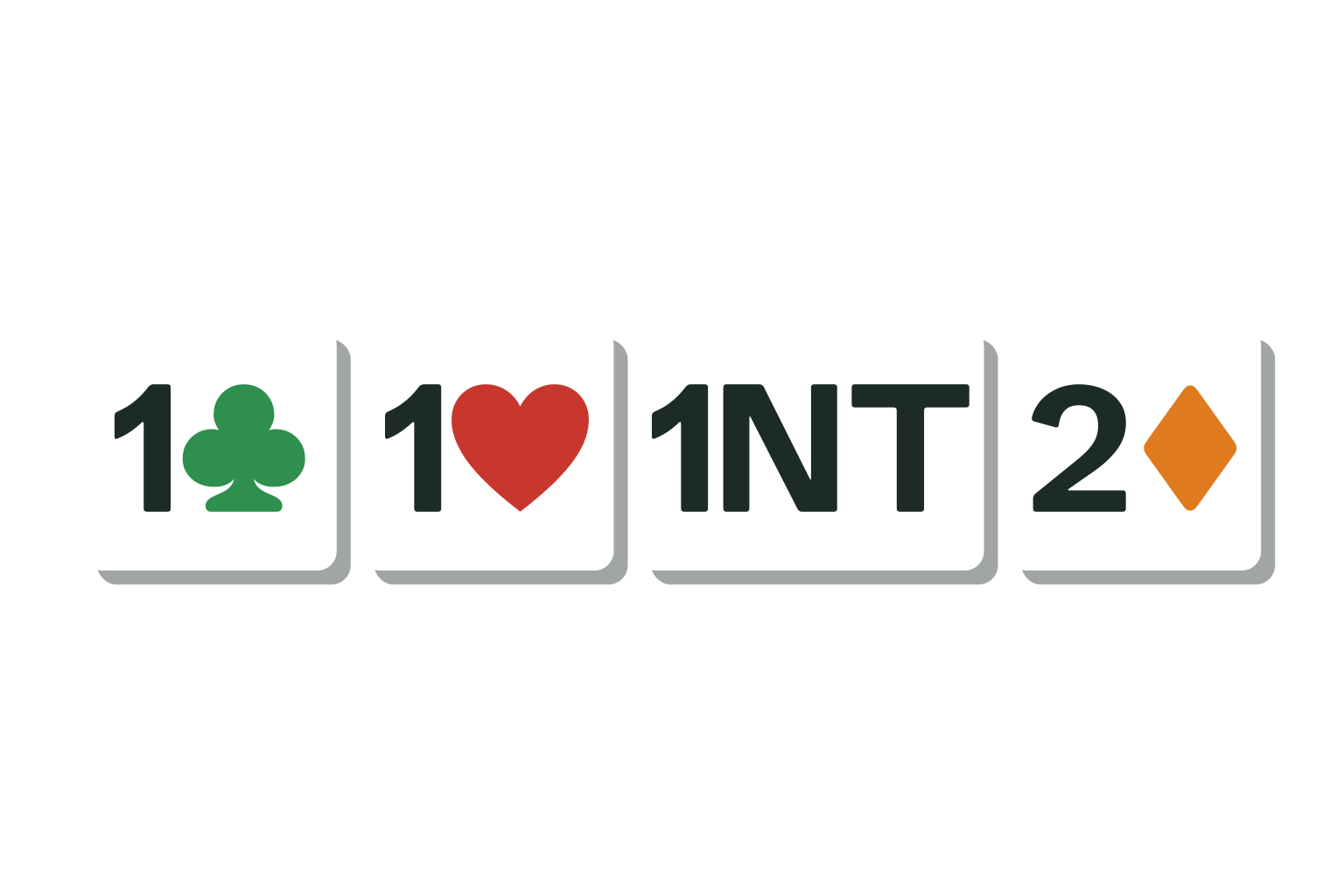
- 1♣ - 1♦ - 1♥, 1♣ - 1♦ - 1♠ and 1♣ - 1♦ - 1NT
- 1♣ - 1♥ - 1♠ and 1♣ - 1♥ - 1NT
- 1♣ - 1♠ - 1NT and 1♦ - 1♠ - 1NT
- 1♦ - 1♥ - 1♠ and 1♦ - 1♥ - 1NT
- 1♥ - 1♠ - 1NT
Pairs differ on competition. Larry Cohen recommends playing XYZ only in uncontested auctions, so after an overcall or a double responder's bids are natural again. Other pairs keep it on after a double, or after an overcall when opener can still rebid 1NT. It is always off when opener's rebid is at the two level, since XYZ needs all three bids at the one level. Larry Cohen also recommends not playing it by a passed hand.
After 1♣ - 1♦ - 1♥, a bid of 1♠ by responder stays natural and forcing for one round. XYZ leaves it alone, and only 2♣ and 2♦ become artificial.
Opener's answers
After the 2♣ puppet
Opener bids 2♦ whatever the hand. Responder's next bid shows the invitation, and opener then accepts or declines. After 1♣ - 1♥ - 1NT - 2♣ - 2♦ - 2♥, showing an invitation with five hearts, opener passes with a minimum and two or three hearts, bids 3♥ with a maximum and three hearts, and bids 4♥ with a maximum, three hearts and a ruffing value. After an invitational 2NT, opener passes with a minimum and bids 3NT with a maximum.
After the 2♦ game force
Opener describes naturally, with the same priorities as in new minor forcing. Three-card support for responder's major comes first, then extra shape, then notrump.
Example deal
The same 2♣ puppet handles a weak hand. Holding 7 points and five diamonds after 1♦ - 1♥ - 1♠, responder bids 2♣, waits for 2♦ and passes. The contract is a part score in a known fit instead of a misfit at 1♠ or 1NT.
Judgment and trade-offs
- The natural 2♣ rebid disappears. A weak hand with clubs goes through the puppet and signs off in 3♣. An invitational hand with clubs jumps to 3♣ directly and needs six of them.
- Opener must never pass 2♣. Even with a club fit, opener bids 2♦. Responder may hold a hand that wanted to play in diamonds.
- The game force starts a level lower. Because 2♦ creates the force, opener and responder have the whole three level to look for the best game or a slam.
- Invitations stop at the two level. Opener can pass an invitational 2♥ or 2♠ with a minimum, so the partnership stops a level lower when game is not there.
XYZ compared with other checkback methods
New minor forcing applies only after a 1NT rebid, and its single ask covers both invitational and game going hands. Two-way checkback uses the same 2♣ and 2♦ pair as XYZ but also only after 1NT. XYZ applies that structure to every start with three one-level bids, so one agreement replaces several. In those auctions its 2♦ also does the job that fourth suit forcing would otherwise do. Pairs who play two over one can add XYZ without changing the rest of their system.
The full XYZ tree
The tree below holds the full XYZ structure: where it applies, the 2♣ and 2♦ trees for 1♦ - 1♥ - 1♠, 1♣ - 1♥ - 1NT and 1♣ - 1♦ - 1♥, and the trade-offs.
Loading the convention from the library.
Common questions
Short answers to what readers ask most.
- What is the XYZ convention in bridge?
- It is a pair of artificial rebids for responder in auctions that start with three one-level bids, such as 1♦ - 1♥ - 1♠. A 2♣ rebid relays opener to 2♦ so responder can stop there or invite, and a 2♦ rebid creates a game force.
- What does XYZ stand for in bridge?
- The three one-level bids that start the auction: X is the opening, Y is responder's one-level response and Z is opener's one-level rebid. The convention applies to responder's next bid.
- Is 2♦ in XYZ forcing to game?
- Yes, by an unpassed hand. It is artificial and says nothing about diamonds. Larry Cohen recommends not playing XYZ by a passed hand at all.
- Does XYZ apply after an overcall?
- Larry Cohen recommends playing it off, and then responder's bids after an overcall or a double are natural. Some pairs keep it on after a double, or after an overcall when opener can still rebid 1NT, so agree on it with your partner.
- How do I sign off in clubs when playing XYZ?
- In the version used here, bid 2♣, let opener bid 2♦, then bid 3♣. A direct jump to 3♣ then shows an invitation with six or more clubs. Many pairs swap these and play the direct 3♣ as the sign-off.
- Is XYZ better than new minor forcing?
- It covers more auctions and lets invitations stop at the two level. The cost is the natural 2♣ rebid and one more agreement to learn.
Practice: XYZ
Eight quick questions on what you just read. For a longer session, bid a hundred hands or take the hundred-question quiz.