 Conventions
New Minor Forcing
New minor forcing is an artificial bid by responder in the minor suit nobody has bid yet, after opener rebids 1NT. It asks opener whether the partnership has a fit in a major, which a 1NT rebid can hide. Responder uses it with a hand good enough to invite or force to game, when no natural bid shows both the strength and the major-suit length.
How new minor forcing works
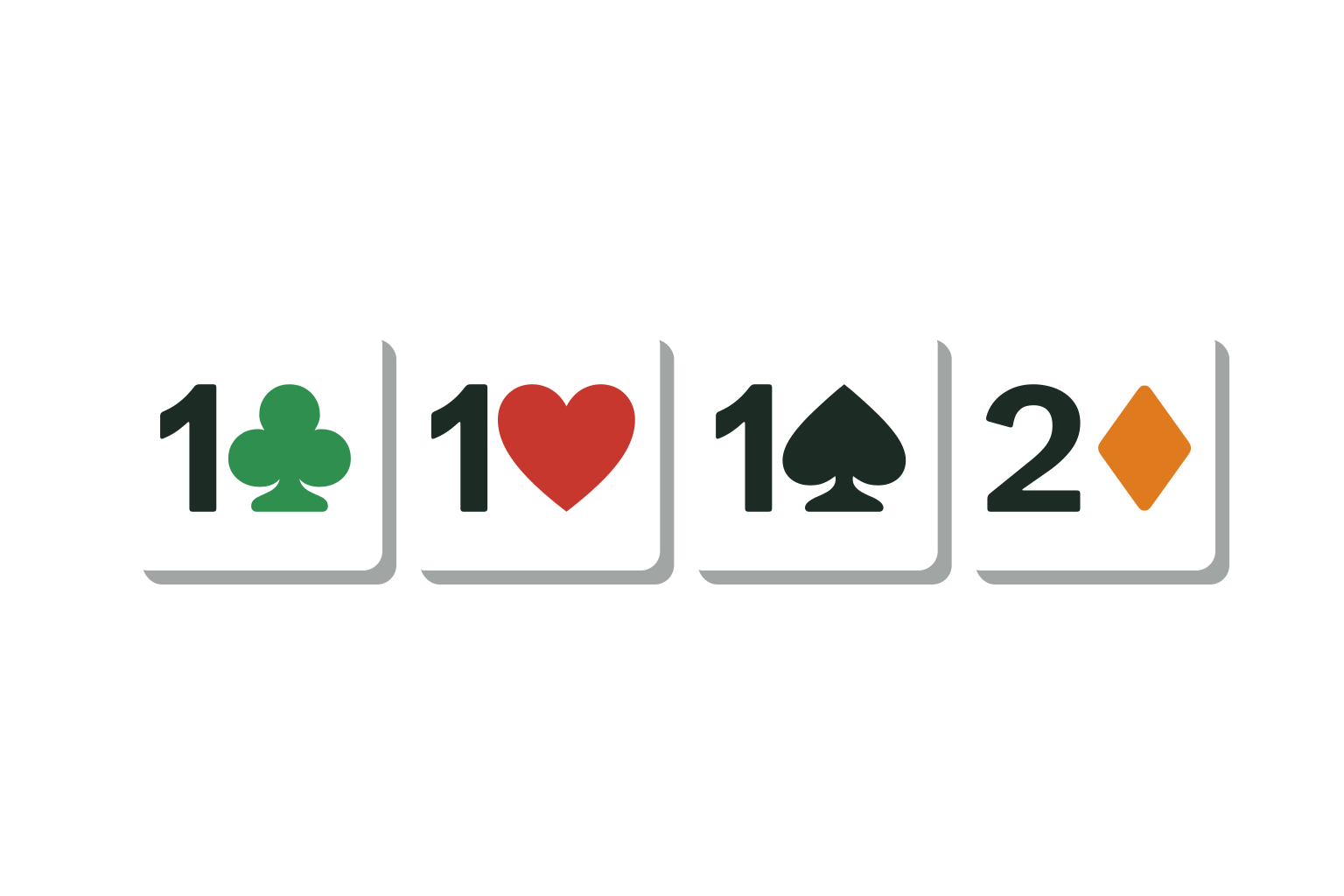
The convention applies after opener opens one of a minor, responder bids one of a major, and opener rebids 1NT. Some pairs also use it after 1♥ - 1♠ - 1NT, with either minor as the ask. Responder's bid of the other minor at the two level no longer shows that suit. It shows at least invitational values, usually 11 or more points, and asks opener to describe the hand further. Opener is asked two things, whether there are three cards in responder's major and whether there are four cards in the other major.
Opener's priorities run in that order. Three-card support for responder's major comes first, because a 5-3 major fit is what responder is looking for. A four-card heart suit comes second. Holding neither, opener shows the range, with a cheap rebid in the opening minor on a minimum and 2NT on a maximum. Partnerships differ here. Some show four hearts before three-card spade support, and some answer 2NT on a minimum without a fit and 3NT on a maximum, so agree the order with your partner.
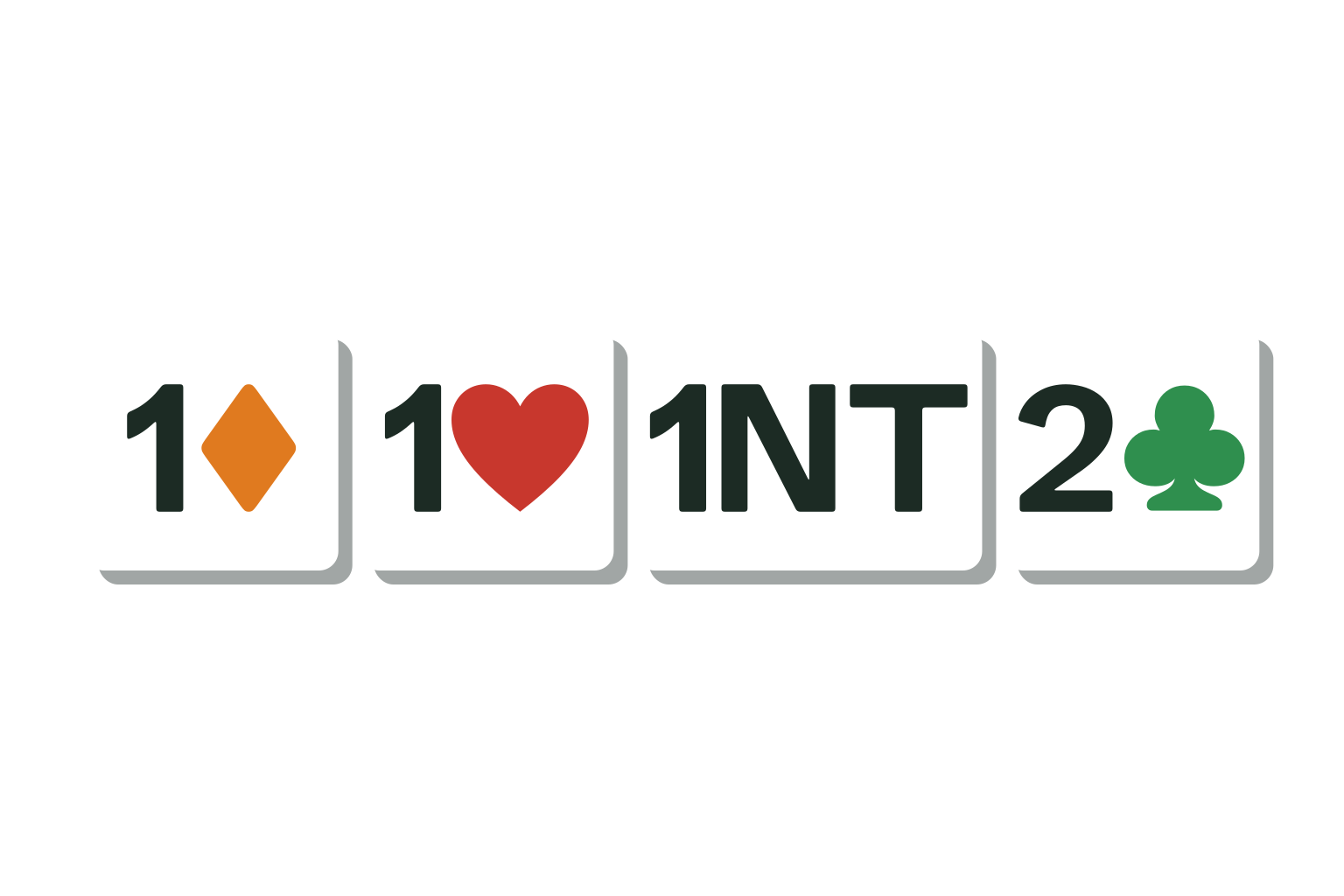
The mirror auction, 1♣ - 1♥ - 1NT - 2♦, works the same way. Opener bids 2♥ with three hearts and a minimum, 3♥ with three hearts and a maximum, 2♠ with four spades (denying three hearts) and 2NT with a maximum and no fit. Because 2♦ is now the asking bid, opener has no cheap waiting rebid, so partnerships need to agree what a minimum without a fit does. Some rebid 2NT on every hand without a fit and let responder decide. Others bid 3♣ with a real club suit.
When responder uses new minor forcing
The bid costs the natural meaning of 2♣ or 2♦, so it is reserved for hands that need it. Use it when you hold:
- Five cards in your major and invitational values, about 11 to 12 points. You need to know about three-card support before choosing between 2NT, 3 of the major and 4 of the major.
- Five cards in your major and game values, when you do not know whether to play 3NT or 4 of the major. Bid NMF first, then bid game in the right strain.
- Five spades and four hearts after 1♣ - 1♠ - 1NT or 1♦ - 1♠ - 1NT. Opener may hold four hearts, since the 1NT rebid does not deny them, and NMF finds both fits at once.
- A slam try in which you want to set the trump suit at a low level before cue bidding.
Weak hands never use it. On five spades and 6 to 9 points, responder either passes 1NT or rebids 2♠, which opener passes. A weak hand with long clubs is stuck after 1♦ - 1♠ - 1NT, since 2♣ is artificial and cannot be played there. This gap is the main cost of the convention, and one reason some pairs play the two-way version.
Responder's continuations
Once opener has answered, responder knows enough to place the contract or invite precisely. An invitational hand raises opener's major-suit answer to the three level, or bids 2NT over a minimum answer. A game-going hand bids game in the fit it found, or 3NT if there is none. The table summarizes the follow-ups after 1♦ - 1♠ - 1NT - 2♣.
| Opener's answer | Responder invitational | Responder game forcing |
|---|---|---|
| 2♠ (3 spades, min) | Pass or 3♠ | 4♠ |
| 3♠ (3 spades, max) | 4♠ | 4♠ or slam try |
| 2♥ (4 hearts) | 3♥ with 4 hearts, else 2NT | 4♥ with 4 hearts, else 3NT |
| 2♦ (min, no fit) | Pass, 2♠ or 2NT | 3NT |
| 2NT (max, no fit) | 3NT | 3NT |
Example deal
On this deal 4♠ is the better game. North can ruff the third round of hearts, while in 3NT the defenders can attack hearts, where North holds only two small cards.
Common mistakes and variations
- Using NMF with a weak hand. The bid promises invitational values, so opener may jump to show a maximum and the partnership ends up too high.
- Forgetting that NMF is not natural. Opener should never pass the new minor, even with five cards in it.
- Forgetting the agreed order. In the order used here, opener shows three-card support for responder's major before a four-card heart suit. Pairs who show hearts first both need to know it.
- Using it when the auction does not fit. NMF applies after a 1NT rebid. After 1♣ - 1♥ - 1♠, a bid of 2♦ is fourth suit forcing, a different agreement.
Two-way new minor forcing
In two-way new minor forcing, also called two-way checkback, 2♣ forces opener to bid 2♦. Responder then passes with a weak diamond hand or makes an invitational bid, which opener can pass. A direct 2♦ is artificial and forcing to game. The structure keeps the weak signoff in diamonds and lets every invitation stop at a low level. XYZ extends the same idea to every auction with three bids at the one level.
Checkback Stayman
Some partnerships play checkback Stayman, in which 2♣ is always the ask after a 1NT rebid, whatever minor opener bid. The answers are the same as in NMF. 2♣ then means the same thing in every auction, at the price of 1♣ - 1♥ - 1NT - 2♣ no longer showing clubs. Acol players, whose 1NT rebid shows 15 to 17 points over a weak notrump, use checkback in the same way after that rebid.
The bidding tree
The tree below holds both NMF auctions with every answer from opener and the follow-ups shown on this page.
Loading the convention from the library.
Common questions
Short answers to what readers ask most.
- What is new minor forcing in bridge?
- Over opener's 1NT rebid, responder bids the minor nobody has named yet, and that bid says nothing about the suit. It shows invitational values or better and asks whether opener has three cards in responder's major or four in the other major. The ask is 2♣ when opener started with 1♦, and 2♦ when opener started with 1♣.
- When do you use new minor forcing?
- Use it after a 1NT rebid when you hold five cards in your major and at least invitational values, about 11 or more points. It also suits five spades and four hearts, and a slam try that wants to set the trump suit low. With a weak hand, rebid your major instead.
- Is new minor forcing forcing to game?
- No. It is forcing for one round and promises invitational values or better. Responder can stop in two or three of the major, or in 2NT, after opener answers.
- What does opener bid with three-card support and four cards in the other major?
- In the order used here, opener shows the support for responder's major first, since that 5-3 fit is what responder is asking about. Some partnerships show the four-card major first, so agree on the order.
- What is two-way new minor forcing?
- Two-way new minor forcing, also called two-way checkback, uses both minors after a 1NT rebid. 2♣ forces opener to bid 2♦, after which responder can pass with a weak diamond hand or make an invitation that opener may pass. A direct 2♦ is artificial and forcing to game. Standard NMF has no such signoff, because the new minor is artificial and opener must answer it.
- What is the difference between new minor forcing and checkback Stayman?
- They ask the same questions. In checkback Stayman the ask is always 2♣, while in new minor forcing it is whichever minor opener did not bid.
- Is new minor forcing alertable?
- Yes. The new minor says nothing about that suit, so it is an artificial bid, and in ACBL games opener must alert it.
Practice: new minor forcing
Eight quick questions on what you just read. For a longer session, bid a hundred hands or take the hundred-question quiz.