 Conventions
Fourth Suit Forcing
Fourth suit forcing is a bidding agreement for the moment when three suits have been bid and responder bids the fourth. Opener may not pass that artificial bid, so responder can ask for more description when the partnership belongs in game but the right game is still unclear.
How fourth suit forcing works
Responder makes the bid at their second turn and may hold anything in the suit, from three small cards to a stopper. The bid is forcing, in most modern partnerships to game, and opener answers in priority order. Delayed three-card support for responder's major comes first, then notrump with a stopper in the fourth suit, then extra length in one of opener's own suits.
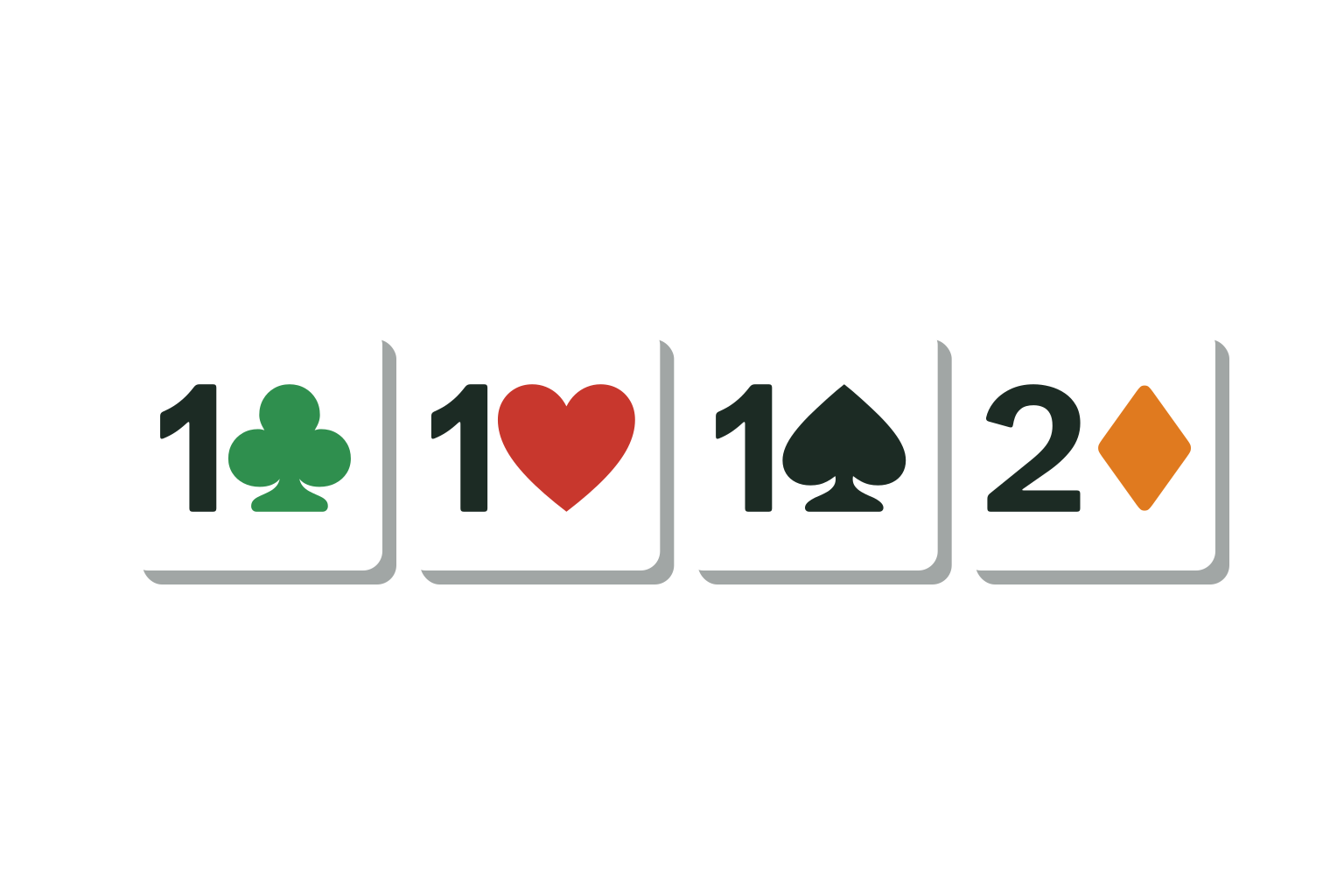
The structure is the same in every fourth suit auction. After 1♣ - 1♥ - 1♠ - 2♦, opener bids 2NT with a diamond stopper, 2♥ with three hearts, 2♠ with five spades and longer clubs, and 3♣ with extra club length and no diamond stopper.
When to use the fourth suit
Fourth suit forcing is a tool for hands where responder knows the partnership belongs in game, or higher, but cannot describe the hand with a natural bid. Typical cases:
- Game values without a stopper in the fourth suit. Responder wants to play 3NT only if opener can stop the suit.
- A five-card major with game values. Responder wants to know whether opener has three-card support before choosing 4 of the major or 3NT.
- Slam interest in opener's suit. Bidding the fourth suit first and supporting later shows a stronger hand than a direct raise.
- A strong hand with nothing natural to say. The fourth suit keeps the auction low while opener describes.
Responder does not need the fourth suit when a natural bid is easy. A club stopper and no major fit means 2NT or 3NT. Four-card support for opener's second suit means a raise. A weak hand gives preference or rebids a six-card suit, and the auction can stop there.
Opener's rebids and responder's next step
Because the fourth suit is a game force, opener does not need to jump to show extra values. Opener makes the most descriptive bid at the cheapest level, and responder places the contract.
- 1.2NT shows a stopper in the fourth suit. Responder bids 3NT with a balanced hand, or continues with a natural bid when looking for a better game or a slam.
- 2.Delayed support shows exactly three cards in responder's major. Holding four, opener would have raised the first time. Responder bids game in the 5-3 fit, or bids the fourth suit again to ask for more with slam interest.
- 3.Rebidding a suit shows extra length and denies the two descriptions above. 2♦ in the main tree shows five or more diamonds.
- 4.Raising the fourth suit usually shows four cards in it but no stopper. Some players also use it as a last resort when opener has no stopper, no support and nothing else to show. Responder will often bid 3NT anyway with half a stopper, or look for a minor-suit game.
Example deal
To drill auctions like this one, bid a hundred hands where the fourth suit comes up.
Common mistakes and variations
- Treating the fourth suit as natural. Responder may hold three small cards in it. Opener should not pass, and should not jump to 3NT on the assumption that responder has the suit stopped.
- Using it with a weak hand. In a game forcing style the fourth suit promises game values. An invitational hand rebids 2NT, raises opener or jumps in its own suit.
- Jumping when a simple answer will do. The force is already in place. Opener's cheapest descriptive bid leaves more room to find the best game or a slam.
- Forgetting the one level. After 1♣ - 1♦ - 1♥, a bid of 1♠ is natural in most modern methods, showing four spades. The artificial force usually starts at the two level, so a responder who wants it here jumps to 2♠.
Forcing for one round
An older style, still common in Acol and in some Standard American partnerships, plays the fourth suit as forcing for one round only. Responder can then use it with invitational values and stop below game after opener's answer. Most tournament players use the game forcing version, which is simpler and lets both players describe their hands slowly. Agree which one you play.
After a two-level response
In two over one game forcing, auctions such as 1♠ - 2♣ - 2♦ are already forcing to game, so a later bid of the fourth suit there is usually natural. When opener has rebid 1NT instead of a new suit, the asking bid is new minor forcing, and when all three bids were at the one level many pairs use XYZ for the same job.
The fourth suit forcing bid tree
The tree below shows opener's answers in priority order for 1♦ - 1♥ - 1♠ - 2♣ and 1♣ - 1♥ - 1♠ - 2♦, with the continuations from this page.
Loading the convention from the library.
Common questions
Short answers to what readers ask most.
- What is fourth suit forcing in bridge?
- Fourth suit forcing is responder's artificial bid of the only unbid suit, as in 1♦ - 1♥ - 1♠ - 2♣. It shows game values in most modern partnerships and asks opener to keep describing, showing three-card support for responder's major, a stopper in the fourth suit or extra length.
- Is fourth suit forcing forcing to game?
- In most modern partnerships, yes. The bid of the fourth suit creates a game force. Some partnerships, especially in Acol, play it as forcing for one round only.
- Does the fourth suit show a stopper in that suit?
- No. It is artificial and says nothing about the suit. It usually asks opener whether they can stop it for 3NT.
- What does opener bid first after fourth suit forcing?
- Opener shows three-card support for responder's major first. Otherwise opener bids notrump with a stopper in the fourth suit, or rebids a long suit.
- Is a fourth suit bid at the one level forcing?
- It is forcing as a new suit, but most players treat it as natural. After 1♣ - 1♦ - 1♥ - 1♠, responder shows four spades.
- How is fourth suit forcing different from new minor forcing?
- Fourth suit forcing applies when opener has bid two suits. New minor forcing applies when opener has rebid 1NT, and it asks mainly about support for responder's major.
Practice: fourth suit forcing
Eight quick questions on what you just read. For a longer session, bid a hundred hands or take the hundred-question quiz.