 Conventions
The Gerber Convention
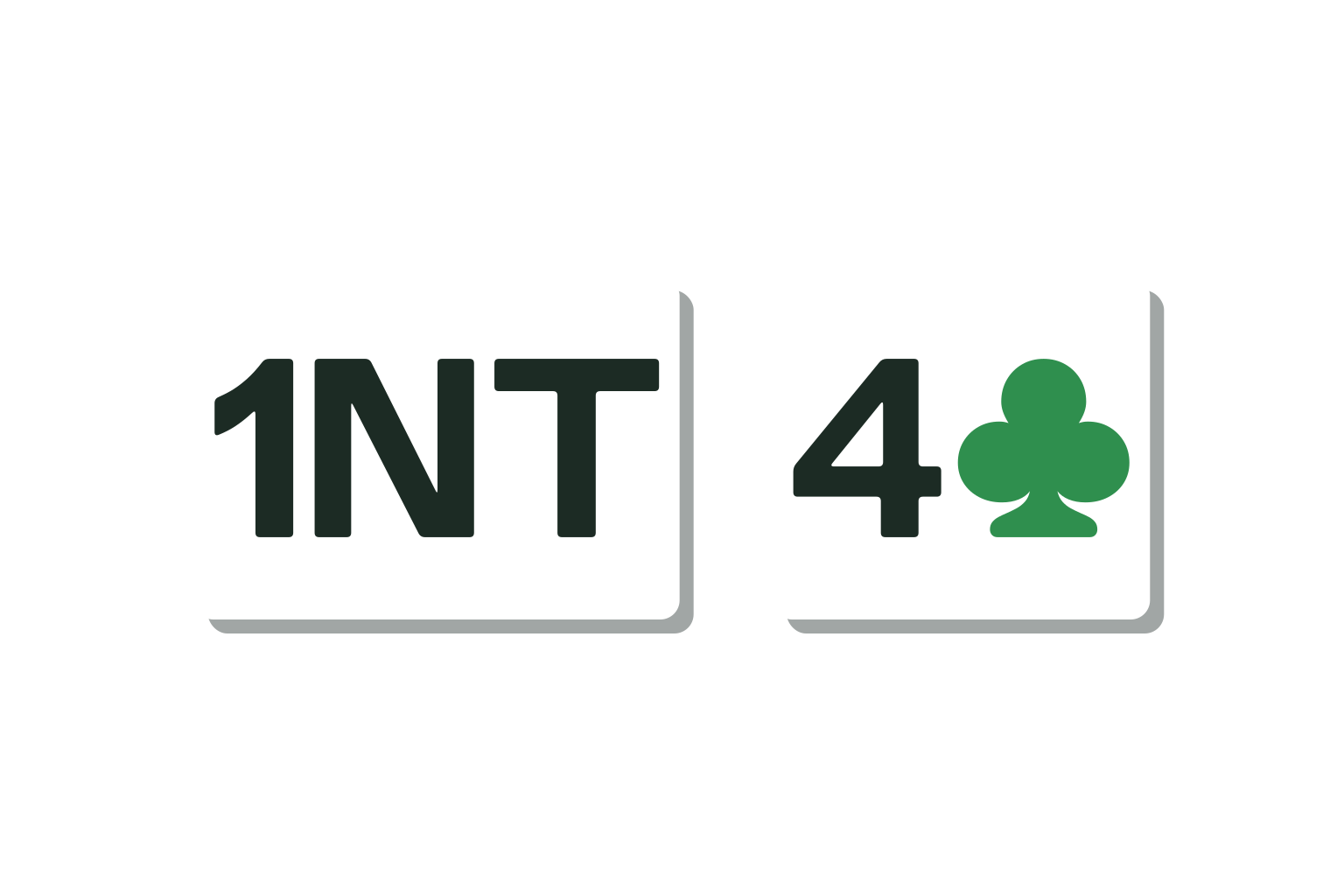
The Gerber convention is a jump to 4♣ over partner's 1NT or 2NT opening that asks how many aces partner holds. It lets the partnership check that it is not missing too many aces before bidding a slam in notrump. Because the ask uses 4♣, a raise to 4NT stays free as an invitation to slam on high cards alone, which Blackwood cannot offer.
How the Gerber convention works
Partner answers in steps, starting with the next bid up. There are four steps for five possible counts, so 4♦ shows either zero or four aces. A later 5♣ asks for kings and promises that the partnership holds all four aces. The king answers use the same steps, starting at 5♦.
The structure is identical after a 2NT opening (20 to 21 balanced in SAYC, 20 to 22 in many other systems) and after a natural 2NT rebid, for example 2♣ - 2♦ - 2NT - 4♣.
When 4♣ is Gerber and when it is not
The standard rule, used in SAYC, is that 4♣ asks for aces only when it jumps straight over partner's natural 1NT or 2NT, as an opening bid or as a rebid. Everywhere else 4♣ keeps its normal meaning.
- 1NT - 4♣ and 2NT - 4♣ are Gerber.
- 1♦ - 1♠ - 2NT - 4♣ is Gerber for most partnerships, since opener's 2NT rebid is natural. Agree this one explicitly.
- 1♥ - 2♣ - 2♥ - 4♣ is not Gerber. Responder has bid clubs, so 4♣ is natural, showing long clubs, or a cue bid.
- 1NT - 2♣ - 2♠ - 4♣ is not Gerber for most pairs. A suit has been found, and 4♣ is a splinter or a cue bid agreeing spades. If you want to ask for aces in spades, use 4NT key card.
- After an opponent's bid, Gerber applies only if you play it explicitly in competition. Many pairs keep it off once the opponents have bid.
After the answer: signing off and asking for kings
The player who bid 4♣ is the captain. After partner's answer, the captain has three choices.
- 1.Sign off in notrump. The cheapest notrump bid, usually 4NT, is to play. When partner's answer is itself 4NT (three aces), the captain can pass or bid on.
- 2.Bid a slam. Any bid at the six or seven level is to play.
- 3.Bid 5♣, the king ask, when all four aces are held and a grand slam is possible. Partner answers in steps: 5♦ zero or four, 5♥ one, 5♠ two, 5NT three.
Neither answer counts your tricks. If your side holds every ace and king, the defenders have none to cash, but you still do not know where thirteen tricks will come from. Before bidding a grand slam, count thirteen tricks in the two hands.
Example: Gerber over 1NT
The partnership held every ace and king here and still had only twelve tricks. If South had held a fifth diamond in place of the ♣8, 7NT would have been a good contract.
Common mistakes
- Using 4♣ when clubs might be natural. If partner's last bid was not a natural notrump bid, 4♣ is not Gerber.
- Answering every 4♣ as Gerber. Opener has to read the auction too. Over 1♥ - 2♣ - 2♥ - 4♣, responder has bid clubs twice, and 4♣ is natural.
- Bidding Gerber with a long, weak suit and unknown fit. Gerber is for hands headed for notrump, or for a responder whose own long suit needs no support. If you still need to find a fit, use Stayman or a transfer first.
- Signing off in 5♣. 5♣ is the king ask, not a sign-off. To stop, bid notrump at the cheapest level.
- Overruling the captain. After the 4NT sign-off, the 1NT or 2NT opener passes, even with a maximum.
Variations
The bid is named after John Gerber of Houston, who brought it to North American players in 1938. The Swiss players William Konigsberger and Win Nye had published the same idea two years earlier. Some partnerships use Gerber more widely, for any jump to 4♣ when no suit has been agreed. Others use key card Gerber, which counts the trump king as a fifth ace in the way Roman Key Card Blackwood does. Acol players, with a 12 to 14 1NT, use Gerber the same way, although slams opposite a weak notrump are rarer. If the opponents interfere, the DOPI and ROPI principles apply just as they do over 4NT. Some pairs drop Gerber over 1NT altogether, using 4♣ and 4♦ as transfers to hearts and spades (South African Texas, a cousin of Texas transfers) and relying on quantitative bids instead.
The Gerber bid tree
The tree below shows Gerber over 1NT and 2NT, with the 5♣ king ask and every answer.
Loading the convention from the library.
Common questions
Short answers to what readers ask most.
- What is the Gerber convention in bridge?
- Gerber is an ace-asking bid. Responder jumps to 4♣ over partner's natural 1NT or 2NT, and partner replies in steps. You can ask for kings with 5♣ afterwards, and 4NT remains available as a quantitative slam invitation.
- What are the responses to Gerber?
- 4♦ shows zero or four aces, 4♥ one ace, 4♠ two aces and 4NT three aces. The king ask that may follow, 5♣, is answered one level higher: 5♦ zero or four, 5♥ one, 5♠ two, 5NT three.
- When is 4 clubs Gerber?
- In standard practice it counts as Gerber only as an immediate jump over a natural notrump opening or rebid from partner, 1NT or 2NT. When partner's last bid was not natural notrump, or a suit has been agreed, 4♣ is natural or a cue bid.
- What is the difference between Gerber and Blackwood?
- Both ask for aces with step answers. Gerber asks with 4♣ in notrump auctions, so a 4NT bid there can remain a quantitative raise. Blackwood uses 4NT once a trump suit is agreed.
- How do you sign off after Gerber?
- Bid notrump at the cheapest level, usually 4NT, which partner must pass. A bid of 5♣ is not a sign-off. It asks for kings.
- Does Gerber apply over a 2NT opening?
- Yes. 2NT - 4♣ asks for aces with the same step answers as over 1NT.
Practice: Gerber
Eight quick questions on what you just read. For a longer session, bid a hundred hands or take the hundred-question quiz.