 Conventions
The Texas Transfer
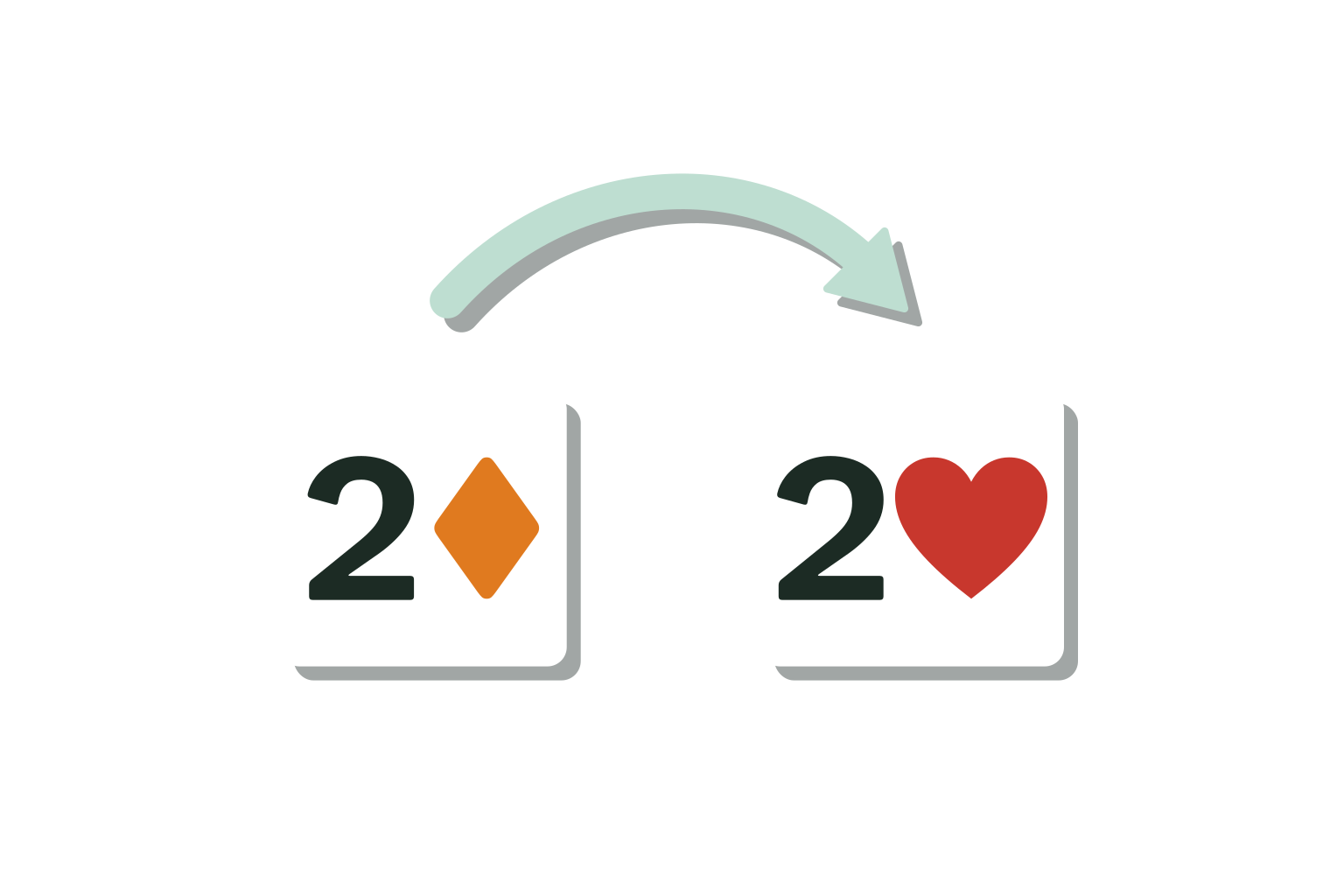
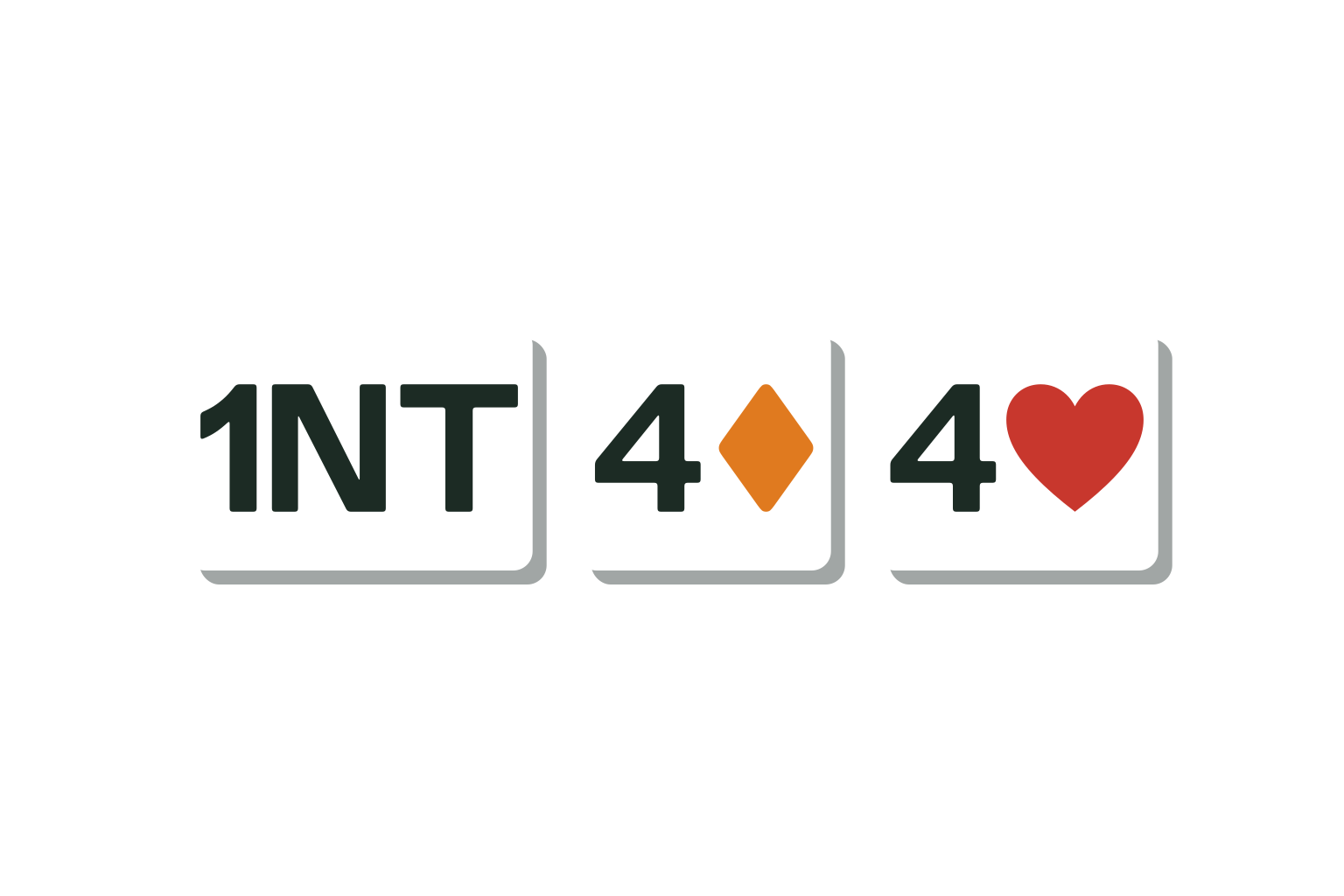
A Texas transfer is a jump to 4♦ or 4♥ over partner's 1NT, asking opener to bid the next suit up. Responder uses it with a long major and enough for game, when there is nothing more to find out. It reaches game in one bid and makes the strong notrump hand declarer, so its cards stay hidden from the defenders.
How the Texas transfer works
Over partner's 1NT, a jump to 4♦ shows six or more hearts and 4♥ shows six or more spades, with values for game. Opener completes the transfer to 4♥ or 4♠ and responder normally passes. The opening lead then comes up to the strong hand's honors, and the opponents get one fewer chance to come into the auction.
Most pairs use the same bids over a 2NT opening and over a 2NT rebid after 2♣, where responder needs even less for game. Opener always completes the transfer. There is no super-accept, because responder has already set the level at game.
When to use Texas, and when to use Jacoby
Pairs who play both transfers choose between them by strength and by slam interest, and both partners need to read each sequence the same way.
| Responder's hand | Route | Example sequence |
|---|---|---|
| Six-card major, game values, no slam interest | Texas, then pass | 1NT - 4♦ - 4♥ - Pass |
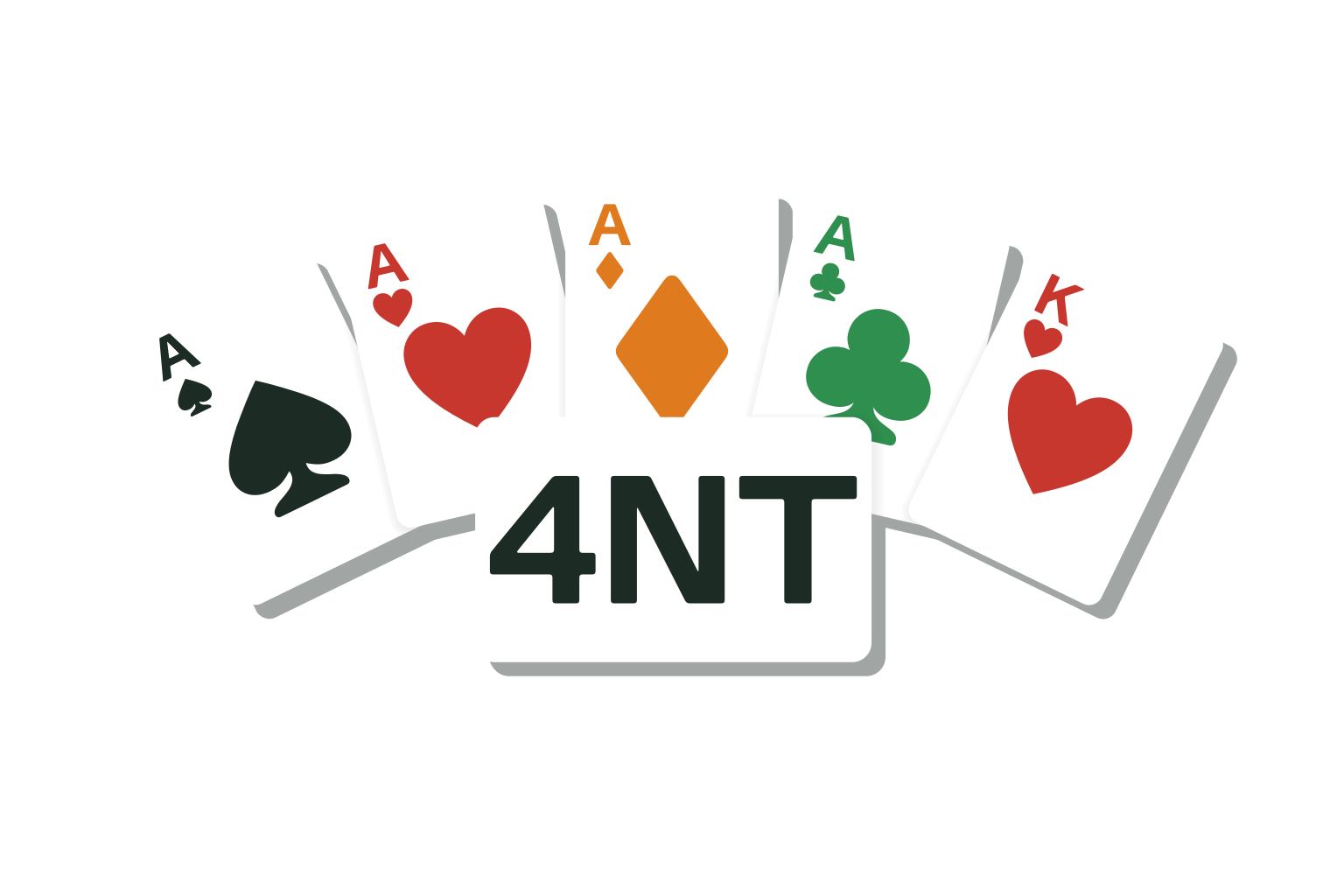
| Six-card major, enough to ask for key cards | Texas, then 4NT | 1NT - 4♥ - 4♠ - 4NT |
| Six-card major, mild slam interest | Jacoby, then jump to game | 1NT - 2♦ - 2♥ - 4♥ |
| Six-card major, invitational only | Jacoby, then raise to 3 | 1NT - 2♥ - 2♠ - 3♠ |
| Five-card major, game values | Jacoby, then 3NT | 1NT - 2♦ - 2♥ - 3NT |
Without Texas in the system, 1NT - 2♦ - 2♥ - 4♥ is simply a sign-off. Once you add Texas, that sequence becomes free for a mild slam try. Opener usually passes, but with a maximum rich in aces and kings can cue-bid or bid 4NT. This is the second gain from Texas, after having the strong hand declare.
Texas transfer example hands
South holds ♠KQJ9854 ♥7 ♦Q93 ♣82 opposite a 1NT opening. That is 8 points and a seven-card suit, enough for game opposite 15 to 17 but nowhere near slam. South bids 4♥, North bids 4♠, and South passes. Spades are played from the North side, protecting North's honors from the opening lead.
The slam needs no luck. On a club lead the defenders take the ♣A and nothing else. On any other lead declarer draws trumps and discards both clubs on the third round of hearts and diamonds. Using Texas first makes the trump suit clear before 4NT, so there is no doubt which king counts as a key card. See Roman Key Card Blackwood for the responses.
Common mistakes and variations
- Confusing Texas with Gerber. In SAYC 1NT - 4♣ is Gerber, the ace ask, while 4♦ and 4♥ are Texas. A jump to 4♦ over 1NT is never natural in a partnership that plays Texas.
- Forgetting the convention at the table. Opener who passes 4♦ leaves the partnership at the four level in a suit responder may hold a singleton in, instead of in game in a long major.
- Using Texas with a vague slam try. After Texas, responder's only normal forward move is 4NT, the key card ask. A new suit at the five level means different things to different pairs, so start with Jacoby when you want to explore.
- Leaving it off in competition. Agree whether Texas still applies after the opponents double or overcall 1NT. Most pairs keep it on after a double. After an overcall, some keep it on only below 3♦ and others up to 3♠.
Texas was devised independently by David Carter of St. Louis and Olle Willner of Sweden. South African Texas uses 4♣ for hearts and 4♦ for spades, leaving 4♥ and 4♠ natural. Because 4♣ and 4♦ are rarely natural, a partner is less likely to forget them, and responder can still play 4♥ or 4♠ from their own side. The cost is the Gerber ask. Texas is usually played together with Stayman and Jacoby. See the bridge conventions overview for how the pieces fit together.
The full Texas tree
The tree below shows the Texas structure, with every answer and the key card continuation.
Loading the convention from the library.
Common questions
Short answers to what readers ask most.
- What is a Texas transfer in bridge?
- Over a 1NT or 2NT opening, responder jumps to 4♦ with six or more hearts or to 4♥ with six or more spades, holding enough for game. Opener then bids 4♥ or 4♠, and the notrump hand plays the contract.
- What is the difference between Texas and Jacoby transfers?
- Jacoby transfers are at the two level and allow responder to invite, describe or sign off. Texas transfers are at the four level and place the contract in game at once.
- Can you use Texas with a five-card major?
- Not normally. With five cards and game values, use a Jacoby transfer and bid 3NT, so opener can choose between notrump and the major.
- What does 4NT mean after a Texas transfer?
- It is key card Blackwood with responder's major as trumps. Responder has a slam-going hand and only needs to count key cards.
- What is South African Texas?
- It is the same idea with 4♣ showing hearts and 4♦ showing spades. Direct jumps to 4♥ and 4♠ then remain natural.
Practice: Texas transfers
Eight quick questions on what you just read. For a longer session, bid a hundred hands or take the hundred-question quiz.