Smolen convention
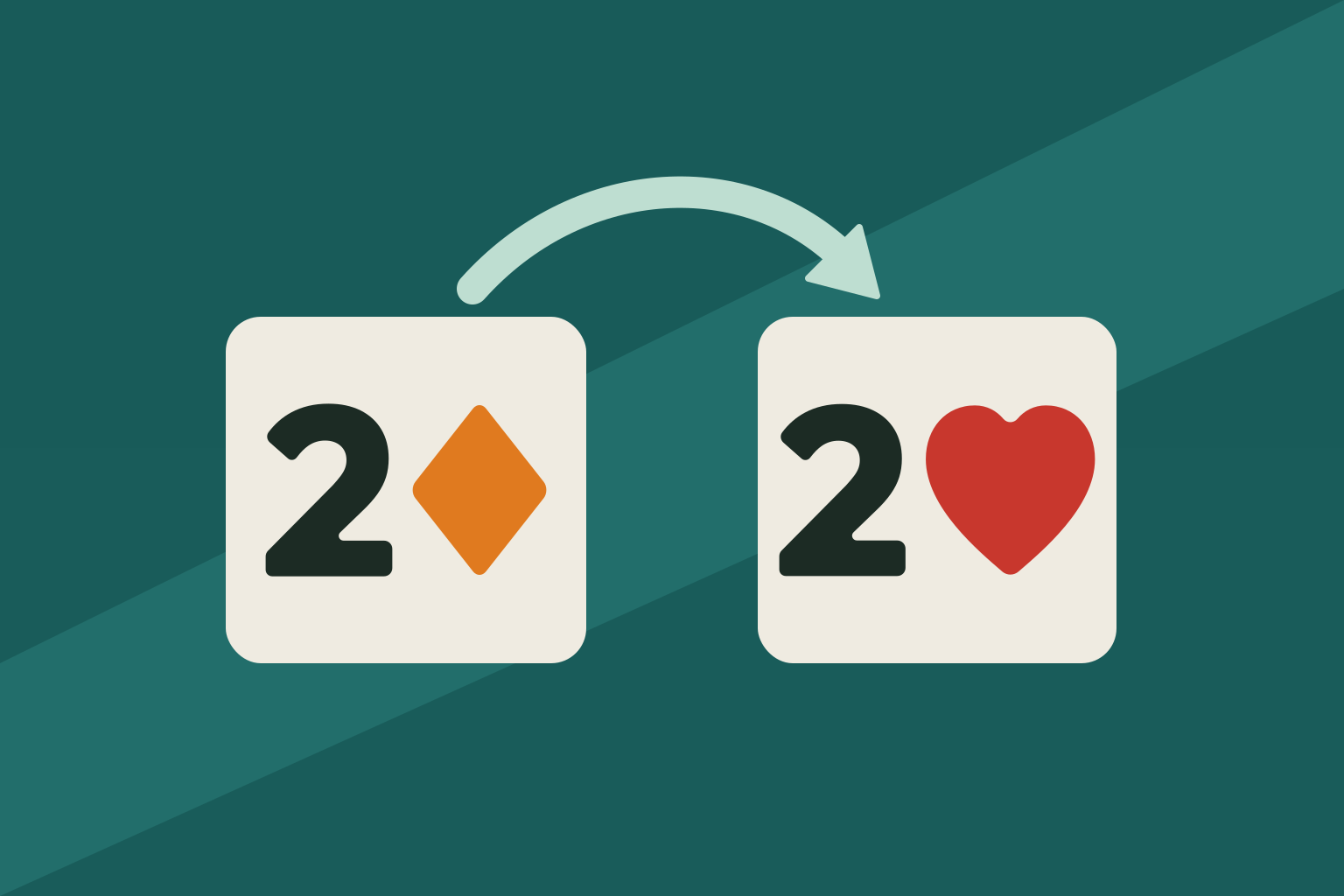
Smolen is a Stayman follow-up in which responder, holding five cards in one major, four in the other and game values, jumps in the four-card major after opener's 2♦ denial, so the 1NT opener can bid the long major and declare it.
Updated 14 October 2026
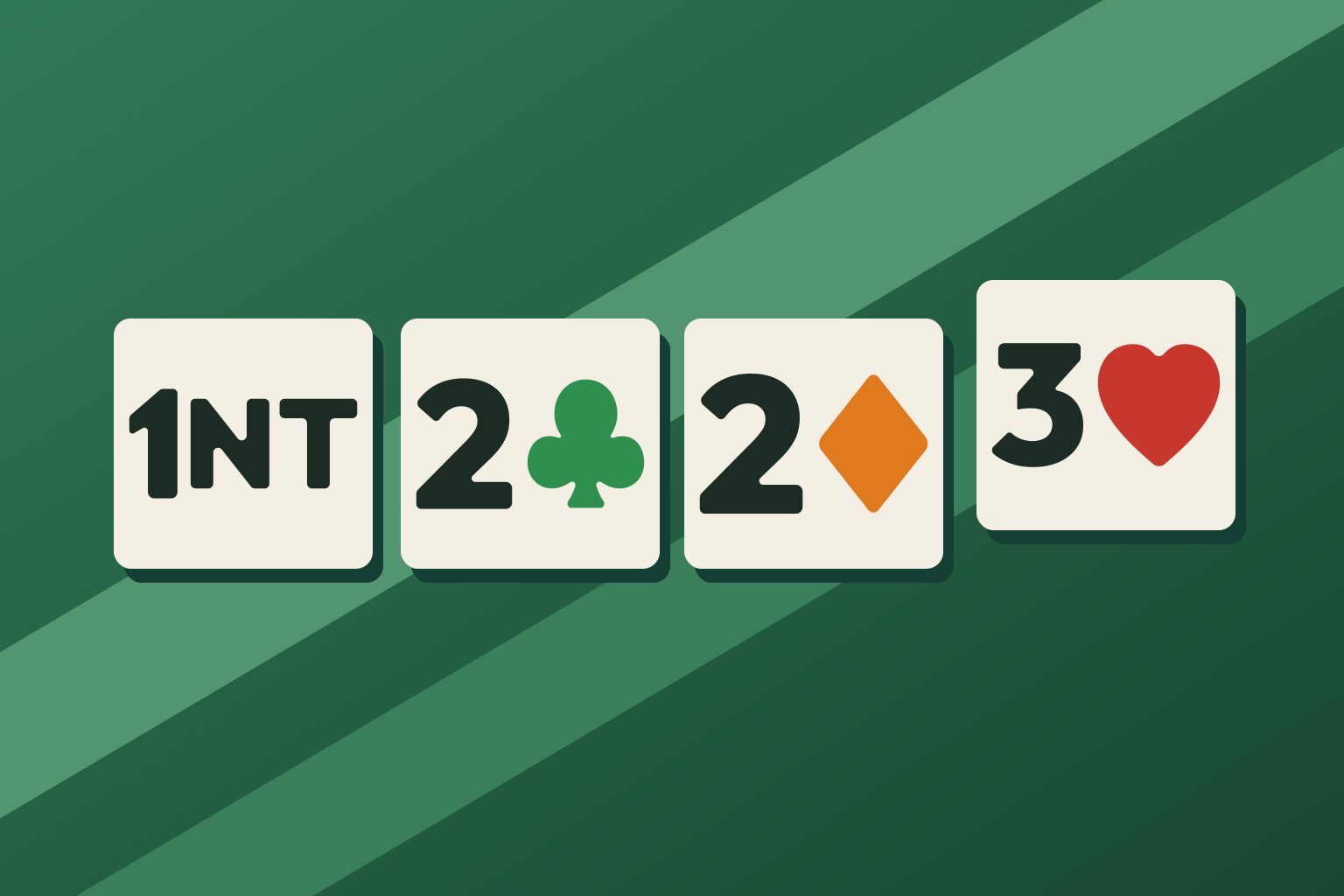
1NT - 2♣ - 2♦ - 3♥ looks like a heart bid, and in plain Stayman it is one. Pairs who play Smolen read it the other way round. Responder has four hearts and five spades, enough for game, and has jumped in the shorter major on purpose. If opener holds three spades, the spade game is bid from opener's side of the table, and the strong notrump hand becomes declarer.
The convention is named after Mike Smolen, an American player who proposed it as a small change to the standard Stayman structure. It costs nothing, because the jumps it uses already existed. It only swaps what they say.
How the Smolen convention works
Responder needs five cards in one major, four in the other and game values, about 10 points or more opposite a 15 to 17 point 1NT. The first bid is ordinary Stayman, 2♣. If opener names a four-card major, responder has found a fit in one of the two suits and raises it to game. Smolen only starts when opener denies a major with 2♦. Responder then jumps to three of the four-card major, which shows five cards in the other one and forces to game.
After 2♦, responder knows there is no 4-4 major fit. The only major fit left is five cards opposite three, and opener can see at once whether it exists, since a 1NT opener without a four-card major holds two or three cards in each major. The jump lets opener answer that question and declare the contract in the same bid.
Why responder bids the four-card suit
Without Smolen, responder jumps to 3♠ over 2♦ to show five spades, opener raises to 4♠, and responder becomes declarer. That puts the weaker hand in charge and lays the 1NT opener's honors out as dummy. The opening lead also comes from the wrong side. Suppose opener holds AQx in diamonds. If responder declares, the defender on opener's right makes the opening lead, a diamond through the AQ, and a king sitting over it takes a trick. If opener declares, the lead comes from the other defender, up to the AQ, and the tenace is safe.
Smolen keeps the stronger hand concealed, which matters at matchpoints in particular, where an overtrick decides the board. It also gives opener the choice between the major and 3NT, and opener is the one who knows whether a 5-3 fit exists.
Opener's rebids after a Smolen jump
| Responder bid | Responder holds | Opener with two cards | Opener with three cards |
|---|---|---|---|
| 3♥ | Four hearts, five spades | 3NT | 4♠, or 3♠ with slam interest |
| 3♠ | Four spades, five hearts | 3NT | 4♥ |
Opener cannot hold four cards in responder's long major, having denied a four-card major with 2♦, and a balanced hand has at least two. So there are only two cases, and the rebid follows from them. Most pairs treat the simple 4♠ over 3♥ as the ordinary fit-showing bid. The cheaper 3♠, which is available only in that auction, shows the fit with a maximum and good controls, and leaves room for cue bids or a Roman Key Card ask. Over 3♠ there is no room below game, so opener bids 4♥ with a fit and some pairs use 4♣ and 4♦ as cue bids for slam. Agree this before you rely on it.
When opener bids 3NT, responder normally passes. A 5-2 major fit rarely plays better than notrump, and opener has already said there is nothing better.
Smolen example hands
Which hands use Smolen, and which do not
Smolen is for one shape and one strength, five-four in the majors with game values. Other major-suit hands opposite 1NT go through Jacoby transfers instead. The table shows the usual way to start each one.
| Responder holds | Points | Start with | Then |
|---|---|---|---|
| Five-four in the majors | 0 to 7 | A transfer to the five-card major | Pass |
| Five-four in the majors | 8 to 9 | A transfer to the five-card major | 2NT, inviting |
| Five-four in the majors | 10 or more | 2♣, Stayman | Smolen jump over 2♦ |
| Five-five in the majors | 10 or more | 2♥, transfer to spades | 3♥, game forcing |
| Six-four in the majors | 10 or more, no slam interest | Texas transfer to the six-card suit | Pass |
Some partnerships also play 4♦ and 4♥ after 1NT - 2♣ - 2♦ as transfers, 4♦ showing six hearts and 4♥ six spades, each with four cards in the other major. A 6-4 hand can then try Stayman for a 4-4 fit first and still have opener declare the long suit. It is a refinement worth discussing before you add it, and it is not part of basic Smolen. A weak 4-4 hand in the majors uses garbage Stayman, described in the Stayman guide, and never reaches a Smolen auction.
Smolen over 2NT and after interference
The same idea works one level higher. After 2NT - 3♣ - 3♦, a jump is not needed, so responder simply bids 3♥ with four hearts and five spades, or 3♠ with four spades and five hearts, and opener chooses between 3NT and the major. Opposite a 20 to 21 point 2NT, about 5 points is enough for game. Pairs who play Puppet Stayman over 2NT already have a different structure there, since opener shows five-card majors directly and 3♦ means something else.
If an opponent overcalls 2♣, Stayman and Smolen are both off, and responder bids naturally or doubles. Many pairs keep Smolen on after a natural 1NT overcall by partner, as part of playing their notrump system on.
Common mistakes
- Jumping in the five-card suit. Out of habit from plain Stayman, a player bids 3♠ with five spades and four hearts. Partner then reads four spades and five hearts, and the pair can land in a 5-2 or 4-3 fit.
- Using Smolen after opener shows a major. Over 2♥ or 2♠, responder with both majors has found a fit and raises to game. Smolen is only for the auction where opener bids 2♦.
- Smolen with an invitational hand. The jump forces to game. An 8 or 9 point 5-4 hand transfers to the five-card major and bids 2NT instead.
- Passing 3NT with a six-card major. A responder with six cards in the long major should not have bid Smolen at all. Use a Texas transfer, or the 6-4 extension above if your partnership plays it.
In the Bidding Architect
This is the Smolen tree as it sits in the Bidding Architect's convention library, with opener's rebids after both jumps. Copy it into your own system and drill it in practice mode.
Loading the convention from the library.
Common questions
Short answers to what readers ask most.
- What is the Smolen convention in bridge?
- Smolen is an agreement for responder's rebid after 1NT - 2♣ - 2♦. A jump to 3♥ shows four hearts and five spades, and a jump to 3♠ shows four spades and five hearts, both forcing to game. Opener then bids the long major with three-card support or 3NT with two, and declares either contract.
- What does 1NT - 2♣ - 2♦ - 3♥ mean?
- Playing Smolen, it shows four hearts, five spades and game values. Opener bids 4♠ with three spades, 3♠ with three spades and slam interest, or 3NT with two spades. In plain Stayman the same auction shows five hearts and four spades.
- How many points do you need for Smolen?
- About 10 or more opposite a 15 to 17 point 1NT, enough for game. Weaker five-four hands transfer to the five-card major and either pass or invite with 2NT.
- Does Smolen apply over 2NT?
- Yes, for pairs who play ordinary Stayman over 2NT. After 2NT - 3♣ - 3♦, responder bids the four-card major at the three level to show five cards in the other. Pairs who play Puppet Stayman over 2NT use a different structure.
- What do you do with 5-5 or 6-4 in the majors?
- Not Smolen. With 5-5 and game values, transfer to spades and then bid 3♥. With a six-card major and game values, use a Texas transfer, unless your partnership has agreed the 4♦ and 4♥ extension after 1NT - 2♣ - 2♦.
- Who invented the Smolen convention?
- It is named after Mike Smolen, an American player. Today it is a common add-on to Stayman in Standard American and two over one partnerships.
Practice: Smolen
Eight quick questions on what you just read. For a longer session, bid a hundred hands or take the hundred-question quiz.