
Bridge lessons · Lesson 26 of 26
Defensive Signals
Updated 16 October 2026
Defenders are allowed to pass information to each other, but only through the cards they play. When you can spare a card, its size tells partner if you like a suit, how many cards you hold in it, or, when partner is about to ruff, which suit to lead back.
Attitude: do you like the suit?
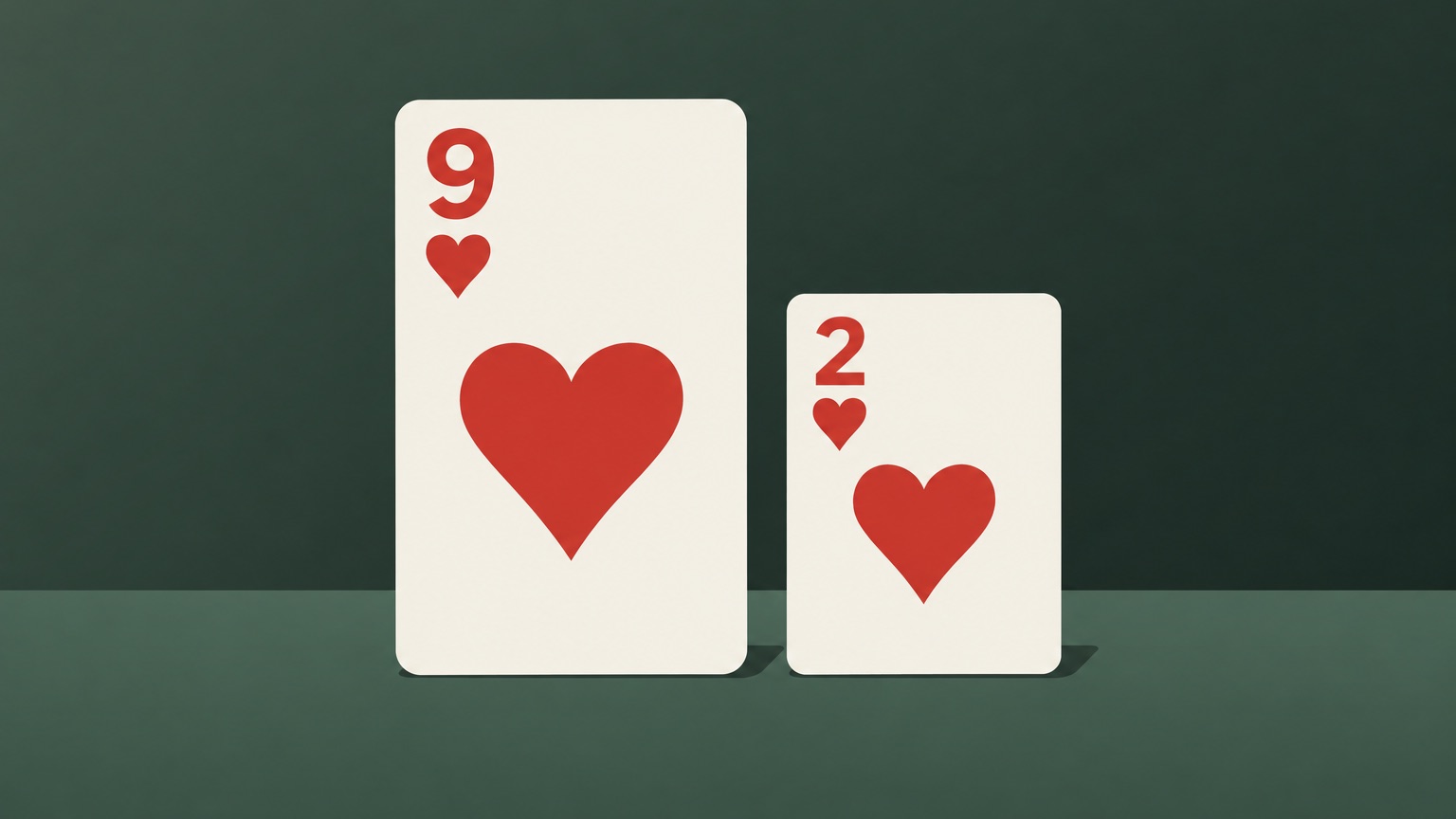
When partner leads a suit and you are not trying to win the trick, the spot card you play is an attitude signal. A high card encourages, saying you like the suit and would like partner to go on with it. A low card discourages and suggests a switch. High and low mean as high or as low as you can afford, so a 9 or 8 is high and a 2 or 3 is low.
You encourage when you hold a useful honor in the suit, such as the queen after partner leads the ace from AK. In a trump contract you can also encourage with a doubleton, playing the higher card first, because partner can then lead the suit a third time for you to ruff. You discourage with small cards and nothing to gain from more rounds.
Count, and a word on suit preference
When declarer leads a suit, the defenders often show how many cards they hold in it, a count signal. Play high then low with an even number of cards (two or four), and low then high with an odd number (three or five). Partner adds your count to the cards in view and works out declarer's length. That tells partner, for example, how long to hold up an ace when dummy has a long suit and no other way in.
A third signal, suit preference, is used when partner is about to ruff. Leave out the trump suit and the suit being ruffed, and two suits remain. The card you lead for partner to ruff asks for one of them back, a high card for the higher-ranking of the two and a low card for the lower, and so shows partner how to reach your hand for a second ruff.
Watch it in a deal
You are East, defending 4♠. Partner leads the ♥A.
South opens 1♠ and North makes a limit raise to 3♠ with 10 points and four trumps. South, with 17, bids game. Partner leads the ♥A, the top of the AK.
Honest signals, and where to go next
Signals are honest information for partner. Declarer sees your cards too and now and then learns something from them, but a partner who can trust every spot card defends far better than one who has to guess. Signal only with cards you can spare, never with a card that might take a trick, and give the true message every time. Your methods are no secret either. Partnerships agree on their signals in advance and must explain them to the opponents when asked.
That is the end of the course. You can now bid a hand, play it and defend it. Play real games, at a club, with friends or online, and come back to a lesson when a deal puzzles you. When you want more bidding tools, the bridge conventions guide lists the common ones, and bridge signals goes further into the cards defenders play.
Practice: defensive signals
Eight quick questions on what you just read.