
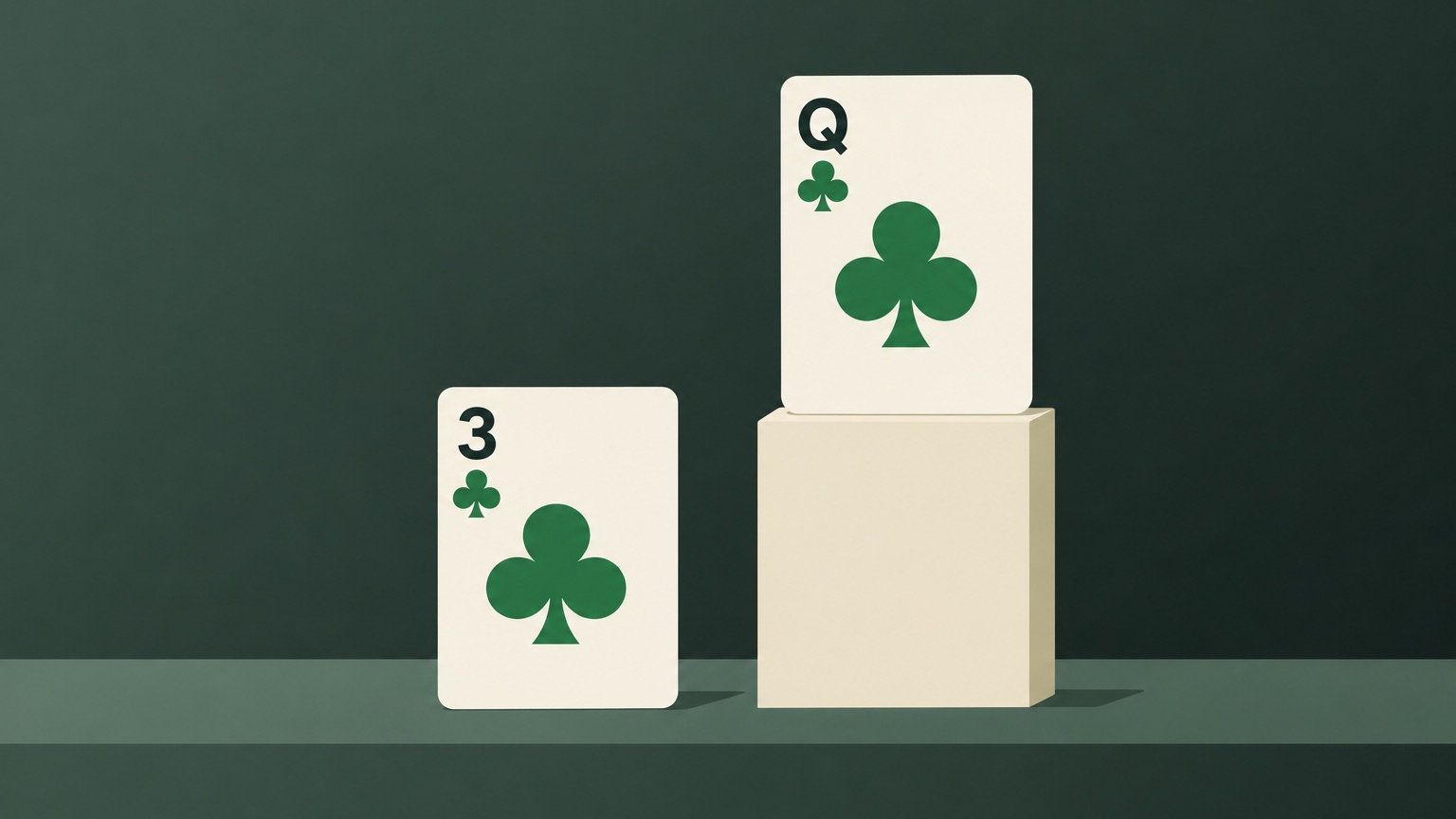
Bridge lessons · Lesson 25 of 26
Second Hand Low, Third Hand High
Updated 16 October 2026
Defenders cannot see each other's cards, so they lean on two habits named after the seat they play from in a trick. Second hand plays low when declarer or dummy leads, because partner plays last and is better placed to win the trick. Third hand plays high when partner leads, to win the trick or make declarer spend a high card. Both habits give way when you can count the trick that beats the contract.
Second hand low
In every trick the leader is first hand, and the next three players are second, third and fourth hand. As a defender you are second hand when declarer or dummy leads, and third hand when partner leads.
When declarer leads a low card and you play second, the habit is to play low as well. Partner plays last to the trick and sees every card before choosing, so partner is the better placed of you to win it. A high card from you often catches nothing but small cards and turns declarer's honors into winners.
Say dummy holds ♦K83, declarer ♦Q75 and you, East, hold ♦A62. Dummy leads the 3 toward declarer's queen.
| You play | Declarer's diamond tricks |
|---|---|
| The ♦A | Two, the king and the queen |
| The ♦2 | One, the queen, and your ace captures the king later |
Third hand high
When partner leads a low card and dummy plays low, play your highest card. A low card would let declarer win cheaply with a middle card and keep the top honor for later.
The habit has two refinements. If you hold touching honors, such as KQ or QJ, play the lower of them. It does the same job, and partner can read it. When your queen forces out the ace, partner knows you do not hold the jack, because from QJ you would have played the jack. Also, third hand plays only as high as it needs to. If dummy has played a card you cannot beat, play low and keep your honor.
When to break the habits
- When declarer or dummy leads an honor and you hold a higher one, cover it. Declarer then has to spend two honors to win one trick, and a 10 or 9 in partner's hand may become a winner. When dummy holds touching honors such as QJ10, wait and cover the last one.
- If the trick you can win as second hand is the one that beats the contract, take it now. Declarer may never give you another chance.
Watch it in a deal
You are East, defending 4♠. Partner makes the opening lead.
South opens 1♠, North raises to 2♠ with 7 points and South, with 20, bids game. Partner leads the ♥4. The defense needs four tricks.
Habits to play by
Play low as second hand, high as third hand, and cover an honor with an honor. Each is the default play, right on most deals, and each gives way when you can count the trick that beats the contract. When you break one, have a reason you can name.
Defense is the other side of declarer's finesse, and for the cards you play when you are not trying to win a trick, see bridge signals.
Practice: second hand low, third hand high
Eight quick questions on what you just read.