 Defense
Defensive Signals in Bridge
Bridge signals are the agreed meanings defenders give to the cards they play when they are not trying to win a trick. The card you choose can tell partner if you like a suit, how many cards you hold in it, or which other suit you want led. Declarer sees both hands of the partnership, while each defender sees only one, so signals are the legal way for defenders to share what they hold.
The three bridge signals
There are three kinds of signal. When you follow suit or discard without trying to win the trick, partner reads your card as one of them.
| Signal | When it applies | How |
|---|---|---|
| Attitude | Partner leads a suit; also your first discard | High card encourages, low card discourages |
| Count | Declarer leads a suit; partner needs to know when to take a winner | High-low shows an even number, low-high an odd number |
| Suit preference | Giving partner a ruff, or when attitude and count are already known | High card asks for the higher-ranking side suit, low card for the lower |
On partner's lead, signal attitude, and on declarer's lead, signal count. Use suit preference only when the situation makes attitude and count meaningless. "High" and "low" are relative. The 6 is high from 62 and low from K96.
Attitude signals
When partner leads a suit and you cannot or should not win the trick, your card says if you want the suit continued. An attitude signal with a high card encourages, and a low card discourages. Encourage when you hold an honor that makes the continuation good, or a doubleton that will let you ruff in a suit contract.
Signal with the highest card you can afford, and that is often higher than the first spot above the 2. From Q76, encourage with the 7. When all your spare cards are middle spots, partner reads the signal by checking which lower cards are still missing.
Count signals
When declarer leads a suit, partner rarely needs to know if you like it. What partner usually needs is its length. A count signal tells partner. Play high then low with an even number of cards, and low then high with an odd number. Count matters most when dummy has a long suit and no other entry, and partner holds the ace and must decide when to take it.
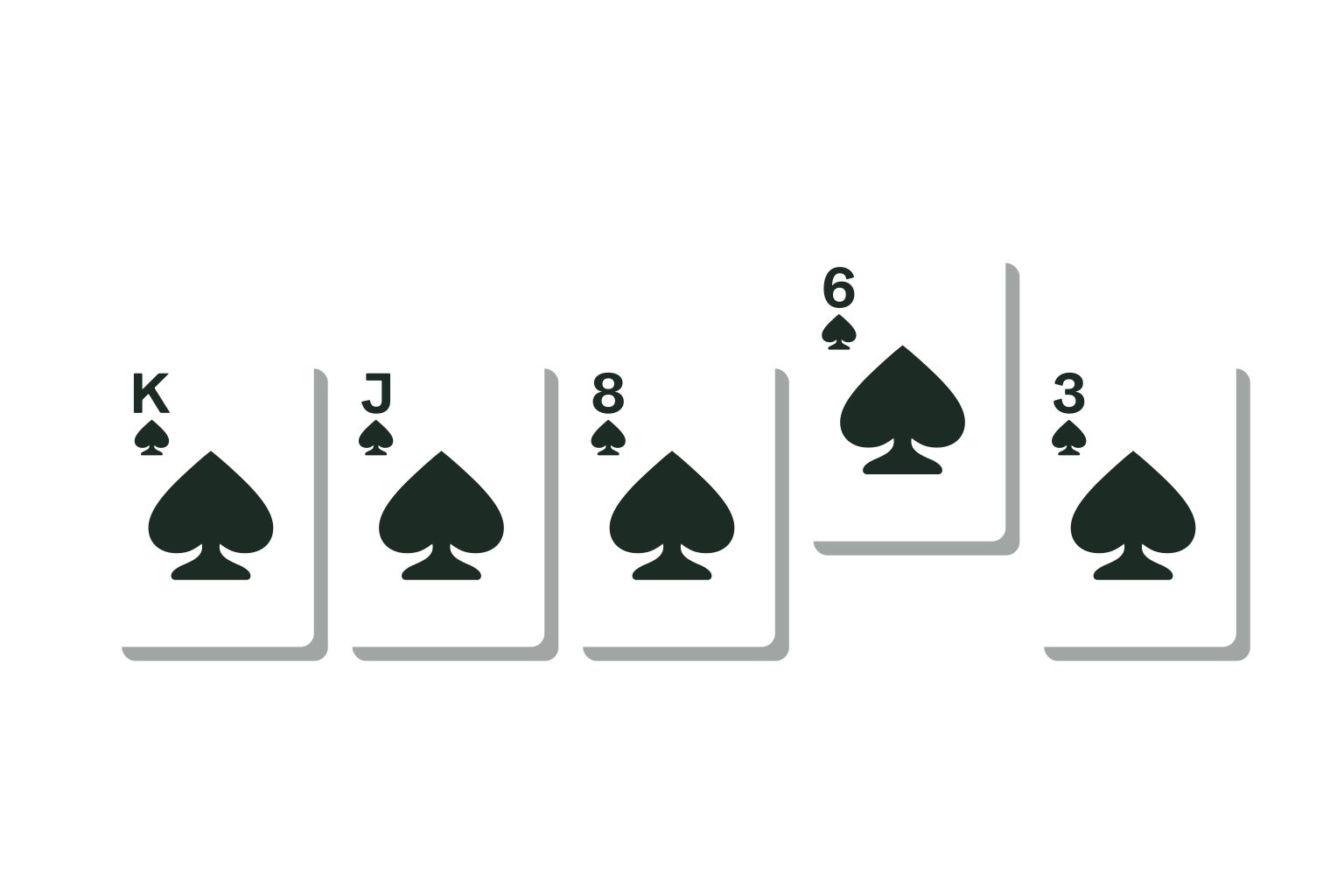
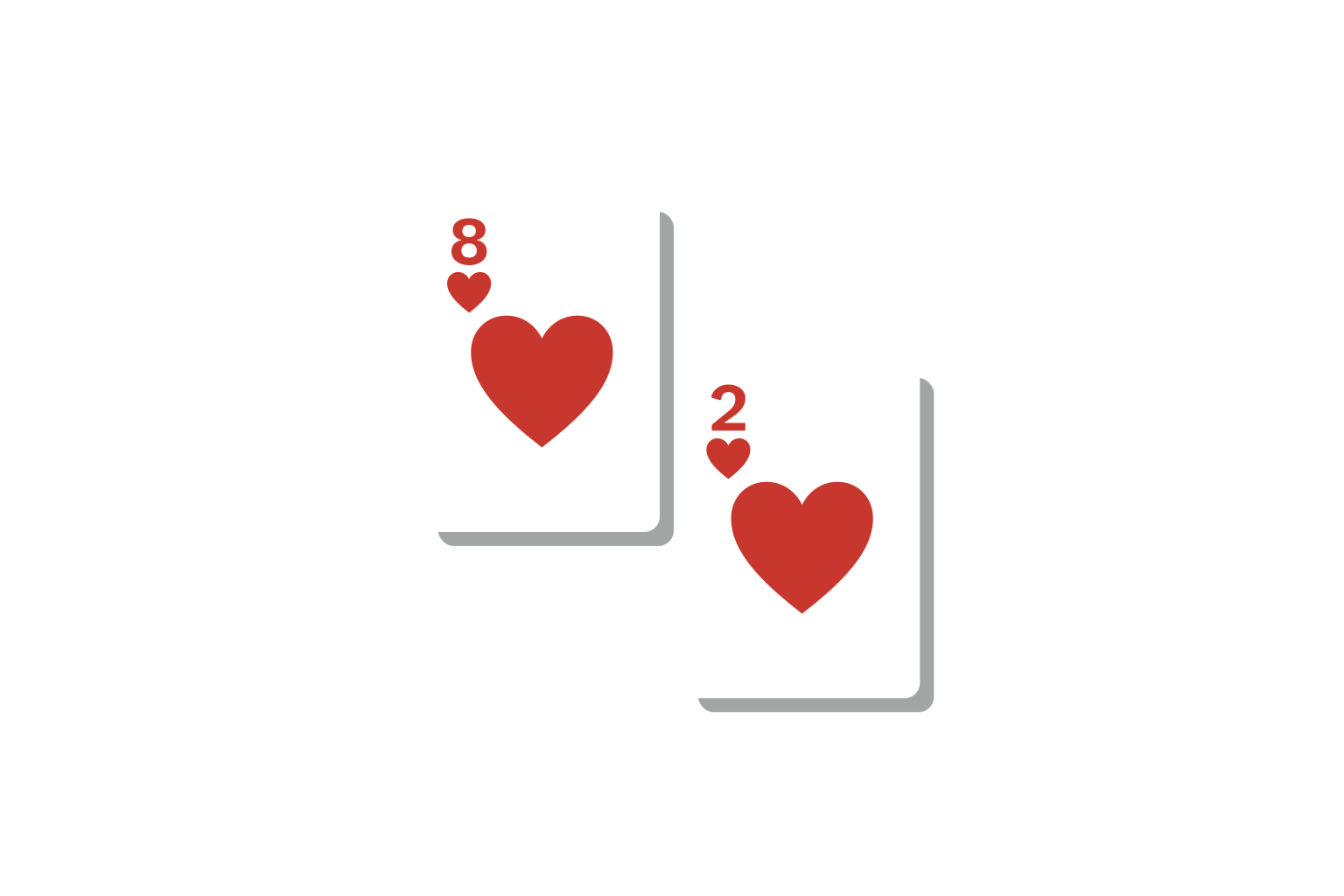
West's 8 starts a high-low, so West has an even number: two or four. Four would leave declarer with a singleton, which a 2NT opener is very unlikely to have. So West has two and declarer three. Duck the first two rounds and take the ace on the third. Declarer then has no diamond left to reach dummy, so dummy takes only two diamond tricks.
Suit preference signals
A suit preference signal points to one of the two side suits other than trumps and the suit being played. Play a high card to point at the higher of those two suits and a low card to point at the lower one. The classic case is a ruff. Partner leads a singleton club against 4♠, you win the ♣A and return a club for partner to ruff. The club you return tells partner how to get back to your hand. The ♣J (a high club) asks for a heart, the higher of the two remaining suits, and the ♣3 (a low club) asks for a diamond. Partner can then find your entry and ruff again.
Suit preference also applies when dummy's holding makes attitude pointless, for example when dummy has a singleton in the suit led and continuing it would only give declarer a ruff. Keep it for clear cases. If a card can be read as attitude or count, partner will read it that way.
Standard or upside-down signals
Standard signals use high to encourage and high-low to show an even number. Upside-down signals reverse attitude, so a low card encourages and a high card discourages. Many pairs reverse count as well, so low-high shows an even number. Suit preference stays the same in both methods. Many experienced players prefer upside-down attitude because a suit you want continued often holds cards you need, and encouraging with a low card does not waste one. Upside-down attitude and count together (often called UDCA) is a common agreement. Either method works if both partners use the same one and mark it on the convention card.
The first discard
When you cannot follow suit, your first discard is your best chance to tell partner what you want. In standard methods it is an attitude signal, so a high card in a suit asks for that suit and a low card says you do not want it. Two common alternatives are Lavinthal (the suit you discard is the one you do not want, and the card's rank shows a preference between the other two) and odd-even (an odd card encourages the suit, an even card shows preference). Whichever you use, take care not to throw away a card you need. Signal with a card from a suit where you have length and nothing to protect.
Common mistakes
- Signaling attitude on declarer's lead. Partner reads count when declarer leads, so a high card there shows an even number.
- Signaling with a card you need. Never throw a winner or break a holding to signal. If you have no spare card, play the card that does least harm.
- Reading every card as suit preference. Use it only when attitude and count are already known or meaningless.
- Giving count when it only helps declarer. If partner does not need the count, a true signal can help declarer more than partner.
- Forgetting to look at what partner did not play. If partner played the 4 and you can see the 2 and 3, the 4 is partner's lowest card.
Signals start from the opening lead. Third hand reads the lead with the rule of 11, and the leader reads third hand's signal. Leads like MUD and good signals together help both defenders count the hand early, which makes it easier to avoid endplays and to keep the right cards against a squeeze. The Lead Trainer gives you real auctions to practice the first card of the defense.
Try a lead problem in the Lead TrainerCommon questions
Short answers to what readers ask most.
- What are signals in bridge?
- Signals are agreed meanings for the spot cards a defender plays, used to tell partner about the hand. There are three types. Attitude asks for a suit to be continued or not, count gives the length you hold, and suit preference points to one of the other suits. Attitude is normal on partner's lead and count on declarer's lead.
- What does a high-low signal mean?
- In standard count, playing a higher card followed by a lower one shows an even number of cards in the suit. With upside-down count it shows an odd number.
- What are upside-down signals?
- They reverse standard attitude, so a low card encourages and a high card discourages. Many pairs reverse count too (UDCA), so low-high shows an even number of cards. Many pairs prefer them because they let you encourage without wasting a high card.
- When should I give a suit preference signal?
- Mainly when returning a suit for partner to ruff, and when dummy's holding makes attitude and count meaningless. A high card points to the higher of the two remaining side suits.
- What does my first discard mean?
- In standard methods it is an attitude signal. A high card asks for that suit and a low card discourages it. Partnerships using Lavinthal or odd-even discards read it differently, so agree on one method.
Practice: bridge signals
Eight quick questions on what you just read. For a longer session, take the hundred-question quiz.