The Meckwell Convention
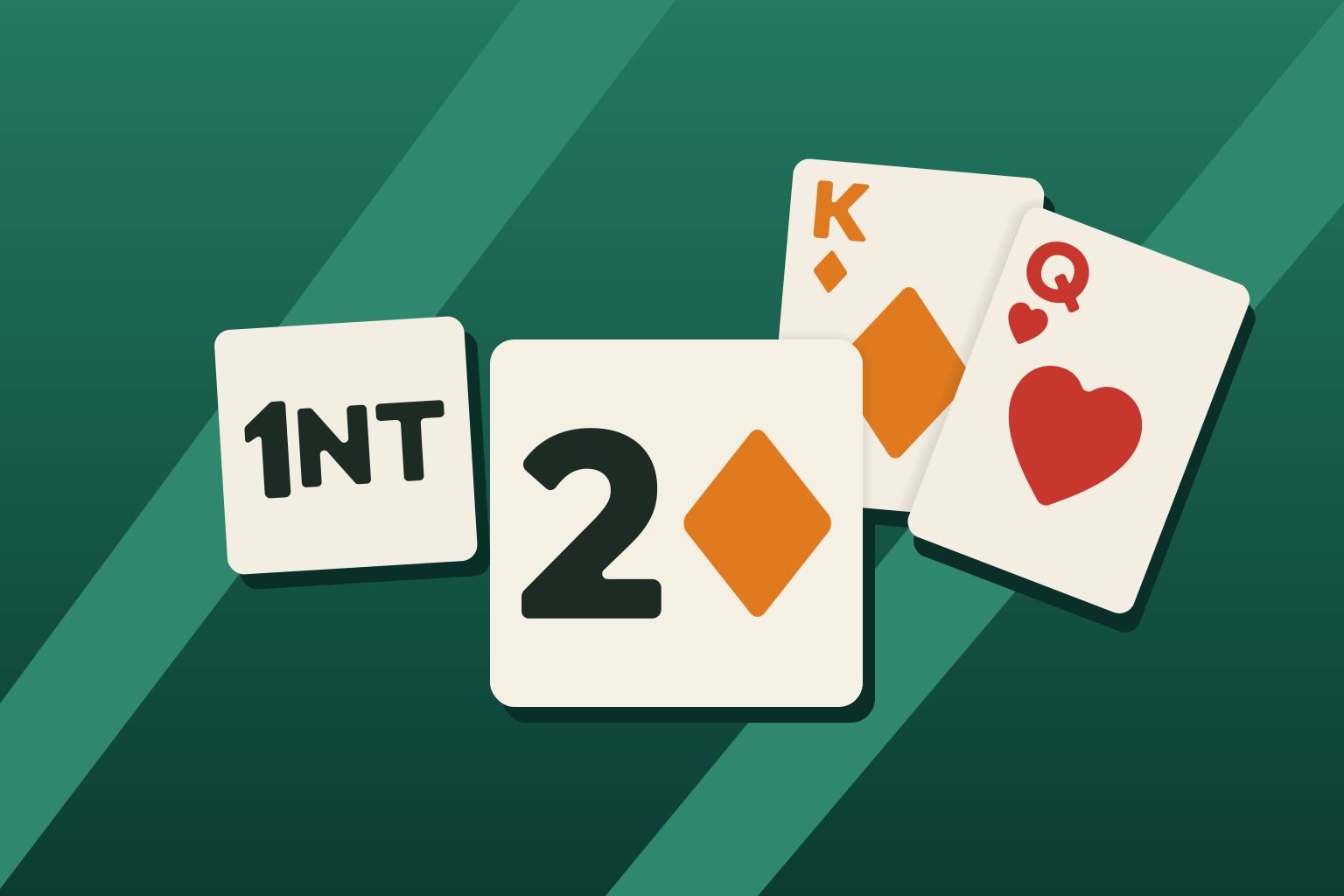
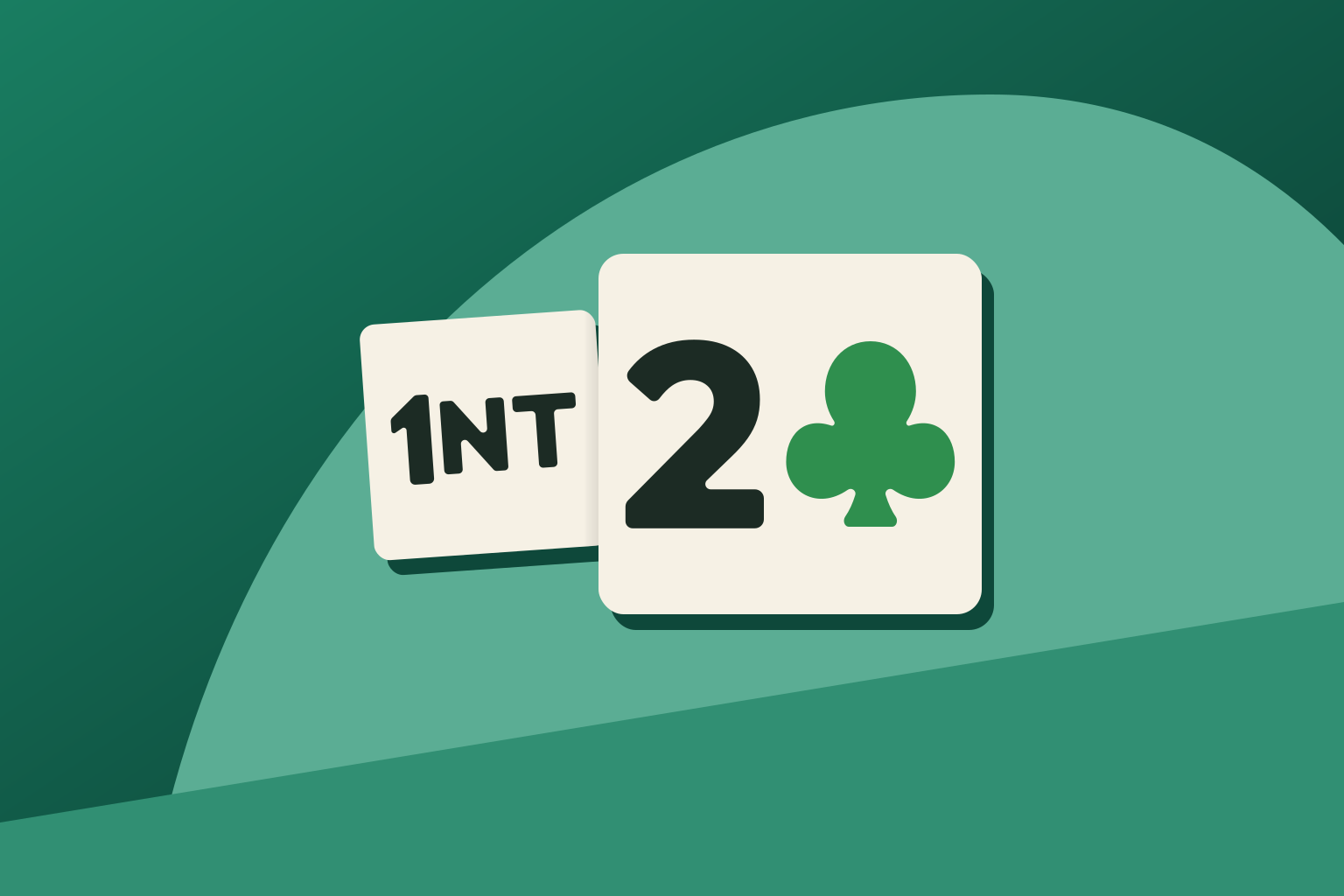
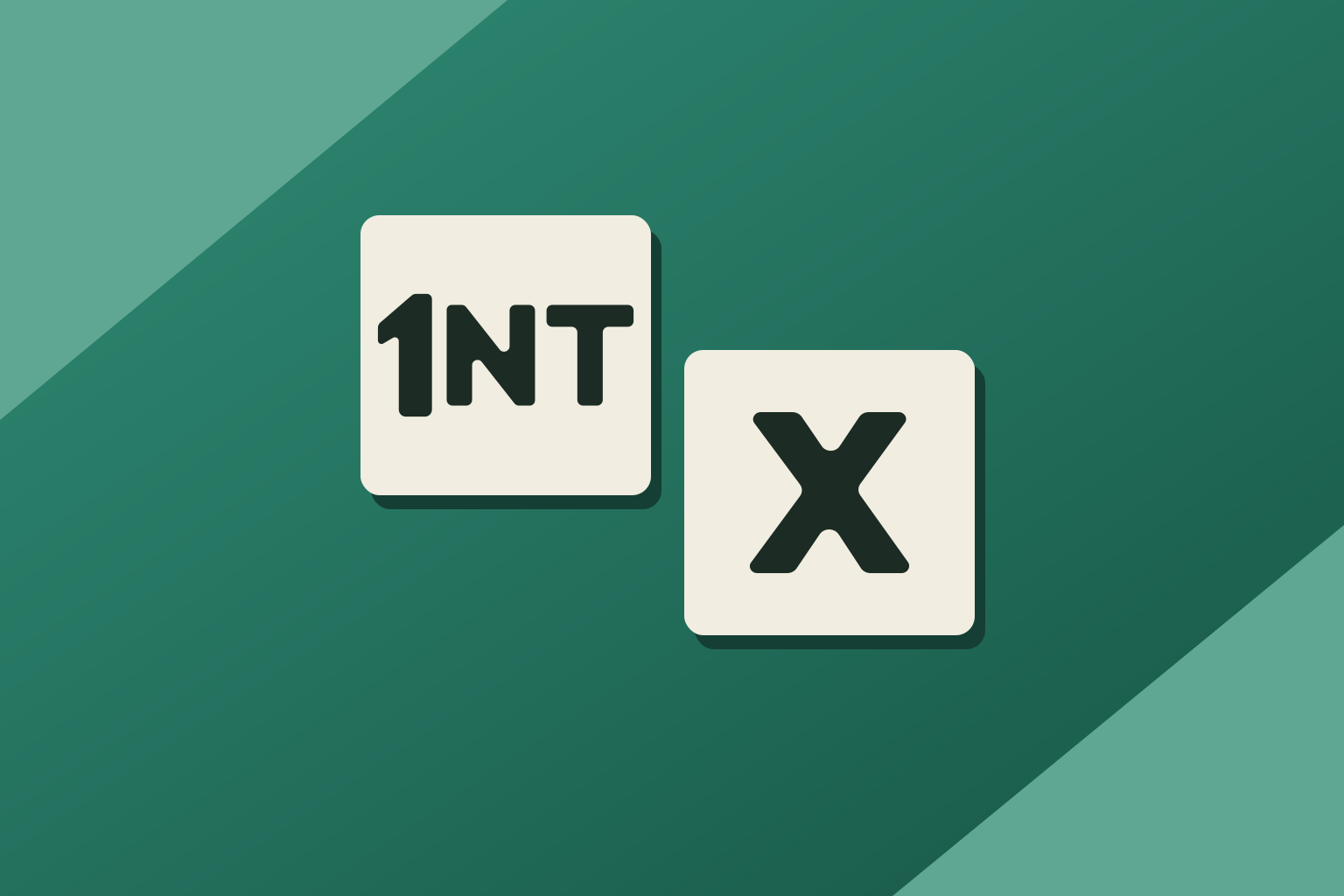
Meckwell is a defense to the opponents' 1NT opening in which a double shows one long minor or both majors, 2♣ and 2♦ show that minor and a major, 2♥ and 2♠ are natural one-suiters, and 2NT shows both minors.
Updated 14 October 2026
Jeff Meckstroth and Eric Rodwell, the American pair known to everyone as Meckwell, have won world titles together since the early 1980s, and their name is also on a defense to the opponents' 1NT. The Meckwell convention keeps the two-level major overcalls natural and puts the awkward hands, a long minor or both majors, into the double. Every other call shows a minor and a major, or both minors.
The structure is built to compete against a strong notrump, where a penalty double rarely pays. It is easy to remember, because the major-suit overcalls mean what they say.
Meckwell bids over 1NT
| Call | Meaning | Typical shape |
|---|---|---|
| X | One long minor, or both majors | A six-card minor, or 5-4 or better in the majors |
| 2♣ | Clubs and a major | Five or more clubs, four or more in a major |
| 2♦ | Diamonds and a major | Five or more diamonds, four or more in a major |
| 2♥ | Natural, a heart one-suiter | A good five or six-card suit |
| 2♠ | Natural, a spade one-suiter | A good five or six-card suit |
| 2NT | Both minors | At least 5-5 |
The double is the only artificial call that hides its suit. It holds two hand types: a one-suiter in clubs or diamonds, which has no natural two-level bid of its own in this scheme, and both majors. Advancer bids 2♣ almost every time, and the doubler then shows which hand it was. Passing 2♣ means clubs, 2♦ means diamonds, and 2♥ means both majors.
Strength depends on shape and vulnerability more than on points. Meckwell is played light, and a good 5-4 with 8 or 9 points is enough to act when not vulnerable. Most pairs play the same meanings in the balancing seat, after 1NT - Pass - Pass, as in the direct seat.
Advancer's responses to Meckwell
Advancer is the overcaller's partner. The aim is to find a playable fit at the two level as cheaply as possible, so most responses are relays or pass-or-correct bids, and advancer rarely bids a suit of their own.
- Over the double, bid 2♣ and let partner describe. When partner then shows both majors with 2♥, pass with as many hearts as spades and bid 2♠ with longer spades.
- Over 2♣, pass with three or more clubs. Holding a doubleton club or worse, bid 2♦ to ask for the major, and partner bids 2♥ or 2♠.
- Over 2♦, pass with diamond support. Short in diamonds, bid 2♥. Partner passes holding hearts or corrects to 2♠ holding spades, so bid 2♥ only if you can stand either major.
- Over 2♥ or 2♠, treat it as a normal overcall. Pass with nothing to say, raise with support.
- Over 2NT, bid your longer minor at the three level.
Pairs differ on the follow-ups after 2♣. The usual agreement is the one above, 2♦ asking for the major, but some partnerships play 2♦ as natural and use 2♥ as pass or correct instead. Agree it before the first time it comes up.
Meckwell example hands
East opens a 15 to 17 point 1NT and South holds 10 points with five spades and four hearts. South doubles to show both majors, the second hand type inside the double.
North does not know which hand South holds, so North relays with 2♣ even holding five diamonds. South's 2♥ shows the majors, and North, with three hearts and two spades, passes. The side plays a seven-card heart fit at the two level instead of defending 1NT, and if North had held longer spades, a 2♠ preference would have found that fit instead.
For the second deal, East again opens 1NT. South has five diamonds and four spades, a textbook 2♦. North has only two diamonds but holds four hearts and three spades, so North can stand either major.
Had South held the hearts, South would have passed 2♥. Either way the partnership lands in the major, at the two level, without ever guessing.
Meckwell against a weak notrump
Against a 12 to 14 point 1NT the penalty double earns much more, because the opponents hold fewer points and your side is often the stronger. Many pairs therefore play Meckwell only against a strong notrump and keep a penalty double against a weak one. If you do, agree where the long-minor and both-majors hands go instead, or keep it simple and play a natural defense against a weak notrump.
A passed hand cannot hold the strength for a penalty double, so pairs who switch methods usually go back to the strong notrump scheme once they have passed.
Meckwell vs DONT, Cappelletti and Landy
All four defenses solve the same problem in different ways. The table puts them side by side over a strong 1NT.
| Call | Meckwell | DONT | Cappelletti | Landy |
|---|---|---|---|---|
| X | A long minor, or both majors | Any one-suiter | Penalty | Usually penalty |
| 2♣ | Clubs and a major | Clubs and a higher suit | Any one-suiter | Both majors |
| 2♦ | Diamonds and a major | Diamonds and a major | Both majors | Natural |
| 2♥ | Natural | Both majors | Hearts and a minor | Natural |
| 2♠ | Natural | Spades alone | Spades and a minor | Natural |
| 2NT | Both minors | By agreement | Both minors | By agreement |
Against DONT, Meckwell's gain is the major one-suiter. A DONT player with six hearts must double and wait for the 2♣ relay, while a Meckwell player bids 2♥ at once and takes away the opponents' room. The cost is that both majors go through the double, a round slower than DONT's direct 2♥.
Cappelletti keeps the penalty double, which is worth more against a weak notrump, but every one-suiter, majors included, goes through 2♣. Landy is the simplest of the four: 2♣ shows both majors and everything else is natural, so hands with a minor and a major have no good bid. Meckwell is the one that shows a major one-suiter directly and still has a call for every common two-suiter.
Whichever defense you choose, the opponents will often answer with Lebensohl or a double for penalty. The wider list of defenses and other conventions is on the bridge conventions page.
Common mistakes
- Doubling for penalty. Against a strong notrump the Meckwell double is artificial. A balanced 17 count that doubles will hear partner relay to 2♣ and has nothing to say next, so pass and defend.
- Bidding 2♣ or 2♦ with a minor one-suiter. The direct minor bids promise a four-card major as well. A long minor alone goes through the double.
- Advancer passing 2♣ or 2♦ with a doubleton. Partner may have only five cards in the minor. Ask for the major, or bid 2♥ pass or correct over 2♦, and play the better fit.
- Bidding 2♥ over 2♦ with a spade void. The bid is pass or correct, so partner will bid 2♠ holding spades. Bid it only when you can stand either major.
- Using weak suits. The two-suiters are safe because both suits play well opposite a fit. A 5-4 hand whose suits are ♣87642 and ♠9532 is a pass.
In the Bidding Architect
Here is Meckwell as it sits in the Bidding Architect's convention library, with the double's 2♣ relay and advancer's pass-or-correct bids. Copy it into your own system and drill it in practice mode.
Loading the convention from the library.
Common questions
Short answers to what readers ask most.
- What is the Meckwell convention in bridge?
- Meckwell is a defense to an opponent's 1NT opening named after Jeff Meckstroth and Eric Rodwell. A double shows a long minor or both majors, 2♣ and 2♦ show that minor and a major, 2♥ and 2♠ are natural, and 2NT shows both minors.
- What does a double of 1NT mean in Meckwell?
- It shows either a one-suiter in clubs or diamonds, or both majors. Advancer bids 2♣, and the doubler passes with clubs, bids 2♦ with diamonds or bids 2♥ with both majors.
- How do you respond to a Meckwell 2♣ or 2♦?
- Pass with support for the minor. Over 2♣, bid 2♦ to ask for the major. Over 2♦, bid 2♥, which partner passes holding hearts or corrects to 2♠.
- Is Meckwell better than DONT?
- Neither is better on every hand. Meckwell shows a major one-suiter at once with a natural 2♥ or 2♠, while DONT shows both majors at once with 2♥. Many players prefer Meckwell because the natural major overcalls are hard to forget.
- Does Meckwell use a penalty double?
- Not against a strong notrump, where the double is artificial. Many pairs keep a penalty double against a weak notrump instead.
- Can you use Meckwell in the balancing seat?
- Yes. Most pairs play the same meanings after 1NT - Pass - Pass as in the direct seat.
Practice: Meckwell
Eight quick questions on what you just read. For a longer session, bid a hundred hands or take the hundred-question quiz.