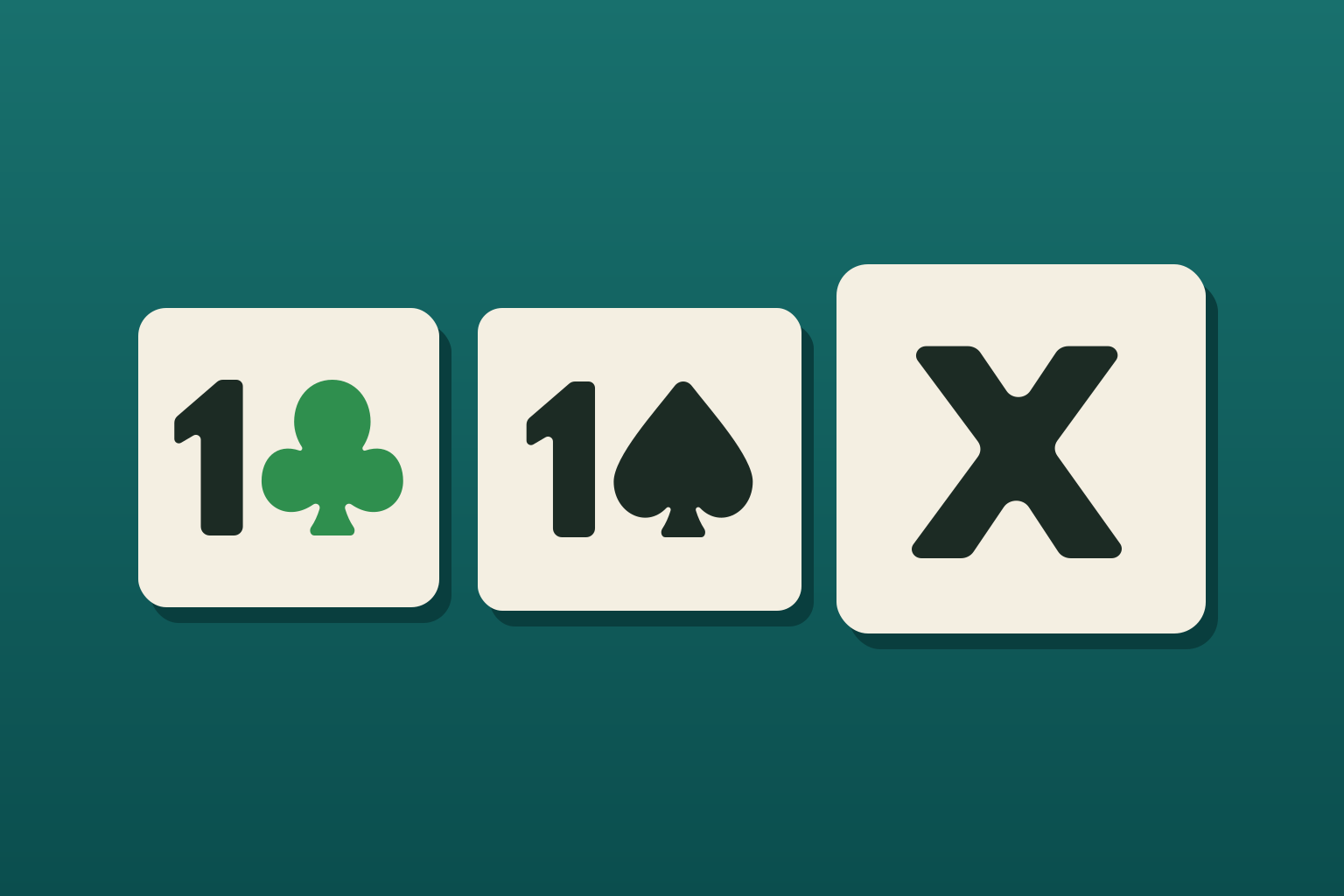
Support Doubles
A support double is opener's double after partner responds in a major and the next player overcalls or doubles. It shows exactly three-card support for partner's major, while a direct raise shows four, and it applies up to two of responder's suit.
Updated 14 October 2026
A support double is opener's double at the first rebid, after partner has responded in a major and the next player has bid. It shows exactly three cards in partner's major. A direct raise shows four. The idea comes from Eric Rodwell, of the Meckwell partnership, and it is now part of most expert and tournament systems.
Knowing the length matters. Responder with four cards in the major needs to know whether the side has seven trumps or eight, and responder with five needs to know whether it has eight or nine. Without the agreement, a raise could be three cards or four and responder has to guess. With it, the length is known after one call, and every later competitive decision gets easier.
Support doubles at a glance
| Auction | Opener's call shows | Hearts or spades held |
|---|---|---|
| 1♣ - 1♥ - (1♠) - X | Support double | Exactly three hearts |
| 1♣ - 1♥ - (1♠) - 2♥ | A raise | Four hearts |
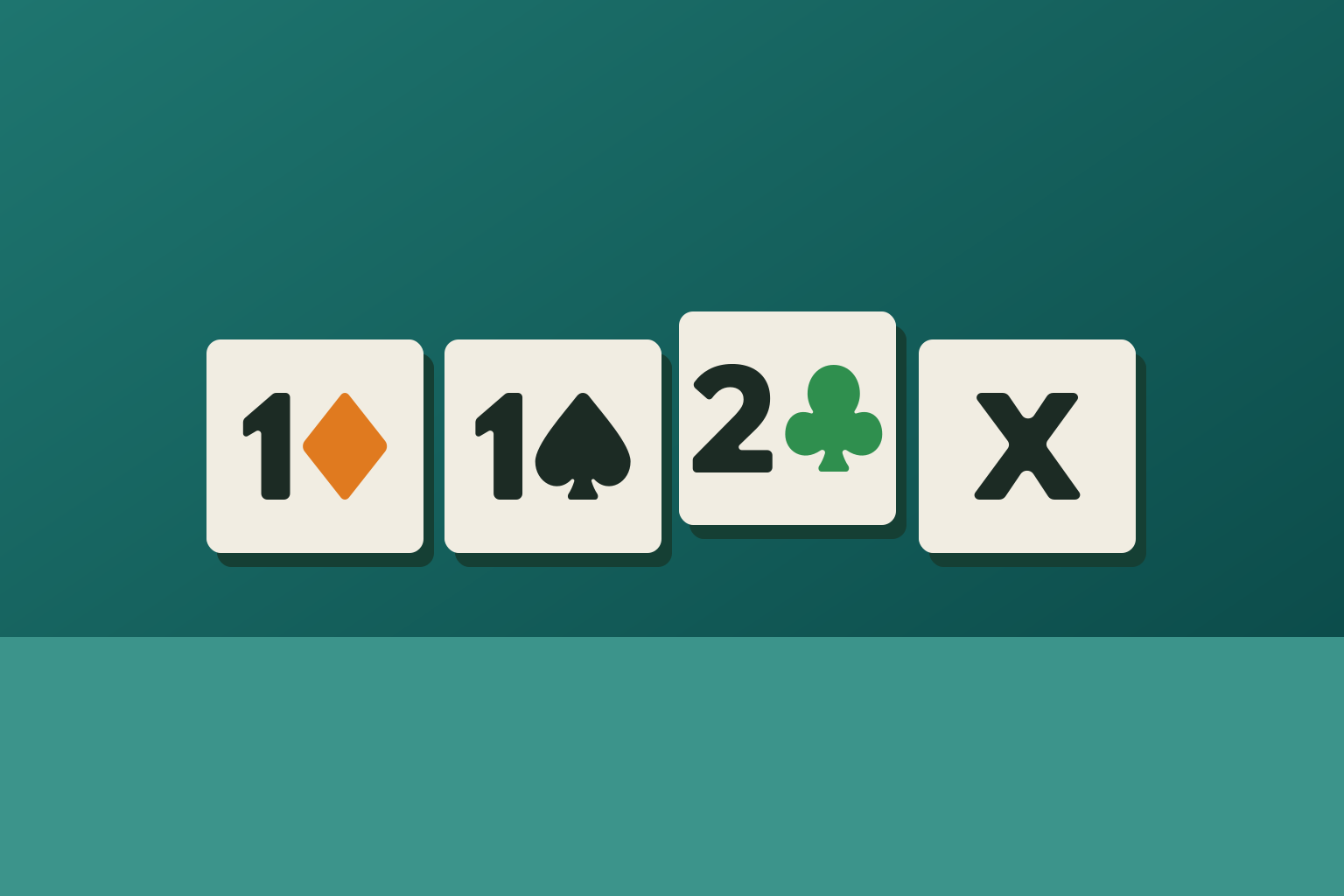
| 1♦ - 1♠ - (2♣) - X | Support double | Exactly three spades |
| 1♣ - 1♠ - (2♥) - X | Support double | Exactly three spades |
| 1♣ - 1♥ - (X) - XX | Support redouble | Exactly three hearts |
| 1♦ - 1♥ - (2♠) - X | Not a support double | Says nothing about hearts |
The double says nothing extra about strength. Opener can hold a bare 12 points or a hand worth 18, and a strong opener doubles first and bids again later. It also says nothing about the overcaller's suit, so opener cannot double the overcall for penalty while playing support doubles.
When support doubles apply
Three things have to be true. Opener has opened one of a suit, responder has bid a major at the one level, and opener's right-hand opponent has made a call before opener's rebid. That call can be a suit overcall or a takeout double.
- Up to two of responder's major. The usual limit is an overcall no higher than two of responder's suit. After 1♣ - 1♠, a 2♥ overcall still allows a support double because 2♥ is below 2♠. After 1♦ - 1♥, a 2♠ overcall is above 2♥, so opener's double is not a support double. Most pairs treat that higher double as showing values, and some as penalty. Agree which.
- After a takeout double, redouble. When RHO doubles responder's major, opener's redouble shows exactly three cards in it and a raise shows four. The traditional meaning of the redouble, a strong hand, has to find another route.
- Majors only, usually. Most partnerships use support doubles only when responder has bid a major, since a minor-suit fit is less often where the side wants to play.
- When both opponents have bid. Many pairs also play opener's double as support in auctions such as 1♣ - (1♦) - 1♥ - (2♦) - X. It is a sensible extension, but check that partner plays it too.
Opener's other rebids
Once the double is reserved for three-card support, every other rebid by opener denies three cards in responder's major. Responder can build on that.
Opener's pass does not show a weak hand. It can hide a decent hand that has no clear bid, often one with length in the overcaller's suit. Responder should hear it as "I have at most two of your suit" and act accordingly.
Responder after a support double
Responder now knows the exact fit. Holding four cards in the major, the side has seven trumps. Holding five, it has eight, and six gives nine. Responder rebids as if opener had raised with three cards, which in practice means the cheapest bid in the major with a minimum, a jump with invitational values and game with enough for game.
The difference between seven and eight trumps matters most when the opponents keep competing. By the law of total tricks, a side with eight trumps is usually safe at the two level and a side with nine can go to the three level. A 4-3 fit is fine at the two level and a poor place to be pushed higher. Responder with four cards in the major and a minimum usually lets the opponents play at the three level rather than bidding on.
Passing the support double for penalty is possible but uncommon. Responder needs a strong holding in the overcaller's suit, sitting over the bidder, and opener may have no tricks in it at all.
Example hands
What support doubles cost
Opener gives up the low-level penalty double of the overcall. Holding four good cards in the overcaller's suit and no support, opener passes instead. Responder, short in the overcalled suit, can reopen with a double when the auction comes back, and in most partnerships opener can then pass it for penalty. Most pairs judge that the loss is small, because opener rarely holds a strong penalty double at the one or two level.
The support redouble has a similar price. The traditional strong redouble is gone, and a strong opener without three-card support has to show strength later, usually by bidding again at a higher level or by doubling the opponents later in the auction.
Common mistakes
- Raising on three cards. Once the agreement is on, 2♥ after 1♣ - 1♥ - (1♠) promises four. Holding three hearts, double, even when the hand is a minimum.
- Passing with three-card support. A minimum opener sometimes passes to avoid saying anything. Responder will then play opener for at most two cards and may give up on the fit.
- Doubling the overcall for penalty. The double shows three-card support. Opener with length in the overcaller's suit passes and waits.
- Using it too high. After 1♦ - 1♥ - (2♠), the overcall is above 2♥, and opener's double is not a support double.
- Responder counting on four-card support. Responder holding a four-card major opposite a support double knows the side has seven trumps and should not compete above the two level on the fit alone.
In the Bidding Architect
The library entry covers the support double after 1♦ - 1♠ - (2♣) with responder's rebids, and the support redouble after 1♣ - 1♥ - (X). Copy it into your system and drill the auctions in practice mode.
Loading the convention from the library.
Common questions
Short answers to what readers ask most.
- What is a support double in bridge?
- A support double is opener's double after partner responds in a major and the next player interferes. It shows exactly three cards in partner's major, while a direct raise shows four.
- How many cards does a support double show?
- Exactly three. A raise shows four, and any other rebid by opener, including a pass, shows two or fewer.
- What is a support redouble?
- It is the same idea after a takeout double. In 1♣ - 1♥ - (X) - XX, opener's redouble shows exactly three hearts and a raise to 2♥ shows four.
- How high do support doubles apply?
- The usual agreement is through two of responder's major. After 1♣ - 1♠ the double applies over a 2♥ overcall, but after 1♦ - 1♥ it does not apply over 2♠.
- Who invented support doubles?
- Eric Rodwell, who formed the Meckwell partnership with Jeff Meckstroth. The convention spread from expert play and is now standard in most tournament systems.
- Does a support double show extra values?
- No. It shows three-card support only, with any opening hand. A strong opener doubles first and then bids again to show the extra strength.
Practice: support doubles
Eight quick questions on what you just read. For a longer session, bid a hundred hands or take the hundred-question quiz.