Learn bridge
Minibridge
Bridge teachers in schools and clubs often start new players with minibridge before they say a word about bidding. Players learn to sort a hand, take tricks with a partner and run a hand as declarer from the first evening. It is also a good card game in its own right.
Who minibridge is for
Minibridge was first played in the Netherlands as a way to bring bridge into schools, according to the English Bridge Union. It spread through Europe in the 1990s. In England the EBU later made it the recommended route into bridge for all beginners, and its booklet says children of seven or eight can pick it up. In North America the ACBL describes Minibridge as a game for players new to trick-taking games, and its website has a rules sheet and a version you can play online on your own.
Teachers like it because it removes the hardest part of bridge for a newcomer. In the full game the four players spend the first minutes of every deal in an auction, a coded conversation that decides the contract. Minibridge replaces that with one simple step, so a class can be playing real hands, with a declarer, a dummy and two defenders, within an hour.
The cards and the deal
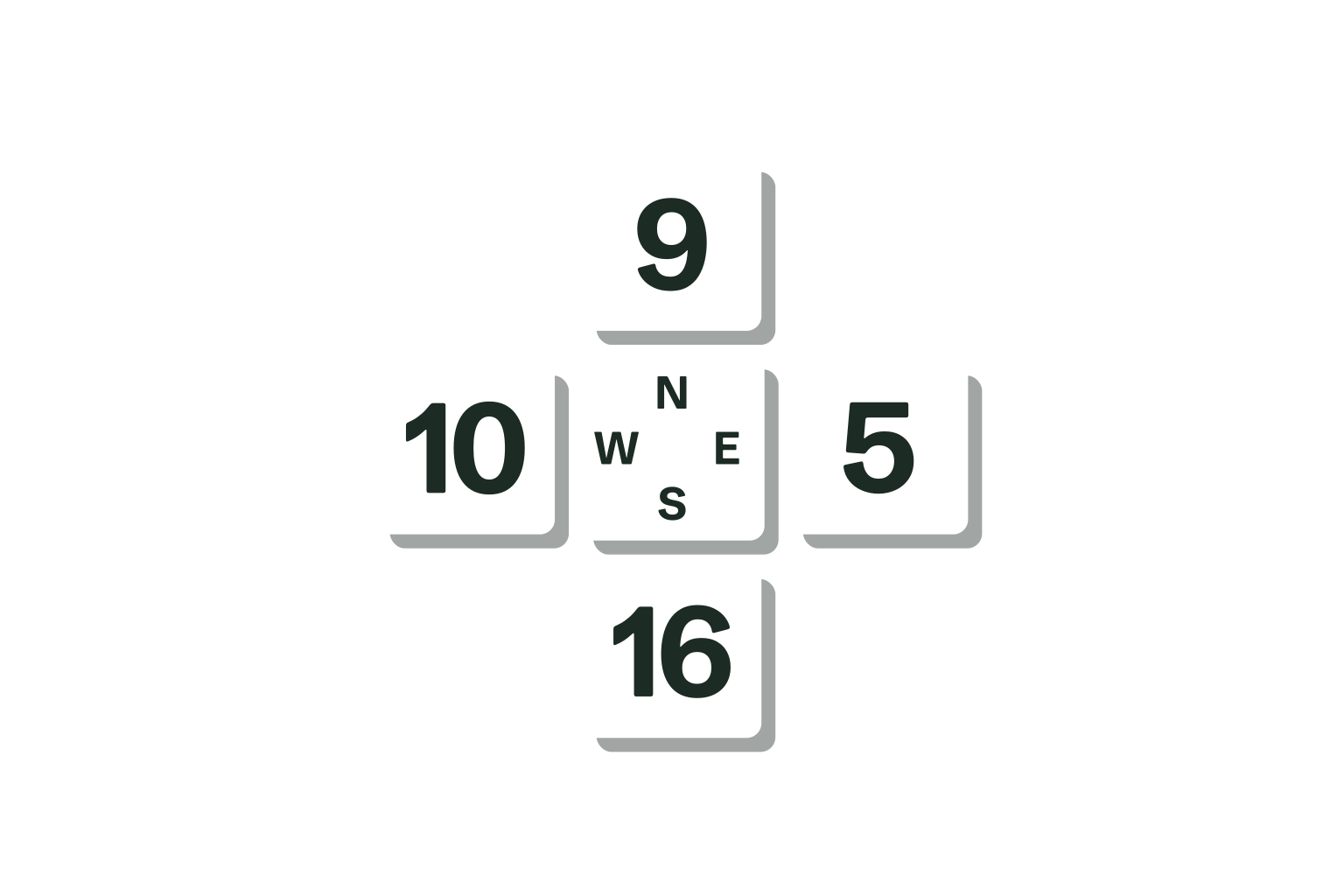
You need four players in two partnerships, with partners sitting opposite each other. The seats are named North, East, South and West, so North and South play against East and West. Use one standard pack of 52 cards with the jokers taken out. The cards in each suit rank from the ace at the top down through the king, queen, jack and ten to the two.
The cards are shuffled, the player on the dealer's right cuts, and the dealer gives out all the cards one at a time, face down and clockwise, starting on the left. Everyone ends with 13 cards. The job of dealer moves one seat to the left after each deal. Sort your hand into suits, alternating red and black, and keep it hidden from the others, partner included.
Counting and announcing points
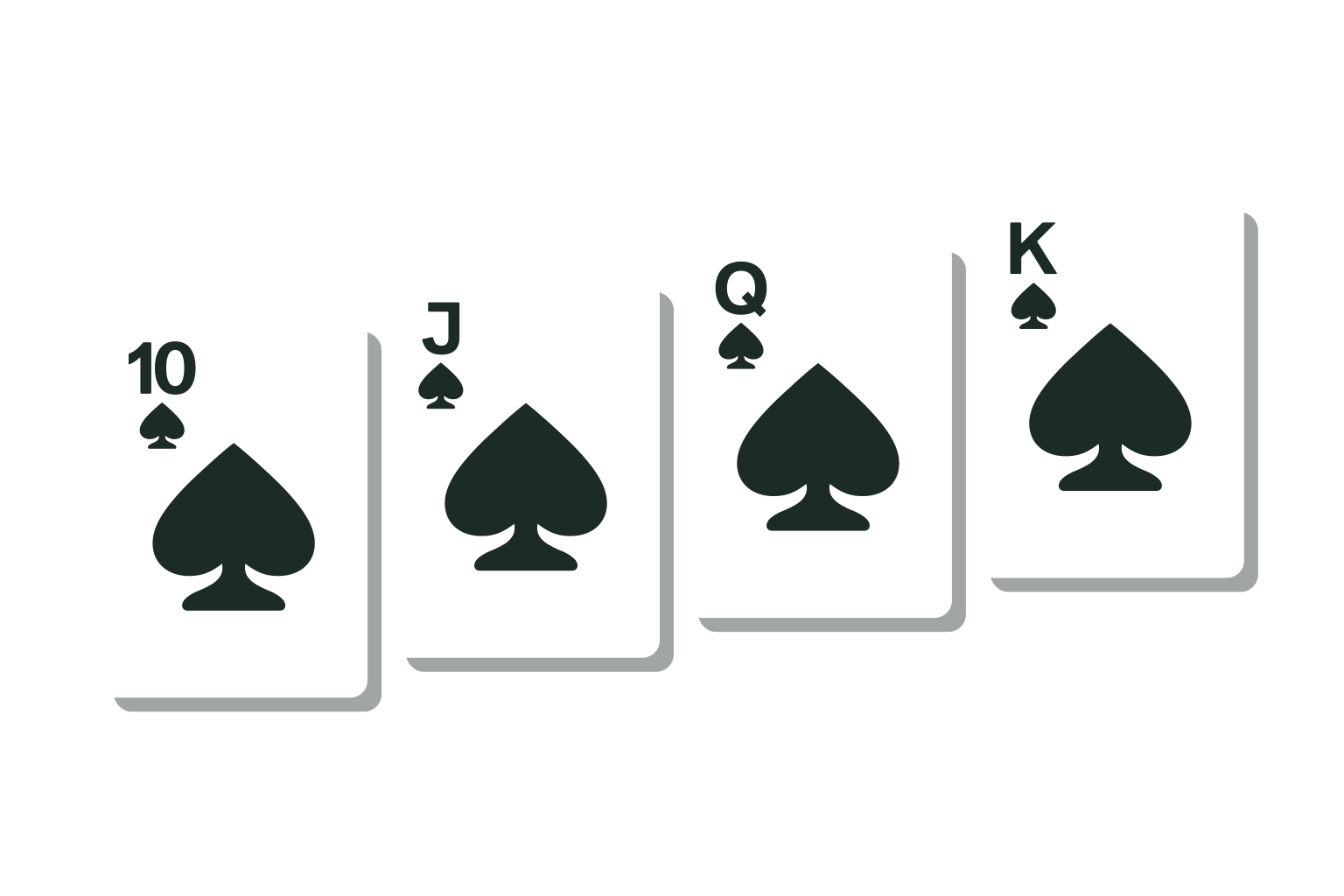
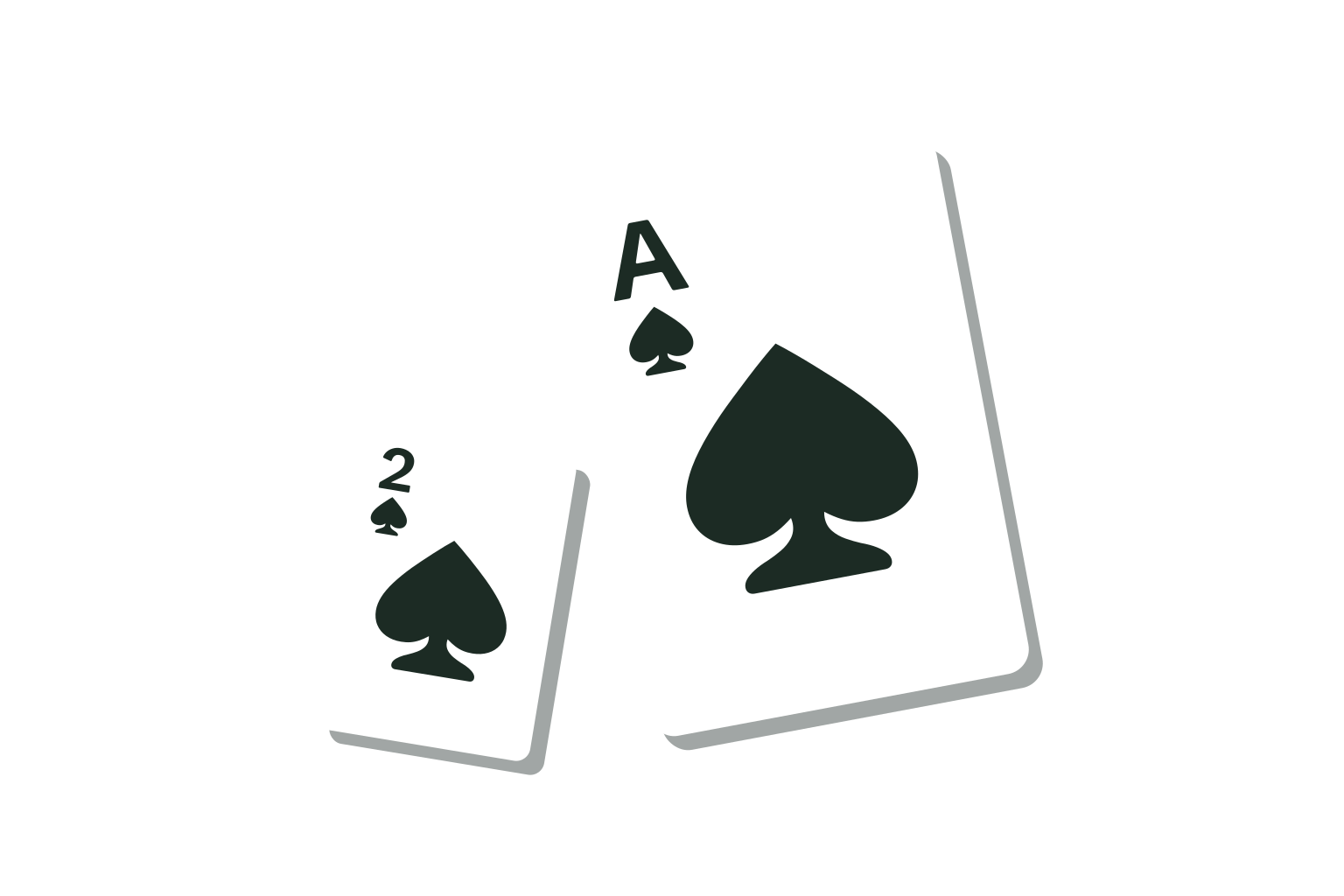
Each player now counts the high-card points (HCP) in their hand. Only the four top cards of each suit count.
| Card | Points |
|---|---|
| Ace | 4 |
| King | 3 |
| Queen | 2 |
| Jack | 1 |
| Ten down to two | 0 |
Every suit holds 10 points, so the whole deck holds 40 and an average hand holds 10. A hand such as ♠KQJ84 ♥A6 ♦KQ5 ♣J73 has 6 points in spades, 4 in hearts, 5 in diamonds and 1 in clubs, 16 in all. The page on high-card points shows how often each count turns up.
Starting with the dealer and going clockwise, each player says their total out loud. Add the four numbers. If they do not come to 40, someone has miscounted, and everyone counts again before going on.
Who becomes declarer
The partnership with more points between them wins the right to play the hand, and they become the declaring side. The other pair are the defenders. Within the declaring side, the player with more points is the declarer, who will play both hands, and the partner becomes the dummy.
- Both sides have 20. Nobody wins the hand. The same dealer shuffles and deals again.
- Declarer's side is tied, say 11 and 11. The player who announced first becomes declarer. That is the rule in the EBU laws, and in the first lessons with children the EBU booklet lets the two partners choose who will play.
- The four totals do not add up to 40. Count again before deciding anything.
Dummy goes down before the contract
As soon as the declarer is known, the dummy lays all 13 cards face up on the table, sorted into suits in columns facing declarer. Only then does declarer choose the contract, looking at both hands together. It is the biggest difference from bridge, where the dummy is shown only after the contract is fixed, so declarer has to judge the partnership's cards from the bidding.
Choosing the contract
Declarer makes two choices and announces them together, for example "Game in hearts" or "Part-score in notrump".
- 1.Part-score or game. A part-score needs seven of the thirteen tricks, whatever the trump suit. A game needs nine tricks in notrump, ten in hearts or spades, or eleven in clubs or diamonds. A game scores a much bigger bonus, but if declarer falls short the defenders score instead.
- 2.A trump suit or notrump. Declarer names one suit as trumps, or says notrump for a hand played with no trumps at all.
The usual guideline from both the ACBL and the EBU is to announce game when the two hands hold 25 or more points between them, and a part-score with fewer. A hand with 25 points will not always make game, and the EBU booklet admits that many of those games will fail, but it still encourages beginners to try. Very strong hands of 33 points or more can usually take twelve tricks, which matters only in the versions that score a slam (see the variants below).
For the trump suit, look for an eight-card fit, a suit in which declarer and dummy hold eight or more cards between them. Eight trumps are usually enough to draw the defenders' trumps and still have some left to win tricks of their own. Prefer hearts or spades when there is a choice, because they score more per trick and need one trick fewer for game. With no eight-card fit, play in notrump.
A notrump game is also often better than a game in clubs or diamonds, since nine tricks are easier to find than eleven. Beginners sometimes pick a short suit full of honors as trumps, such as AKQ opposite xx, ahead of a long weak suit. The long suit nearly always plays better, and the EBU suggests letting a class play the same deal both ways to see it.
Once trumps are chosen, dummy moves that suit to its right-hand column, the one nearest declarer's left, so everyone can see the trumps at a glance.
Playing the tricks
The defender on declarer's left makes the opening lead, putting any card face up on the table. Play then goes clockwise, each player adding one card, and the four cards make a trick. Declarer plays dummy's cards as well as their own, naming each one in turn, and dummy takes no part in the decisions.
- You must follow suit, playing a card of the suit led, if you can.
- If you cannot follow suit, you may play any card, including a trump.
- The highest trump wins the trick. If no trump is played, the highest card of the suit led wins.
- The winner of each trick leads to the next one, from dummy if dummy won it.
These are the same rules of play as in bridge. The rules of bridge page covers the rarer cases, such as a lead from the wrong hand or a failure to follow suit. The EBU's laws of minibridge have no penalties for these. A wrong card is usually taken back, and only a revoke found too late costs a trick, which goes to the other side.
How minibridge is scored
The EBU and the ACBL publish the same scores, and they match the scores a non-vulnerable contract earns in duplicate bridge. Only the tricks after the first six count, and what each one is worth depends on the trump suit.
| Contract | Points per trick |
|---|---|
| Clubs or diamonds | 20 |
| Hearts or spades | 30 |
| Notrump | 40 for the first, 30 for each one after |
A part-score that makes seven or more tricks adds a bonus of 50. A game that makes its target adds 300. Extra tricks beyond the target still score at the same rate, so a part-score in spades that takes ten tricks scores four tricks at 30 plus the 50 bonus, 170. The same ten tricks after announcing game score 120 plus 300, or 420, which is the reason to announce game when you have the points.
If declarer falls short, the declaring side scores nothing for the tricks it did take, and the defenders score 50 for each trick missing. A part-score that takes only five tricks gives the defenders 100. A game in spades that takes nine tricks gives them 50.
| Contract and result | Score |
|---|---|
| Part-score in clubs, eight tricks | 90 |
| Part-score in hearts, eight tricks | 110 |
| Part-score in notrump, nine tricks | 150 |
| Game in notrump, nine tricks | 400 |
| Game in spades, ten tricks | 420 |
| Game in clubs, eleven tricks | 400 |
| Game in spades, nine tricks | 50 to the defenders |
The ACBL sheet reaches the same totals by a different route, giving 50 to every made contract and an extra 250 for a game. There is no vulnerability and no doubling in either version. Each deal is scored on its own, and players agree beforehand to play a set number of deals or to stop at a time.
Home versions vary most in the scoring. Some teachers add a slam, twelve tricks, with a large bonus (the EBU booklet suggests 800, and other sets of rules use their own figures). Others leave out the bonuses with young children and simply count tricks, or set declarer a target that grows with the combined points. Agree on the version before you start.
A complete deal, start to finish
North deals. The four players count their points and announce them in turn.
North and South have 25 points between them and East and West have 15, so North and South are the declaring side. South has more points than North, so South is declarer and North is dummy. North lays the hand face up.
South now sees both hands. There are nine spades between them, a fit to spare, and the combined 25 points meet the guideline for game. Hearts offer only six cards, and a nine-card major fit is the natural choice of trumps. South announces "Game in spades", which needs ten tricks, and North moves the spades to the right-hand column.
West, on declarer's left, leads the ♥Q. South wins with dummy's ♥K, keeping the ace as a way back to hand, and plays three rounds of trumps with the king, queen and jack to take away all the defenders' spades. Next comes the ♦K. West wins the ♦A and leads another heart, which South wins with the ace. South cashes the ♦Q and leads the last diamond, ruffing it with dummy's ♠A. Then South plays clubs. The defenders take the ♣A and ♣K, and the rest of the tricks belong to South, two more trumps and the third round of clubs.
Declarer takes ten tricks and the defenders take three, the ♦A and two clubs. Game in spades made exactly, and North and South score four tricks at 30, or 120, plus 300 for the game, 420 in all. Had South announced a part-score, the same ten tricks would have scored only 170.
Common mistakes
- Skipping the check that the totals make 40. One miscount can hand the contract to the wrong side.
- Dummy joining in. Dummy plays only the cards declarer names and makes no comments. Young children are the exception, since they do not like being dummy, and the EBU suggests letting them come around the table and help declarer play the cards.
- Announcing game with too few points. Below 25 points a game usually fails, and the 50 per trick to the defenders adds up.
- Trumps in the wrong suit. Count the cards in each suit between the two hands before choosing. Eight or more is the target.
- Leading out of turn. The first lead comes from declarer's left, never from declarer, and after that the winner of each trick leads.
From minibridge to bridge
The step to the full game is the auction. Instead of announcing points, the players take turns to make bids, each bid naming a number of tricks above six and a trump suit or notrump. The last bid becomes the contract. The bids do the same job as the announcement and the dummy's face-up hand in minibridge, telling partner about strength and suits, but they have to do it in code because nobody can see partner's cards.
Much of what you learned still applies. Twenty-five points is still the mark for game, an eight-card fit still picks the trump suit, and a major still scores better than a minor. What is new is the meaning of the bids, plus vulnerability, which raises a game bonus from 300 to 500 on some deals, and the double, which raises the stakes when the opponents think a contract will fail.
A good order is to read how to play bridge for one full deal with an auction, then keep the rules of bridge and the scoring guide at hand. The free bridge lessons start where minibridge ends and add the bidding a step at a time, and learning bridge online lists the places to find partners and practice hands.
Common questions
Short answers to what readers ask most.
- What is minibridge?
- Minibridge is a beginner's version of bridge with no bidding. The players announce their high-card points, the stronger side plays the hand, and declarer chooses the contract after seeing dummy. The play of the cards is the same as in bridge.
- How do you decide who is declarer in minibridge?
- The pair with more high-card points declares, and the partner with more points in that pair is declarer. If the partners have the same count, the one who announced first plays the hand. If both pairs have 20 points, the cards are dealt again.
- How many points do you need for game in minibridge?
- The usual guideline is 25 or more high-card points between declarer and dummy. Game then needs nine tricks in notrump, ten in hearts or spades, or eleven in clubs or diamonds.
- Is minibridge scored like regular bridge?
- Mostly. Trick values and the 50 and 300 bonuses match a non-vulnerable contract in duplicate bridge, and each trick short gives the defenders 50. There is no vulnerability and no doubling. The standard EBU and ACBL rules have no slam bonus, though the EBU booklet offers one as an option.
- What age can children start minibridge?
- The English Bridge Union says children of seven or eight can learn it, and its school materials are written for primary pupils. Adults use the same game as their first step into bridge.
- Can you play minibridge with three people?
- Yes. The EBU booklet describes three-player versions in which a fourth hand is dealt as a dummy, and the scoring stays the same. The ACBL also offers a solitaire version online that you can play at any hour.
Practice: minibridge
Eight quick questions on what you just read. For a longer session, take the hundred-question quiz.